If you have high triglycerides, your food choices can make a big difference. Eat more vegetables, whole fruits, dal, beans, whole grains, fish, nuts, and seeds. Try to cut down on sugar, sweets, maida, fried foods and alcohol. Regular exercise and a healthy weight can also help. If your triglycerides are very high, do not depend only on diet. You may need medical treatment too. Knowing how to lower triglycerides through food can help you make better daily food choices.
Key Takeaways
- Triglycerides are a type of fat found in your blood.
- Too much sugar and refined carbs can increase triglycerides.
- Alcohol can raise triglycerides in some people.
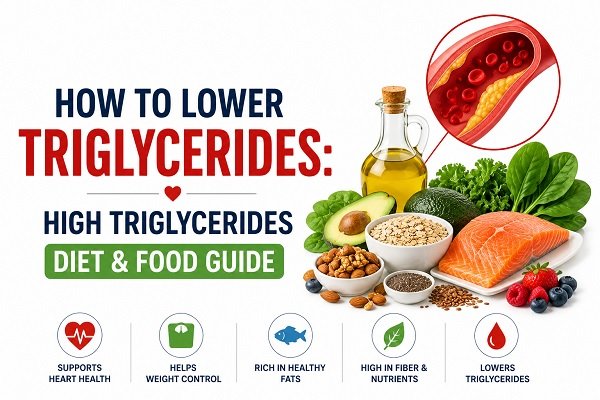
- Vegetables, fibre, fish, dal, nuts and seeds are better choices.
- Very high triglycerides can be dangerous and may need medical treatment.
What Are Triglycerides?
You get your blood report and everything looks okay, except one number: triglycerides. So, what does it mean? Triglycerides are a type of fat in your blood. Your body uses them for energy. But when there are too many triglycerides in the blood, they can become a health concern. Many people also get confused about triglycerides vs cholesterol. They are not the same thing. Triglycerides are fats that your body stores and uses for energy. Cholesterol is a waxy substance that your body needs for things like hormones and cell membranes. Both are checked in a lipid profile, but they have different jobs. If you have been noticing signs of high cholesterol alongside your test results, following a proper diet becomes even more essential.
What Are High Triglycerides?
According to the American College of Cardiology, fasting triglyceride levels are generally grouped like this:
| Triglyceride Level | Category |
|---|---|
| Below 150 mg/dL | Normal |
| 150–499 mg/dL | Mild to moderate elevation |
| 500 mg/dL or higher | Severe |
| 1,000 mg/dL or higher | Very severe |
These numbers are only a general guide. Your doctor may look at your complete health, medicines, and whether your test was fasting or non-fasting before deciding what your result means. It is also important to know what level of triglycerides is dangerous, as very high levels require immediate clinical care rather than relying only on diet.
What Causes High Triglycerides?
Food is not always the only reason behind high triglycerides.
Some common causes and risk factors include:
- Eating too much added sugar
- Eating too many refined carbohydrates
- Drinking too much alcohol
- Not getting enough physical activity
- Diabetes or insulin resistance
- Kidney disease
- Liver disease
- Thyroid problems
- Some medicines
- Genetic conditions
So, if your triglycerides are high, do not simply blame yourself or your diet. Sometimes another health problem can also be behind it. For instance, there is a strong high triglycerides and diabetes risk connection, as well as a close diabetes fatty liver link. The NHLBI also lists diabetes, kidney and liver disease, thyroid problems, excess weight, low activity, and high-fat or high-sugar diets as risk factors.
How to Lower Triglycerides Through Food?
Your daily food can play an important role in how to lower triglycerides. Making conscious diet choices is as crucial as knowing how to lower cholesterol naturally.
Try to eat more:
- Vegetables
- Whole fruits
- Whole grains
- Dal and beans
- Fish
- Lean protein
- Nuts and seeds
- Low-fat curd or yogurt
At the same time, try to eat less:
- Sugary drinks
- Sweets
- Maida
- Large portions of white rice
- Fried foods
- Processed meats
- Too much butter and ghee
- Alcohol
The main idea is simple. Eat more fresh and fibre-rich foods and cut down on foods with lots of added sugar, unhealthy fats and refined carbs. These are also the types of foods recommended in heart-healthy eating guidance to build daily habits for heart health.
Foods to Eat When You Have High Triglycerides
1. Oats
Oats are a good breakfast choice because they contain fibre. You can have vegetable oats or plain oats with some nuts. Try not to add lots of sugar to them.
2. Dal and Lentils
Dal and lentils are easy to include in an Indian diet. They give you plant protein and fibre. Incorporating high fibre Indian foods like moong dal, masoor dal and other dals can be part of a healthy meal.
3. Vegetables
Try to add more vegetables to your meals. Leafy greens, carrots, beans, broccoli and cauliflower are good choices. You can have them as sabzi, soup, salad or lightly cooked vegetables.
4. Whole Fruits
Whole fruits are a better choice than fruit juice. An apple, orange, guava or pear can be a simple snack. Whole fruit also gives you fibre, which you lose when you drink only the juice.
5. Fatty Fish
Fish such as salmon and sardines contain omega-3 fats. These fats can be useful for heart health and triglyceride management. Including omega 3 foods for heart health as part of a balanced meal offers substantial cardiovascular benefits.
6. Nuts and Seeds
Walnuts, almonds, chia seeds and flaxseeds contain healthy fats and fibre. But remember that nuts are high in calories, so a small portion is enough.
7. Low-Fat Curd or Yogurt
Plain low-fat curd can be a simple source of protein. Choose unsweetened curd instead of flavoured yogurt with added sugar.
8. Beans and Chickpeas
Rajma, chana, black beans and chickpeas provide fibre and plant protein. They can be used in salads, curries or simple meals.
9. Tofu and Soy
Tofu and other soy foods can be useful for people who do not eat meat. Comparing options like paneer vs tofu shows that tofu gives you protein without adding a lot of saturated fat. These foods can easily fit into an indian diet for triglycerides without needing to buy expensive special foods every day.
Foods to Strictly Avoid or Seriously Limit
Not every food needs to be completely banned for every person. The amount you should eat can depend on your triglyceride level and overall health.
Sugary Drinks
Try to avoid or strongly limit:
- Cola
- Sweetened juices
- Energy drinks
- Sweetened tea or coffee
These drinks can give you a lot of added sugar without making you feel full. In fact, if you quit sugar for few days, you will notice significant improvements in your energy and blood metabolic markers.
Foods With Added Sugar
Limit foods such as:
- Mithai
- Cakes
- Biscuits
- Doughnuts
- Sweet desserts
Having these foods often can make it harder to control triglycerides.
Alcohol
Alcohol needs special attention. It can raise triglycerides, especially when levels are already high. For people with markedly elevated triglycerides, medical guidance may recommend completely avoiding alcohol.
Refined Carbohydrates
Try to eat less:
- Maida
- White bread
- Large portions of white rice
- Refined breakfast cereals
You can replace these with whole grains and other fibre-rich foods. Understanding the fibre types and benefits helps you choose better whole-grain substitutes.
Deep-Fried Foods
Foods like pakoras, samosas, bhatura, poori and fried chips should be eaten less often. They can add a lot of calories and unhealthy fats to your diet.
Foods High in Saturated Fat
Try to limit fatty meats, butter, large amounts of cream and some full-fat dairy products. The goal is not to stop eating every type of fat. Instead, choose healthier fats and eat foods such as nuts, seeds, fish and beans more often.
Indian Diet for Triglycerides: What Can You Actually Eat?
You do not have to stop eating Indian food just because your triglycerides are high. The main thing is to change how much you eat, how often you eat it, and how you cook it.
| Instead of | Try |
|---|---|
| Poori | Roti + vegetables |
| Samosa | Roasted chana |
| Sugary chai | Unsweetened tea |
| White bread | Whole-grain bread |
| Mithai | Whole fruit |
| Fried pakora | Roasted snacks |
| Large portion of white rice | Smaller rice portion + dal + vegetables |
| Creamy curry | Vegetable or dal-based curry |
This simple approach can make an indian diet for triglycerides easier to follow. Following a structured high cholesterol Indian diet pattern ensures you don’t need to completely change your food habits overnight.
One-Day Indian Diet Chart for High Triglycerides
Here is a simple example of an indian diet for triglycerides:
| Meal | Example |
|---|---|
| Morning | Water + a few walnuts |
| Breakfast | Vegetable oats/upma + curd |
| Mid-morning | One whole fruit |
| Lunch | 2 small rotis + dal + sabzi + salad |
| Evening | Roasted chana + unsweetened tea |
| Dinner | Grilled fish/paneer/tofu + vegetables |
| If needed | Plain low-fat curd |
This is only a general example. It is not a personal medical diet. Your portion size can be different depending on your calorie needs, weight, activity and health conditions.
Does Weight Loss Help Lower Triglycerides?
The American College of Cardiology notes that losing around 5–10% of body weight can be part of lifestyle management for people with persistently high triglycerides. Learning how to reduce belly fat naturally can improve lipid metabolism. But this does not mean everyone with high triglycerides needs to lose weight. If you already have a healthy weight, the focus should be on good food, regular exercise, and treating any health problem that may be causing high triglycerides.
Other Ways to Lower Triglycerides
Food is only one part of the answer when you are learning how to lower triglycerides.
You should also try to:
- Exercise regularly
- Stay at a healthy weight
- Get enough sleep
- Avoid smoking
- Manage diabetes if you have it
- Manage thyroid or other health problems
- Limit alcohol
Regular physical activity and healthy lifestyle habits can support better triglyceride levels.
What About Supplements and Fish Oil?
You may have seen fish oil or omega-3 supplements being sold for high triglycerides. Do not start these supplements on your own. Prescription omega-3 medicines are not the same as regular fish oil supplements bought from a store. Some people with very high triglycerides may need prescription medicines based on their health and triglyceride level. Supplements should not be seen as a replacement for healthy food and other lifestyle changes.
When Are High Triglycerides Dangerous?
A triglyceride level of 500 mg/dL or higher is considered severe. Levels of 1,000 mg/dL or higher are especially concerning because the risk of pancreatitis goes up. If your triglycerides are very high, speak to a doctor. Do not try to fix the problem only through diet. Severe upper stomach pain, repeated vomiting, fever or feeling very unwell can need urgent medical attention.
Summing Up
High triglycerides do not mean you have to stop eating all your favourite foods. You just need to make better choices most of the time. Add more vegetables, dal, whole fruits, fibre and healthy protein to your meals. Cut down on sugar, maida, fried foods and large portions of refined carbs. Avoid alcohol if your doctor advises it. If you are wondering how to lower triglycerides, remember that food, exercise, weight management and treatment of other health problems can all play a role.
Frequently Asked Questions (FAQs)
What are triglycerides vs cholesterol?
Triglycerides are a type of fat that your body stores for energy. Cholesterol is a waxy substance your body needs for hormones and other functions. They are different, but both are checked in a lipid profile.
Which foods should I avoid with high triglycerides?
Try to limit sugary drinks, sweets, maida, fried foods, processed meats, and large portions of refined carbs. Alcohol may need to be completely avoided if your triglycerides are very high.
Can I eat rice if I have high triglycerides?
Yes, you may be able to eat rice, but portion size matters. Try having a smaller portion of white rice with dal, vegetables and salad instead of eating a large bowl of rice alone.
Is an Indian diet good for high triglycerides?
Yes. An indian diet for triglycerides can include dal, vegetables, whole fruits, whole grains, nuts, seeds, curd and healthy protein. The main thing is to reduce sugar, fried foods and refined carbs.
Medical Disclaimer: The content provided in this article is for educational and informational purposes only and is not intended as medical advice. Always consult with a qualified healthcare professional before making changes to your diet, exercise routine, or medical treatment.