In the contemporary life of India, digestive problems, including constipation, bloating, acidity, and improper digestive functions, are becoming highly prevalent amongst Indians. This can be attributed to one simple factor – most meals that we eat on a regular basis contain insufficient amounts of fibre and lots of processed food.
Fibre-rich foods in India have thus come into relevance at this point due to the multiple benefits associated with fibre content. It is not just beneficial for our digestive functions but also plays an important role in maintaining weight, proper blood sugar levels, heart function, and probiotics, which determine our overall immunity.
A traditional Indian diet had enough fiber through millets, dals, seasonal veggies, and fruit consumption, but in contemporary times, its presence in food is very low.
What is dietary fibre?
It is a type of carbohydrate that is indigestible by the body. Unlike other carbohydrates, it doesn’t turn into sugar but rather aids digestion.
The two types of dietary fibre are:
- Soluble fibre – forms a gel, regulates sugar and cholesterol levels
- Insoluble fibre – adds volume to faeces and improves bowel movements
Both are essential in maintaining healthy digestion. In most cases, when individuals seek out top sources of fibre foods, they forget that both types should be present.
Reasons Why the Indian Diet Has a Natural Source of Fibre
The traditional Indian diet had a natural balance. Almost all the foods that people ate in India comprised whole grain rotis, dal, sabzi, and fresh salads.
Such foods include:
- Chana
- Rajma
- Bajra
- Jowar
- Fresh seasonal vegetables
However, these foods have been replaced by foods such as polished rice and refined flour. This is because the consumption of fibre has declined despite India having abundant sources of natural fibre.
High Fiber Indian Food List
Below is a list of the most effective foods containing high levels of fiber that you should eat every day:
- Beans and Lentils
- Rajma (kidney beans)
- Chana (black and white)Moong dal
- Masoor da
- Whole Grain
- Oat
- Brown Ric
- Bajra (pearl millet
- Jowar (sorghum
- Wheat
- Vegetables
- Spinach
- Bhindi (okra)
- Carrot
- Broccoli
- Bottle gourd
- Fruits
- Guava (very high fiber content)
- Apple (eat with skin on)
- Papaya
- Pear
- Banana
- Other Foods
- Flaxseeds
- Chia seeds
- Psyllium husk (isabgol)
These are some of the most useful fiber-rich foods that you can incorporate easily into your diet without altering its taste.
Fiber-Rich Foods That Can Be Part of Every Meal
There is no need to go looking for expensive superfoods. There are plenty of fiber-rich foods in India that are readily available at home.
Some food substitutions are:
- White rice -> Brown rice/millets
- Maida rotis -> Multigrain rotis
- Fried snacks -> Roasted chana/makhana
- Cereal -> Oats + Fruits
Sometimes all you might need to do is add an additional vegetable in every meal to increase your fiber intake. That’s how the fiber-rich diet in India takes shape.
Breakfast Recipes for High Fibre (Indian)
Fibre can be easily included in your diet through breakfast. Here are some examples:
- Porridge with banana and chia seeds
- Vegetable poha with peanuts
- Sprouts chat with lemon juice
- Besan chilla with spinach
- Vegetables upma
Including high fibre Indian breakfast recipes in your daily routine will not only help in proper digestion but will also curb unnecessary food cravings.
Fibre Benefits to Health (Importance)
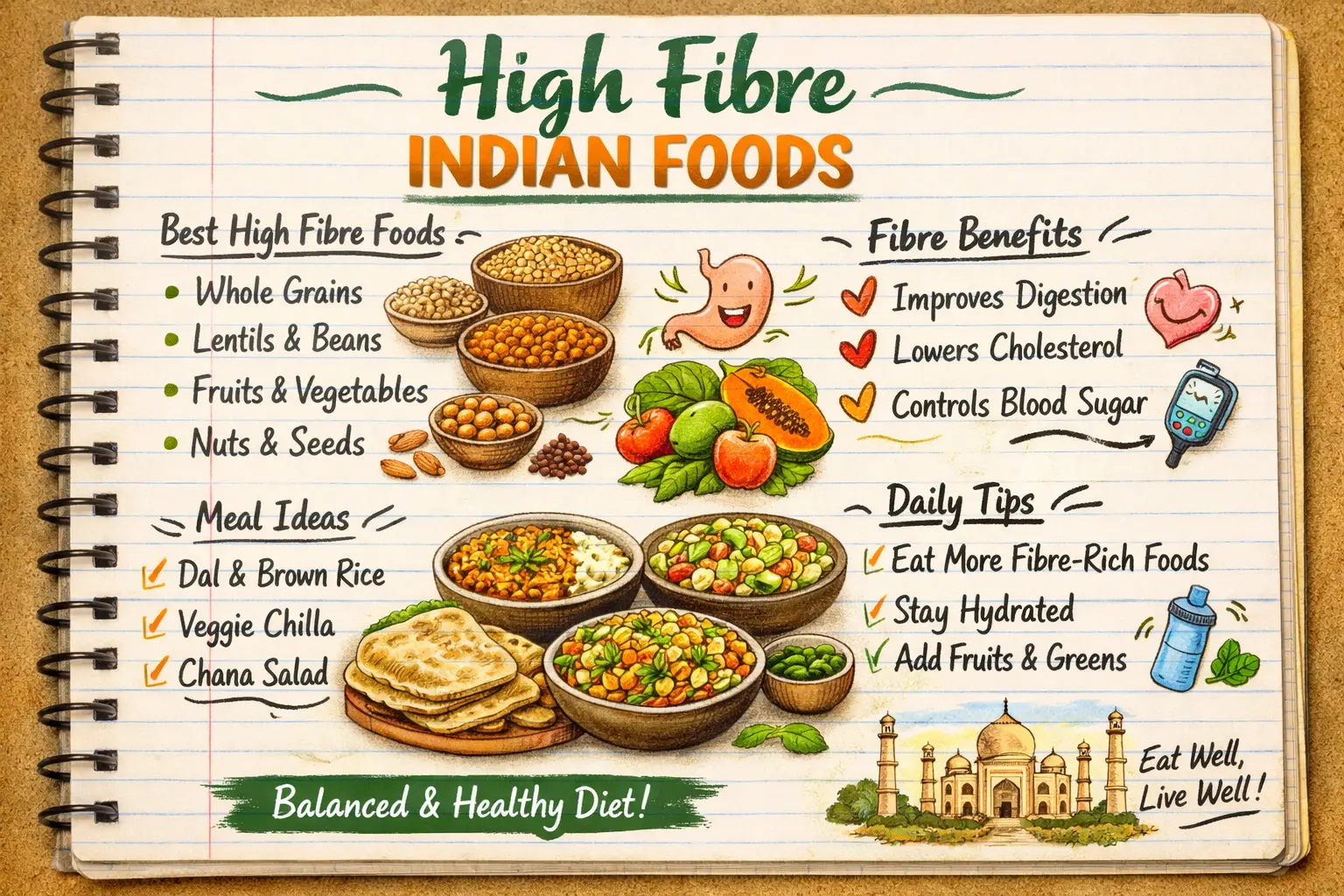
Following are the benefits of a high-fibre diet for your body:
- Better digestion and reduced chances of constipation
- Effective weight management because of satiety
- Regulates sugar level
- Improves heart health by reducing cholesterol
- Helpful in improving gut bacteria
Therefore, including healthy fibre sources in your meals instead of supplements is highly recommended by doctors and nutritionists.
Soluble & Insoluble Fiber
For a healthy lifestyle, you require both kinds:
Sources of Soluble Fiber:
- Oats
- Apples
- Citrus Fruits
- Legumes
- Sources of Insoluble Fiber:
- Whole Wheat
- Vegetables
- Nuts
- Seeds
It is the balance between both that is termed a healthy dietary fiber-rich diet in India.
Fibre Rebuild Plan: 7-Day Gut Reset Cycle (New Technique)
Your digestive system cannot handle a rapid rise in fibres, and that is where the following simple technique comes in handy:
Days 1-2:
Foods such as soups, fruits, and boiled vegetables.
Days 3-4:
Intake of dals, oats, and tender grains.
Days 5-7:
Complete intake of all fibre-rich foods, including salads, legumes, millets, etc.
Make sure to drink plenty of water during this whole process.
It is a gradual approach that allows your body to get adjusted to fibre-rich indian foods.
Common Errors When Consuming Fibres
Healthy foods can make people ill if not consumed properly:
- Rapid consumption of fibre-rich foods
- Inadequate intake of water
- Consumption of a salad-only diet
- Imbalance between insoluble and soluble fibres
Good Indian Diet with Fibres Improves Gradually!
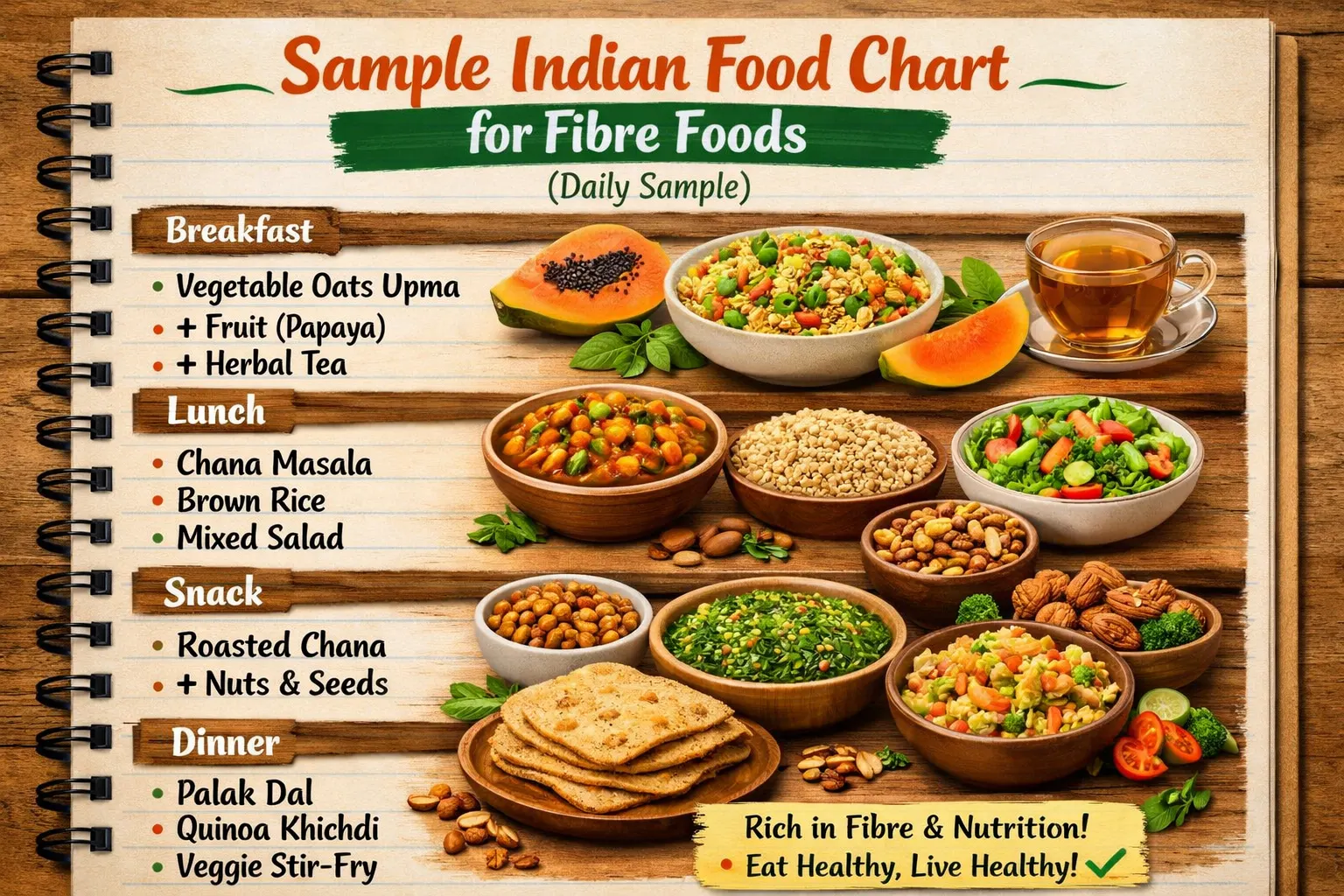
Sample Indian Food Chart for Fibre Foods (Daily Sample)
Breakfast:
- Oats / sprouts with fruits
- Lunch:
- Dal + roti + sabzi + salads + rice (small amount)
Evening Snacks:
- Fruits/roasted chana
Dinner:
- Vegetable + roti or khichdi
These are practical and realistic ways to incorporate top fibre foods in your diet without complicating it too much.
Best Fiber Rich Foods India Shopping List (Week)
To simplify things:
- Whole wheat flour
- Oats
- Millets – bajra, jowar
- Dal – moong, masoor, chana
- Fresh veggies
- Fruits – guava, apple, banana
- Fiber rich seeds – flax, chia
Myths about Fibre Debunked
Myth #1: Fibre is used only for digestive issues
Fact: It improves heart condition and aids weight loss
Myth #2: Vegetables contain all the fibre we need
Fact: Fruits, cereals, and legumes contain much fibre too
Myth #3: High fibre = no carbohydrates
Fact: Fibre is just another type of carbohydrate
Knowing the difference will help you pick more effective high fibre indian foods regularly.
Conclusion: How to Build a Sustainable Fibre Diet
Good digestion doesn’t require one superfood; all that you need is regularity. Indian recipes are filled with ingredients that will help you develop an excellent fibre-rich regimen.
All you need to do is eat more fresh fruits, vegetables, pulses, and whole grains.
It is important not to complicate things. A healthy indian diet for fibre that uses natural foods remains one of the best health decisions you’ll make in 2026.