Do you feel pain in your lower back that travels down your buttocks and ends in your leg? Or does one side of your buttock hurt a lot and get worse when you sit for long periods of time? So many people have these problems but think that all leg pain is due to a slipped disk or sciatica. However, there is a big difference between these two situations. Sciatica is a pattern of nerve pain. Other conditions like a slipped disk or piriformis syndrome can cause similar symptoms. Studies in medicine show that the most common cause of sciatica is a herniated disk in the lower spine, but there are other problems not involving the spine that can cause similar symptoms, such as piriformis syndrome.

What is sciatica?
Sciatic pain is not a disease in itself. This word is used to describe pain that runs along the sciatic nerve, usually because of irritation or squishing of the nerve roots or the nerve itself.
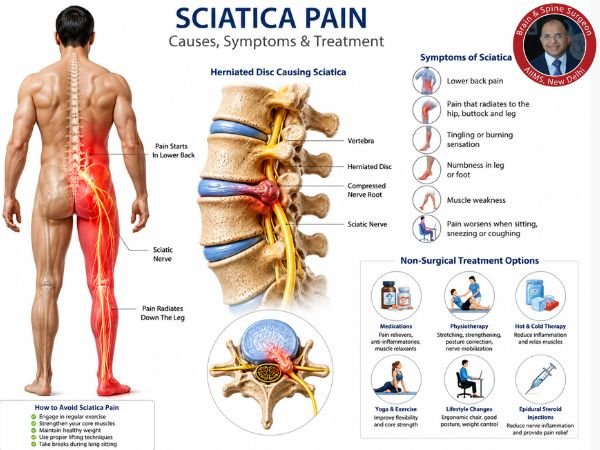
The sciatic nerve runs from nerve roots in the lower back, through the buttocks, and down the back of each leg. The nerve is the longest and the biggest in the body.
When this nerve is irritated, you may feel:
- Pain that shoots or stings from the lower back or buttocks down the leg.
- Pain or burning in the back or side of the leg.
- Tingling sensations or pins and needles.
- Numbness in feet or legs.
- If the problem is bad enough, you might develop muscle weakness.
Sciatica usually happens on one side of the body. The pain may be below the knee, or it may radiate down to the foot or toes. Others say the pain comes in flares when they cough, sneeze or bend over. Most of the time it’s a slipped disk. But spinal stenosis and other conditions can cause the nerve to hurt. Dr. Deepak Agrawal discusses sciatica, piriformis syndrome, and slipped disks. He says doctors can find the source of pain by figuring out where it starts and how it travels.
What Is Piriformis Syndrome?
Deep inside the buttock is a small, flat muscle called the piriformis. It connects the lower spine to the upper thigh bone. Helps hips move and rotate. It is a muscle that the sciatic nerve usually goes under. If irritated, swollen, or tight, the piriformis muscle can compress the nearby sciatic nerve. This can cause pain that is very similar to sciatica. This is known as piriformis syndrome.
The most common symptoms include:
- Sharp pain in one buttock.
- Pain in the hip, which may radiate down the back of the thigh.
- Burning or tingling.
- Pain from sitting too long.
- Pain when climbing stairs, walking, or running.
- Tenderness in the buttock region.
Sitting for long periods of time, muscle spasms, overuse, repetitive motions, and injuries to the hip or buttock can cause the problem. The only important thing to note is that piriformis syndrome is difficult to diagnose. There is no single test to show all cases. Your doctors will evaluate your symptoms, test the range of motion in your hip and rule out other possible causes of nerve pain.
What Is a Slipped Disc?
A slipped disk, also called a herniated or prolapsed disk, is a condition that affects the soft, cushioning disks found between the bones of the spine.
The disks contain a soft inner part and a tougher outer layer. They help to absorb pressure. They allow the spine movement.
Sometimes the material inside pushes through a weak or damaged spot on the outside. This is known as a herniated disk.
If the bulging or herniated material irritates or presses on a nearby nerve root, it may cause pain that radiates from the lower back into the buttock and leg. This can cause sciatica.
Symptoms are common and may include:
- Low back pain.
- Pain that travels down the buttock or leg
- Tingling or numbness in the thigh, calf, or foot
- Difficulty bending or straightening the back.
- Weakness in the muscles of the affected leg.
- Pain that worsens with certain movements, coughing, or sneezing.
But not all slipped disks are painful. Some people have disk changes on an MRI but have no symptoms. That’s why doctors don’t just rely on an MRI report to figure out what’s causing leg pain. The scan should be consistent with the patient’s symptoms and physical exam.
Sciatica vs Piriformis Syndrome vs Slipped Disc: Key Differences
Although these conditions can cause similar symptoms, their underlying causes are different.
| Feature | Sciatica | Piriformis Syndrome | Slipped Disc |
|---|---|---|---|
| What is it? | A pattern of nerve-related pain | Irritation or compression involving the piriformis muscle and sciatic nerve | A spinal disc problem |
| Main affected area | Sciatic nerve pathway | Deep buttock region | Usually the lower spine |
| Where does pain start? | Lower back or buttock | Usually the buttock or hip | Often the lower back |
| Leg pain | Common | Can travel down the leg | Common if a nerve root is affected |
| Numbness or tingling | Possible | Possible | Possible |
| Muscle weakness | Can occur | Less typical | Can occur if nerve compression is significant |
| Pain while sitting | Possible | Often noticeable | Possible |
| Pain while coughing or sneezing | Can occur | Less characteristic | Can occur when nerve roots are irritated |
How to determine the cause of your leg pain?
The location of the pain and the activities that exacerbate it can be helpful clues. But there is no one symptom to prove the diagnosis.
Where does it hurt?
If the pain begins in the lower back and travels through the buttock to the calf or foot, doctors may look for sciatica caused by irritation of a spinal nerve root. Main pain is deep in the buttock and worsened by sitting, then piriformis syndrome should be considered. If you have lower back pain with leg pain that shoots down your leg, or numbness or weakness, a slipped disk could be one cause.
Does it hurt more when you sit down?
Sitting for long periods can worsen all three conditions, but the reason may be different. Piriformis syndrome can cause more pain in the area around the piriformis muscle from pressure around the buttock. If you have sciatica due to a spinal problem, some sitting positions can make the nerve more aggravated. If you sit for long periods of time or bend over, a slipped disk can also cause pain. So just sitting alone and hurting won’t tell you what you’ve got.
Which is more painful, coughing or sneezing?
Coughing or sneezing can increase the pain from irritated spinal nerve roots. This can happen with sciatica from a herniated disk. But this symptom alone does not mean a slipped disk. Doctors check it with other symptoms and examination findings.
Are you numb or weak?
Tingling, numbness, and weakness in muscles may indicate that the nerves are involved. For example, someone with severe nerve compression might struggle to lift the front of the foot. This is sometimes called foot drop. Any new or worsening weakness should be evaluated promptly by a healthcare professional.
What treatment options are there?
The treatment will be based on the underlying cause of the condition, the degree of severity of the symptoms, and the presence of significant compression of the nerves.
Treatment of Sciatica
The majority of people with sciatica improve with non-surgical treatment. Doctors might suggest:
- Pain-relief medicines for this purpose.
- Physiotherapy
- Gentle movement and exercises
- Avoid prolonged bed rest.
- Slowly getting back to normal activities.
If the pain is still severe or does not improve, specialist treatment may include selected injections or surgery, depending on the underlying cause.
Treatment of Piriformis Syndrome
Treatment usually consists of reducing irritation around the piriformis muscle and improving hip motion. Options include:
- Physical therapy.
- Stretching and strengthening exercises, guided
- Changing pain-provoking activities
- Short term medications when needed.
- Injections of choice in chronic cases.
Surgery is not a common treatment and is usually only offered to very carefully selected patients whose condition has not been helped by other treatments.
Treatment of a slipped disk
Most people with a slipped disk do not need surgery right away. Treatment may include medication, physiotherapy and supervised exercise. Doctors may also suggest changes in daily activities while the symptoms improve. However, if a herniated disk leads to significant nerve compression, progressive weakness, or ongoing disabling pain despite appropriate treatment, surgery might be considered. Procedures such as lumbar discectomy aim to remove the disk material that is compressing the affected nerve. The decision is based on the patient’s symptoms, physical exam, MRI findings, and overall health.
When to Call a Doctor Immediately?
Leg pain should not always be considered a minor muscle problem, particularly when there are changes in nerve function.
If you have any of the following, get emergency medical help right away:
- New numbness in the genital, inner thigh, or buttocks area.
- Difficulty starting to urinate or inability to urinate.
- Loss of bladder or bowel control.
- Both legs are very weak or weakening.
- Sudden severe difficulty walking
If leg pain keeps coming back, or gets worse, or interferes with normal movement, or doesn’t get better after a while, see a doctor.
Final Thoughts: Treat the Cause of the Pain, Not the Pain Itself
Sciatica, piriformis syndrome, and slipped disk can all cause leg pain that begins in the lower back or buttock. But the underlying cause is not the same, and their treatment may be different too. Sciatica is a pattern of nerve-related pain. Piriformis syndrome is irritation around the sciatic nerve in the buttock. A slipped disk is a spinal condition that can compress a nerve root. Where you feel the pain can be misleading in terms of diagnosing the condition, as there is a lot of overlap in the symptoms. If you have regular leg pain, numbness, tingling, or weakness, see a qualified doctor or spine specialist. The cause can be found with a proper examination and the right investigations, and this can help direct appropriate treatment. Dr. Deepak Agrawal explains that understanding the difference between these conditions is an important step toward choosing the right treatment instead of just managing the pain temporarily.