Grade 1 fatty liver occurs due to an increase in the amount of fat in the liver. It may be an early finding; however, the grade cannot provide information on whether there is inflammation or fibrosis of the liver. Healthy eating habits like a grade 1 fatty liver diet, exercise, controlled weight loss, and improved sugar and cholesterol levels can aid in lowering the levels of fat in the liver. No particular drink or home remedy will cleanse your liver instantly.
Important Points
- Grade 1 fatty liver is usually an early finding.
- Gradual weight loss helps lower the amount of fat in the liver.
- Vegetables, whole grains, dal, and healthy fats are recommended.
- One must limit intake of sugary beverages, fries, and too many refined carbohydrates.
- Home remedies must not be used as a substitute for medical treatment.
What Does Grade 1 Fatty Liver Mean?
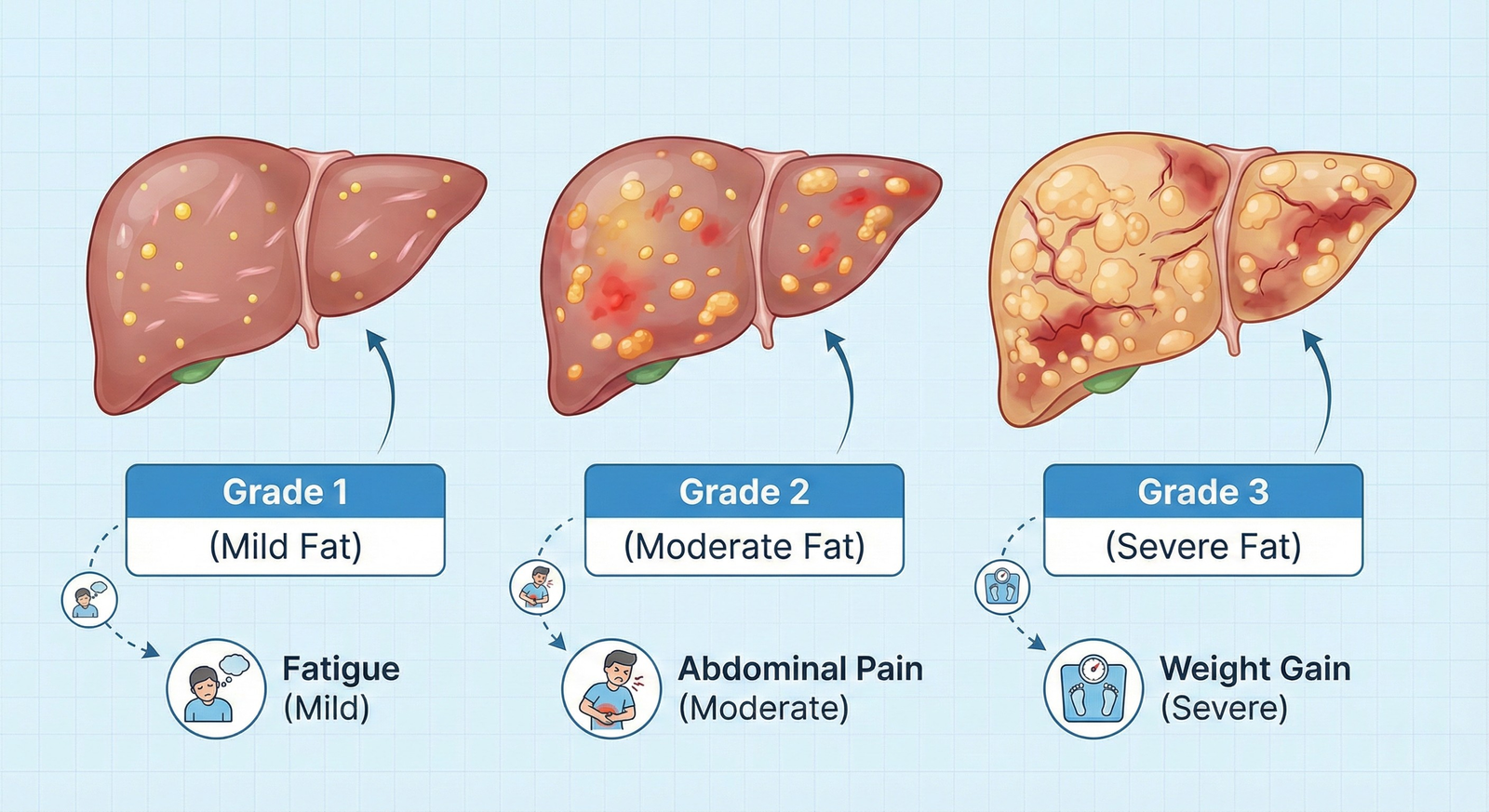
Fatty liver means there is more fat stored in the liver than there should be.
When an ultrasound says Grade 1 fatty liver, it usually means a mild amount of fat has been seen in the liver. But there is one thing people often misunderstand. The grade does not tell the full story about liver health.
For example, an ultrasound finding cannot by itself tell you whether there is liver inflammation or scarring. Your doctor may look at your symptoms, blood tests, medical history and other tests to understand the bigger picture.
You may also hear the newer term MASLD, which stands for metabolic dysfunction-associated steatotic liver disease. It is the newer name used for what was earlier called NAFLD in many cases.
Can Grade 1 Fatty Liver Be Reversed?
In many people, liver fat can be reduced with regular lifestyle changes. This is especially true when extra weight, unhealthy eating or metabolic problems are playing a role. According to NIDDK, losing at least 3% to 5% of body weight can reduce fat in the liver.
But this does not mean you should stop eating or follow a very strict crash diet. Rapid weight loss and poor nutrition can actually make liver disease worse.
A better fatty liver reversal plan includes:
- Eating balanced meals
- Controlling portion sizes
- Being physically active
- Losing weight slowly if needed
- Cutting down on sugary drinks
- Limiting alcohol
- Managing diabetes and cholesterol
Exercise can also help the liver even when it does not lead to weight loss.
What Should Your Plate Look Like With Fatty Liver?
Instead of thinking about every food as simply “good” or “bad”, use an easy plate method.
Half your plate: Vegetables and salad
Think spinach, beans, cauliflower, broccoli, cucumber, carrots, and other vegetables.
One-fourth: Protein
You can choose dal, beans, paneer, tofu, fish, chicken or eggs.
One-fourth: High-fibre carbohydrates
Try whole-wheat roti, oats, quinoa, millets or a smaller portion of brown rice.
Small amount: Healthy fats
Nuts, seeds and a moderate amount of healthier cooking oils can fit into your meals. This type of eating gives you fibre, protein and other nutrients while helping you cut down on excess sugar, refined carbohydrates and unhealthy fats.
Best Foods for Grade 1 Fatty Liver
1. Green Vegetables
Spinach, beans, broccoli, cauliflower and other vegetables are easy foods to add to your meals. They provide fibre and nutrients without adding a lot of calories.
2. Whole Fruits
Apples, oranges, guava, berries and other whole fruits can be part of your diet. Whole fruit is a better choice than fruit juice because juice can give you a large amount of sugar without the same amount of fibre.
3. Oats
Oats are a simple breakfast option. They provide fibre and can be combined with vegetables, curd, nuts or seeds.
4. Dal and Lentils
Dal, rajma, chana and other pulses provide protein and fibre. They can easily be included in an Indian meal.
5. Nuts and Seeds
Almonds, walnuts, chia seeds and flaxseeds provide healthier fats and other nutrients. Keep portions moderate because nuts and seeds are also high in calories.
6. Fish
Fish gives you protein. Fatty fish also provides omega-3 fats, which are a healthier type of fat.
7. Low-Fat Curd or Yogurt
Plain curd or low-fat yogurt can be a useful protein-rich food. Avoid adding lots of sugar.
8. Whole Grains
Oats, quinoa, millets, and whole-grain options can be chosen more often than highly refined grains.
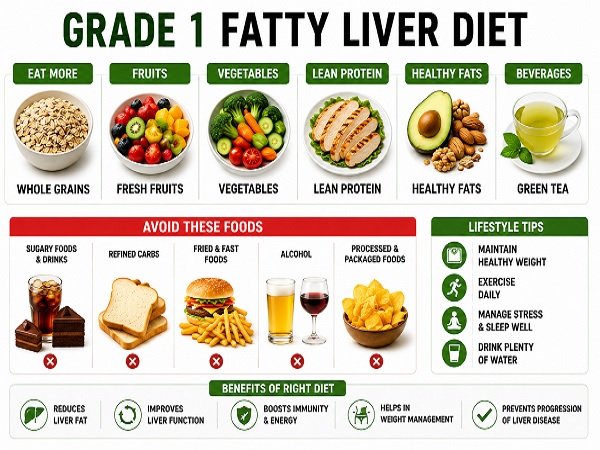
Overall, a grade 1 fatty liver diet should focus more on vegetables, fruits, whole grains, legumes, fish and healthier unsaturated fats.
Foods to Avoid or Strictly Limit
Not every food needs to be completely banned. But some foods should be strongly limited because they can make it harder to manage your weight and metabolic health.
Sugary Drinks
- Cola and soft drinks
- Sweetened juices
- Energy drinks
- Sweetened tea or coffee
Foods With Added Sugar
- Mithai
- Cakes
- Biscuits
- Desserts
Refined Carbohydrates
- Maida-based foods
- White bread
- Very large portions of white rice
Deep-Fried Foods
- Samosas
- Poori
- Bhatura
- Chips
- Other heavily fried snacks
You should also limit highly processed foods and foods high in saturated fat.
Alcohol needs special attention. If you have fatty liver, it is better to discuss your alcohol intake with your doctor. NIDDK recommends minimizing alcohol because it can add to liver damage.
Indian Diet for Fatty Liver
You do not need to eat fancy or expensive foods to manage fatty liver. A simple home-cooked indian diet for fatty liver can work well.
| Instead of | Try |
|---|---|
| Poori | Roti + vegetable sabzi |
| Bhatura | Roti + dal |
| Sweetened chai | Unsweetened tea |
| Mithai | Whole fruit |
| Fried pakora | Roasted chana |
| Large rice portion | Smaller rice portion + dal + vegetables |
| Creamy curry | Dal or vegetable-based curry |
| Sugary cold drink | Water or an unsweetened drink |
The main changes are often about portion size, cooking method and how often you eat fried or sugary foods. You do not have to stop eating Indian food.
One-Day Grade 1 Fatty Liver Diet Chart
| Time | Example |
|---|---|
| Morning | Water + a few nuts |
| Breakfast | Vegetable oats or vegetable poha + plain curd |
| Mid-morning | One whole fruit |
| Lunch | 2 small whole-wheat rotis + dal + sabzi + salad |
| Evening | Roasted chana + unsweetened tea |
| Dinner | Paneer/tofu/fish/chicken + vegetables + small whole-grain portion |
| If hungry later | Plain curd or another light option |
This grade 1 fatty liver diet chart is only a general example. Your actual food portions may need to change based on your age, body size, activity, diabetes, medicines and other health conditions.
Natural Home Remedies: What Helps and What Doesn’t
That is why you have to be cautious here. There are various claims made online about drinks or foods that claim to help in the “detoxification” of the liver.
Some helpful practices indeed include:
- Walking regularly
- Exercises
- Healthy diet
- Slow weight loss if necessary
- Proper sleep
- No excessive alcohol
- Managing blood sugar and cholesterol levels
However, there is nothing to make you believe that drinking lemon juice will cleanse your liver and nothing will help you to lose your liver fat except vinegar.
Moreover, “detox juices” or “herbal drinks” cannot be a solution as some herbs may even worsen your liver condition. According to NIDDK, it is recommended to consult a doctor before taking any supplement or herbal products for the treatment of liver diseases.
Therefore, a more effective approach to fatty liver disease reversal should focus on your daily activities.
Exercise and Lifestyle Changes
Diet is only one part of managing fatty liver.
Try activities that you can continue regularly, such as:
- Brisk walking
- Cycling
- Swimming
- Dancing
- Strength training
- Other activities you enjoy
It is also useful to reduce long periods of sitting and work on getting enough sleep.
For general health, adults are commonly advised to aim for around 150 minutes of moderate physical activity each week, while also doing muscle-strengthening activities on at least two days. Start slowly if you are not active now.
How Long Does It Take to Reverse Grade 1 Fatty Liver?
There is no fixed answer like “7 days” or “30 days.”
The time can be different for every person. It depends on things like:
- How much liver fat is present
- Body weight
- Diet
- Exercise
- Blood sugar
- Cholesterol and triglycerides
- Alcohol intake
- Other health conditions
Do not judge your progress only by how you feel. Your doctor can decide if follow-up blood tests or imaging are needed.
When Should You See a Doctor?
Talk to a doctor if you have fatty liver along with:
- Diabetes
- Obesity
- High cholesterol or triglycerides
- Repeatedly abnormal liver tests
- Heavy alcohol use
- Unexplained weight loss
- Yellow skin or eyes
- Swelling in the abdomen or legs
- Severe or ongoing abdominal symptoms
Also remember that Grade 1 on an ultrasound does not automatically mean your liver has no scarring. Your doctor may need to look at other risk factors and tests to understand your liver health.
Conclusion
Grade 1 fatty liver is not a reason to panic, but it is a good reason to take your health seriously. A balanced grade 1 fatty liver diet, regular exercise and gradual weight management can help reduce liver fat, especially when excess weight or metabolic problems are involved. Avoid crash diets and random detox remedies. A sensible fatty liver reversal plan should focus on habits that you can follow for a long time, not quick fixes.