A heart attack happens when blood flow to a portion of the heart muscle is blocked. This is a serious medical problem that needs urgent medical management. But heart attacks don’t always start with intense chest pain, as many people imagine. Some people may sweat a lot, feel very weary, feel sick to their stomach or have pain in their arm, back, neck or jaw, or have trouble breathing.
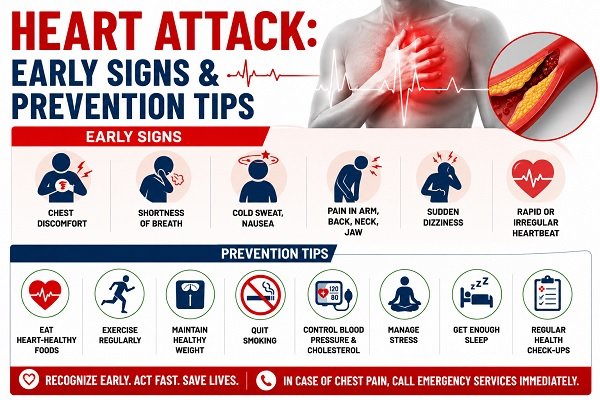
Knowing the early signs of a heart attack can help you receive care quickly. Other than that, it’s crucial to learn what the risk factors are and make some basic lifestyle modifications to keep your heart healthy.
Five Things to Know
- Chest pain or discomfort is one of the most common warning signs of a heart attack.
- The pain might also be experienced in the arm, shoulder, back, neck, or jaw.
- At other times, the chief symptoms include shortness of breath, sweating, nausea, or excessive weariness.
- Risk factors are high blood pressure, smoking, high cholesterol, and diabetes.
- If you think you are having a heart attack, get medical help right away.
What Is a Heart Attack?
The heart needs an adequate supply of blood and oxygen to accomplish its work. The coronary arteries supply blood to the heart. Sometimes plaque or fatty deposits accumulate in the walls of coronary arteries. Over time, a blood clot may form and block the flow of blood through the artery. When this happens, there will be a shortage of oxygen in parts of the heart, which will damage the cardiac muscles, causing a heart attack.

It’s crucial to recognize the difference between a heart attack and a cardiac arrest. A heart attack is when blood flow to part of the heart is restricted. A cardiac arrest is when the heart abruptly stops pumping blood.
Warning Signs of a Heart Attack You Should Never Ignore
First of all, it is important to recognize that not all heart attack symptoms are the same for all people. The most prevalent symptom is chest pain. It is a sensation of pressure, squeezing, fullness, or pain in the center or left side of the chest. Sometimes folks say it feels like there is a heavy weight on the chest.
The pain may continue for a few minutes, or it may come and go. It can even occur while resting. Pain or discomfort in different areas of the body can radiate to one or both arms, shoulder, back, neck, jaw, or upper stomach. Here are some of the most crucial Heart Attack Early Signs to know.
Other Indications of a Heart Attack
But there’s another indicator other than chest pain. The patient may have acute respiratory difficulties. They may feel they just can’t get enough breath, even if they haven’t been working hard. You may feel chest pain, with or without shortness of breath. Other symptoms may include cold sweats, nausea, vomiting, dizziness and sudden weakness. Sometimes a person can be really tired suddenly without any explanation. This makes it harder to diagnose a heart attack because many of the symptoms don’t match the “typical” heart attack you see in movies.
Heart Attack Symptoms in Hindi (हार्ट अटैक के लक्षण)
अगर आप हार्ट अटैक के लक्षण हिंदी में खोज रहे हैं तो यहां कुछ सामान्य चेतावनी संकेत दिए गए हैं:
- सीने में दबाव या दर्द: Chest may feel heavy, tight, or painful.
- सांस लेने में परेशानी: You may suddenly feel breathless or have difficulty breathing.
- ठंडा पसीना: You may suddenly start sweating even without heavy exercise or heat.
- हाथ या कंधे में दर्द: Pain or discomfort may move towards one or both arms or shoulders.
- जबड़े, गर्दन या पीठ में दर्द: Some people can feel discomfort in these areas.
- चक्कर या कमजोरी: You may suddenly feel weak, dizzy, or like you may faint.
- मतली या उल्टी: Some people can feel sick or may vomit.
If you’re having a number of them at once, particularly with chest discomfort, don’t wait around at home to see if they go away.
What Causes Chest Pain?
Not every chest ache is a heart attack. There are numerous probable causes of chest pain. For example, muscle discomfort may occur following exercise or after lifting a big object. A burning sensation in the chest can also be caused by acidity and acid reflux. There are moments when you feel anxious and stressed and your chest feels tight and your heart races.
The reasons of chest pain can therefore be confusing at times. However, if the pain is new, intense, or unusual, don’t try to diagnose the source yourself. You can potentially suffer a heart attack and feel like you have acid or indigestion. Chest pain with shortness of breath, cold sweats, nausea, dizziness, or pain radiating to the arm, back, neck, or jaw requires rapid medical attention.
What to Do If You Think Someone Is Having a Heart Attack?
The first thing to do is to get emergency medical treatment. Don’t tell the victim to just sit back and let the anguish go away. If emergency medical transport is available, do not drive yourself to the hospital. Place the victim in a comfortable sitting or lying position. Stay with the person until help arrives. If the person is unconscious and not breathing normally, you may need to do CPR immediately. If you have an automated external defibrillator, use it as directed.
What you do in an emergency depends on the situation and it is crucial to receive competent emergency help as soon as you can.
Who’s Most Likely to Have a Heart Attack?
Heart attacks can happen to anyone, but some things can increase your risk. An important risk factor is high blood pressure. Other risk factors include high cholesterol, diabetes, smoking, obesity, and inactivity. Age and family history could also be influences.
The risk is also increased by unhealthy food over many years, particularly when it is high in saturated fat, trans fat, salt, and added sugar. Stress, lack of sleep, and too much alcohol can also affect the health of the heart. The good news is that many risk factors for heart disease can be improved with lifestyle changes and proper medical care.
How to Avoid a Heart Attack?
You can’t control all the risk factors for a heart attack. For example, you can’t change your age or your background. But there is a lot more you can do. First, load up on veggies, fruits, whole grains, legumes, nuts, and other nourishing foods. Try to cut down on foods with a lot of salt, added sugar, and harmful fats. It is also vital to exercise regularly. If you’re not really active at all right now, walking each day is a great start.
“If you smoke, quitting is one of the best things you can do for your heart.”
You should also have your blood pressure, blood sugar, and cholesterol checked when your doctor recommends it. If you have high blood pressure, diabetes, or high cholesterol, take your medicines as directed.
Does Walking Protect Your Heart?
Yes, exercise is good for the health of your heart. You don’t need to begin by performing difficult exercises. Be active by walking, cycling, swimming, or other pleasurable activities. Most adults need around 150 minutes of moderate physical activity a week, but the right amount varies for everyone. If you have heart disease or another medical condition, ask your doctor what type and how much exercise is safe for you.
The most important thing is not to sit all day, but to attempt to include some action in your daily routine.
Eat Your Way to a Healthier Heart
The food you choose to eat each day might pile up over time. Try to eat home-cooked meals instead of fried and highly processed items everyday. A heart-friendly diet contains vegetables, fruits, dal, beans, healthy grains, nuts, and seeds. You can also include omega-3 foods for heart health to further improve cardiovascular function.
You can choose to receive your protein from healthy sources like fish, beans, dal, tofu, or lean meat depending on your diet. Try to limit your salt intake (especially if you have high blood pressure). You don’t have to completely give up your favorite foods. The key aim is to get nutritious meals in as a bigger part of your normal diet.
Don’t Miss High Blood Pressure
High blood pressure is sometimes called a “silent” disease since many people may not feel anything out of the ordinary when their blood pressure is high. Over time, high blood pressure can damage your blood vessels and raise your risk of heart disease and stroke. That’s why it’s important to have your blood pressure checked, even if you feel okay. If your doctor prescribed blood pressure medicine, don’t stop taking it on your own just because you’re feeling better. Following daily habits for heart health can help manage these risks effectively.
What About Stress?
Stress is a fact of life, but persistent stress can take a toll on your overall health. Stress can promote poor sleep, unhealthy eating choices, smoking, or stopping exercise. These habits could affect heart health indirectly. Try some healthy habits to reduce stress and anxiety, such as taking a walk, deep breathing, yoga, talking to a trusted person, or taking a break from your phone. You don’t have to live a perfect, stress-free life. The small things help.
Do Heart Attacks Happen to Young People?
Yes, heart attacks occur more in older people but can occur in young ones too. You can learn more about heart attacks under 40 and why they are rising. Risk factors that may increase your risk include smoking, diabetes, high blood pressure, high cholesterol, obesity, family history, and several other medical conditions. That’s why it’s a bad idea to use age alone to decide whether chest pain is serious.
Young people should still seek emergency medical attention if they suddenly develop chest tightness, shortness of breath, sweating, or other concerning symptoms. Check out the specific heart attack symptoms in young individuals to stay informed.
Simple Daily Things to Do to Prevent Heart Attacks
You don’t have to transform your whole life in a day. Begin with little steps. Take regular walks, eat more fruits and vegetables, drink enough water, and get enough sleep. Try to cut down on smoking, drinking, and highly processed food. And also know your numbers. Blood pressure, cholesterol, and blood sugar are important indicators of your heart risk. Adopting a heart healthy lifestyle can significantly lower long-term risk.
Talk to your doctor if you have a family history of heart disease. Your doctor may advise you to get checkups more often or earlier, depending on your situation. Small habits, if continued for many years, can make a big difference.
Cardiologist and Heart Attack
Cardiologist: A doctor who specializes in the heart and blood vessels. A cardiologist can evaluate your symptoms, do tests, and suggest therapy if you have a heart disease.
Are you interested in medicine and want to know how to become a cardiologist? The usual method is to go through school doing the right science courses, and then medical school and specific training in cardiology. The actual course of education varies from country to country and from one medical education system to another.
A cardiologist treats heart disease and abnormal heart rhythms, high blood pressure, and other problems of the heart and blood vessels. Building healthy heart habits is essential alongside expert medical care. It’s a long professional path, but it might be a terrific choice for students who like biology, science, and helping people.
When Should You See a Doctor?
If you have sudden or severe chest pain, don’t wait for your next scheduled appointment. Seek emergency medical care if you have chest pressure or discomfort that lasts for several minutes, or that goes away and comes back, especially if it happens with shortness of breath, cold sweating, nausea, dizziness, or pain spreading to your arm, back, neck, or jaw. Better to get it checked and find out the pain was something less severe than to ignore a heart attack. If you’re unsure, review the warning symptoms of silent heart attack to understand non-obvious signs.
The Bottom Line
You don’t get a warning of heart attacks, but if you recognize the signs, you can act right away. Key signs to watch out for are chest tightness, shortness of breath, cold sweats, nausea, dizziness, and pain that radiates to the arm, back, neck, or jaw. You can also reduce your risk by being active, eating a healthy diet, not smoking and maintaining a normal weight and addressing problems such as high blood pressure, diabetes, and high cholesterol. Learning heart disease prevention strategies is key to a longer, healthier life.
Most importantly, don’t try to treat serious chest pain at home. If you or someone near you is having a heart attack, seek emergency medical services right away.
Frequently Asked Questions
What are the warning signs of a heart attack?
Common early signs include chest pressure or tightness, shortness of breath, sweating, nausea, dizziness, and pain or discomfort that may extend to the arm, back, neck, or jaw. Symptoms can be different from one person to another.
Heart Attack ke Lakshan in Hindi Kya Hote Hain?
Common Heart Attack Symptoms in Hindi include chest pain or pressure, difficulty in breathing, cold sweat, pain in arm or shoulder, pain in jaw or neck, dizziness, weakness, and nausea.
Can acid cause a heart attack?
No, but acidity and chest pain linked to heart problems can feel similar. Don’t ignore new or unusual chest pain as indigestion, especially if accompanied by shortness of breath, sweating, nausea, dizziness, or pain radiating to other areas.
What causes chest pain?
Several things might cause chest discomfort, including pulled muscles, acid reflux, anxiety, or heart problems. Any new severe or unexplained chest pain should be evaluated promptly. Learn more about how to differentiate between trapped gas in upper chest and heart-related issues.
How do I reduce my risk of having a heart attack?
Regular activity, not smoking, a well-balanced diet, maintaining a healthy weight, and controlling blood pressure, cholesterol, and diabetes can reduce the risk of heart disease.
How to become a Cardiologist?
To become a cardiologist, students must first complete medical school and then undergo a cardiology residency and fellowship. The specific pathway depends on the medical education system in that country.