COPD and Asthma Symptoms and Care Overview
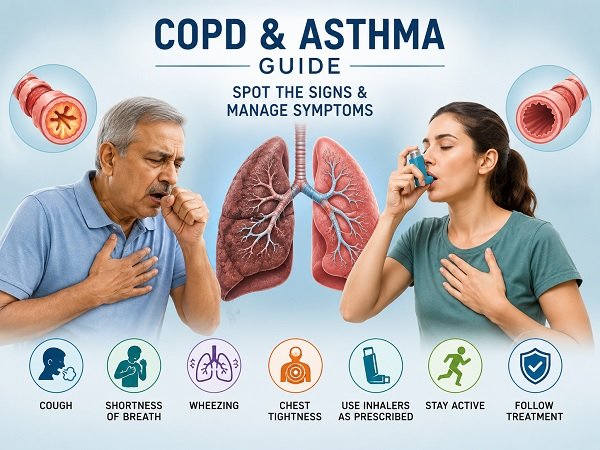
Having trouble breathing can be frightening, especially if you don’t know what is causing it. There are two common lung disorders: COPD and asthma. Symptoms include coughing, wheezing, chest tightness, and shortness of breath. But these are not the same problems. Asthma symptoms can come and go. They can be caused by dust, smoke, cold air, or exercise. COPD usually develops slowly. It is often caused by smoking or exposure to harmful chemicals over a lengthy period of time. Knowing the signs and getting the right treatment can help you manage these conditions better.
Asthma vs. COPD: What’s the Difference?
COPD stands for chronic obstructive pulmonary disease. It’s a chronic lung illness that limits the movement of air in and out of the lungs. Symptoms usually develop slowly, and you may not notice them at first. Asthma is a chronic condition, yet it hits airways in different ways. The airways may become swollen and narrow, making it difficult to breathe. Some people experience intermittent asthma symptoms. The symptoms recur when a person is exposed to a trigger.
| COPD | Asthma |
|---|---|
| Usually develops slowly | Symptoms can come and go |
| Smoking is a major risk factor | Allergies and other triggers are common |
| Cough and mucus are common | Wheezing and chest tightness are common |
| Breathlessness may slowly get worse | Breathing may become difficult during an attack |
| Needs long-term management | Can often be controlled with proper treatment |
Both are manageable chronic conditions, but they are treated differently. This is why it is important not to assume that every breathing problem is asthma or COPD.
What Is Chronic Obstructive Pulmonary Disease (COPD)?
COPD is a disease that damages or blocks the normal flow of air through the lungs. It often includes diseases such as emphysema and chronic bronchitis. A person with COPD may find everyday tasks become more difficult. For example, people may become breathless when they climb stairs, walk long distances, or do housework. A cough may sometimes linger for months, or occur again and again.
Smoking is one of the major causes of COPD. But it can also happen to people who do not smoke. Long-term exposure to air pollution, dust, smoke, and chemical fumes can damage lungs. Sometimes a person’s genes or other lung disorders also increase the risk.
Signs & Symptoms of COPD
COPD symptoms may develop slowly and can be easy to miss. Some may think that breathlessness is just a result of growing older or not exercising enough. But if these problems keep coming back, the doctor should check them out.
Typical symptoms are:
- A stubborn cough
- Coughing up mucus or phlegm
- Breathing difficulty
- Puffing / gasping for air
- Chest tightness
- Fatigue on little effort
- Becoming breathless with everyday activity
- Persistent chest infections
Sometimes COPD can flare up. This means your symptoms suddenly grow worse. This is known as a flare-up or an exacerbation. That’s when your coughing and trouble breathing can get worse than usual.
What Is Asthma?
Asthma is a condition of the airways that carry air in and out of your lungs. Managing asthma care in polluted air becomes essential when a person with asthma encounters a trigger and their airways become irritated and restricted, making it more difficult for air to get through.
Asthma can start in childhood, but it can also develop in adulthood. Some people have symptoms just at certain times; others have more constant issues. They can be fine for days or weeks and then suddenly find themselves coughing, wheezing, or experiencing pressure in the chest.
Common causes of asthma include dust, pollen, smoke, strong odors, cold air, exercise, and respiratory diseases. Everyone’s triggers are different, so it can be good to work out what time your symptoms usually start.
Signs of Asthma You Should Be Aware Of
Asthma symptoms might vary from person to person. Some people’s main symptom is a dry cough. Others wheeze or feel a tightness in the chest. Symptoms may also get worse at nighttime or in the early morning.
Key indicators include:
- Wheezing respiration
- Shortness of breath
- Tightness in chest
- Persistent coughing
- Coughing at night
- Shortness of breath during or after activity
If you discover you are having to use your relief inhaler more often than usual, or your symptoms are affecting your sleep or day-to-day activities, speak with your doctor. This could be a sign that your asthma is not adequately controlled.
What Causes Common Lung Diseases?
There are several causes of lung illness, of which smoking is just one. If you breathe dirty air for a long time, understanding how air pollution affects lungs, heart, and brain can show how it harms your health. People who breathe in dust, chemicals, smoke, or other harmful items may also be more susceptible to developing several lung ailments.
Infections can affect the lungs. Some people may have allergies or asthma. Other people may have problems with their lungs because of their genes or another health problem. That’s why two people with the same symptoms can require completely different treatment.
If you have a cough that continues for weeks, breathing problems that come back, or shortness of breath that you can’t explain, it is better to figure out the problem than to keep using home remedies for dry cough.
How Is COPD Diagnosed?
The doctor will ask about your symptoms, smoking history, job environment, and health concerns. They may listen to your lungs and measure your oxygen level. Spirometry is an important test used to screen for COPD; it measures how much air you can breathe out and how fast you can breathe it out.
Your doctor may also order a chest X-ray, CT scan, or blood tests depending on your symptoms. These tests can help rule out other diseases and clarify what might be causing your breathing problems. An accurate diagnosis is crucial, as asthma, COPD, infections, and other lung illnesses can sometimes share identical symptoms.
What Is the Treatment for COPD?
While there is no cure for COPD at this time, the appropriate medication can help you manage your symptoms and enhance your day-to-day life. Treatment depends on the severity of the sickness and the person’s lung function. Doctors may give inhalers to help open the airways or reduce swelling. Low levels of oxygen may also require some patients to be given oxygen therapy.
Pulmonary rehab can also help some patients with COPD. This can involve exercise, breathing techniques, education, and help with daily duties. If you do smoke, quitting is one of the most important things you can do, as smoking can make lung illness worse.
What Is the Treatment of COPD in AIIMS?
People searching for COPD treatment at AIIMS should realize that COPD treatment is not the same for all. Before deciding on treatment, a doctor needs to look at a person’s symptoms, check how well their lungs perform, and examine their overall health.
If you want to have treatment at AIIMS, check the official website of AIIMS for the latest department-wise appointment information. A doctor specializing in respiratory or pulmonary medicine can review your symptoms and suggest what tests and therapy may be necessary. Do not discontinue or change your prescribed inhaler or other medication without first talking to your doctor.
How Is Asthma Managed?
Asthma can typically be controlled with proper therapy and understanding your triggers. Inhalers are commonly prescribed by doctors to help decrease inflammation of the airways and to provide rapid relief of symptoms. What kind of medicine and how often it is administered depends on the state of the person.
It is very important to use the inhaler correctly. If the medicine doesn’t reach your lungs properly, then it may not do what it is meant to. Your doctor, nurse, or pharmacist should show you the right way to use your inhaler. Stick to the asthma treatment plan your doctor has suggested and do not change your medicines on your own.
Lung Breathing Exercises
Breathing exercises will not cure COPD or asthma, but learning how to detox lungs naturally and practicing breathing techniques might help some people manage their shortness of breath and improve their breathing habits. One simple approach is pursed-lip breathing: breathe in through your nose slowly, and breathe out through your lips which are slightly closed, as if you are softly blowing out a flame.
Another method is to breathe with your diaphragm—the muscle beneath your lungs. These activities are often included in the rehabilitation of people with lung problems. However, in the case of serious difficulty breathing, breathing exercises should not replace emergency care.
Can Exercise Benefit People with Lung Disease?
People with COPD or asthma sometimes avoid exercise because they are frightened of becoming breathless. But if you do not undertake physical activity, you will be weaker and daily duties will become harder to do.
Once it is safe for you, regular activity can help develop fitness and muscle strength. Some can walk with ease, or explore the best home exercises to stay active safely. Other activities like cycling or swimming may also be useful. If you have a lung condition, ask your doctor or physiotherapist how much exercise you should perform.
If you get sudden severe dyspnea, chest discomfort, dizziness, or other disturbing symptoms while exercising, stop immediately and seek medical assistance.
What Are the Symptoms of TB?
Another important lung disease is tuberculosis, or TB. It is caused by bacteria and can be spread from person to person through the air. You can read about tuberculosis and mental health to see how it affects overall well-being. TB is not like asthma or COPD and needs special tests and treatment.
Tuberculosis often causes symptoms such as a cough that persists for several weeks, fever, night sweats, weight loss, weariness, and loss of appetite. Some people may spit blood as well.
Having a lingering cough does not automatically mean a person has TB, as there are many distinct causes of a cough.
How to Better Look After Your Lungs
Taking care of your lungs doesn’t have to be complicated. If you smoke, one of the finest things you can do for yourself is to quit. Avoid secondhand smoke. If your job involves dust, fumes, or chemicals, wear the safety equipment provided at your site.
Also, being physically active helps keep you in good shape. If you have asthma or COPD, eat healthily, get plenty of sleep, and follow your doctor’s treatment plan. Keep vaccines current as recommended by your doctor, as some infections affect people with lung problems more seriously.
| Lung-care Habit | What You Can Do |
|---|---|
| Avoid smoking | Quit smoking and avoid second-hand smoke |
| Reduce dust and fumes | Use protective equipment at work |
| Stay active | Walk or exercise as advised by your doctor |
| Take medicines correctly | Follow your prescribed treatment |
| Watch your symptoms | Notice changes in cough or breathing |
| Get medical checks | Do not ignore long-lasting symptoms |
When to See a Doctor
If you have a cough that won’t go away, wheezing that occurs frequently, pressure in your chest on a daily basis, or shortness of breath with normal activity, have your breathing evaluated. Bring this up with your doctor if you find that you are having more trouble breathing when you are asleep.
What Breathing Trouble Symptoms Are an Emergency?
Do not ignore severe breathing problems as a normal cough or asthma condition. Learn how to relieve chest pain and call emergency medical services right away if you have severe trouble breathing, can’t speak properly because you are too short of breath, become confused, feel faint, or notice blue or gray lips or skin.
A flare-up of COPD or an asthma attack can be life-threatening. Follow the asthma or COPD action plan your doctor gave you. If breathing gets really difficult, don’t wait for home remedies or breathing exercises.
Summary
COPD and asthma both cause coughing, wheezing, and difficulty breathing, but they are different diseases. COPD symptoms progress steadily over time, while asthma symptoms tend to fluctuate based on triggers. Key factors that harm lung health include smoking, air pollution, dust, and chemical fumes. Do not neglect respiratory problems or settle for home cures. Your doctor can evaluate your symptoms and decide if you need lung function tests. With proper treatment, many people with asthma or COPD live active daily lives.