Staying seated in a chair for prolonged periods places immense mechanical stress on your spinal discs. Modern office workers often spend hours hunched over computers, laptops, and meetings without realizing the physical toll. Over time, this leads to chronic backache, cervical stiffness, and fatigue. One of the most severe complications of prolonged sitting is a slipped disc (herniated disc), which occurs when the soft gelatinous core of an intervertebral disc pushes through a weakened spot in its outer ring.
According to Dr. Deepak Agrawal, a leading neurosurgeon from AIIMS New Delhi, a slipped disc causes sharp backache, localized numbness, tingling sensations, and radiating pain traveling down the legs if it compresses nearby spinal nerves. Fortunately, adopting ergonomic habits at your desk can drastically reduce spinal pressure and protect your back health. For broader strategies on maintaining wellness during long hours at a desk, explore this guide on desk job fitness.
1. Maintain an Ergonomic Sitting Posture
Your working posture dictates how your spine feels at the end of the day. Slouching forces your spine out of its natural alignment, creating excessive strain on your lumbar discs. To counteract this:
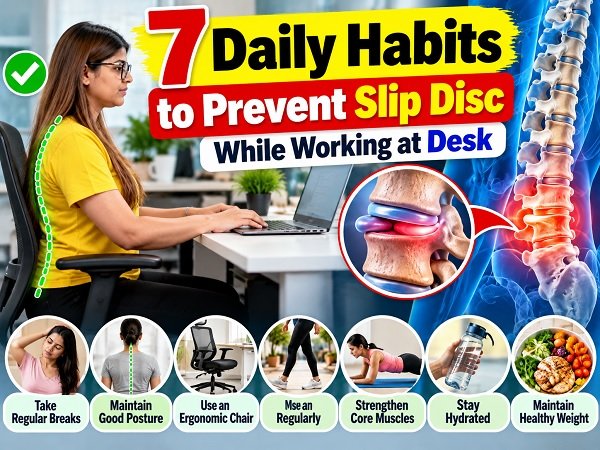
- Keep your back firmly supported against your chair’s backrest.
- Plant both feet flat on the floor with your knees positioned roughly level with your hips.
- Relax your shoulders and avoid hunching forward toward your screen.
You do not need to sit rigidly straight for hours; focus instead on maintaining balanced comfort and shifting your position regularly. To learn more about anatomical mechanics and non-surgical approaches, refer to this professional overview on lumbar spondylosis causes and treatments.
2. Take Strategic Micro-Breaks Every 30 to 60 Minutes
Remaining locked in a static posture exhausts your back and neck muscles. Office deadlines often cause people to ignore physical discomfort until it becomes acute. Make it a rule to stand up, stretch, and move your body every 30 to 60 minutes. Simple habits like walking to refill your water bottle, pacing during phone calls, or resting your eyes from the display can relieve spinal compression. As Dr. Deepak Agrawal highlights in clinical insights on slip disc symptoms, prolonged physical inactivity is a primary contributor to early spinal degeneration. You can also incorporate short routines mentioned in desk exercises for lower back pain to keep your spine flexible throughout the day.
3. Optimize Your Workstation Setup
Your desk layout should allow you to work upright without straining your neck or upper back. If your laptop screen sits too low, your head tilts downward for hours, straining your cervical spine. Follow these ergonomic adjustments:
- Position the top of your computer monitor at or slightly below eye level at a comfortable arm’s length.
- Arrange your keyboard and mouse so your elbows bend at a comfortable 90-degree angle without stretching.
- If working primarily on a laptop, invest in a laptop riser paired with an external keyboard and mouse.
Proper workstation adjustments prevent cumulative upper body strains, aligning with clinical recommendations found under back and neck pain insights.
4. Build Core and Back Muscle Strength
Your spinal column relies heavily on your core abdominal and back muscles for structural support. Regular, low-impact exercise improves muscular endurance and flexibility. Safe beginner activities include walking, light stretching, and physiotherapist-approved stabilization routines. “Physical activity is essential, but you should avoid high-impact or rigorous workouts if you already experience spinal disorders,” notes Dr. Deepak Agrawal. For detailed safe techniques, read more about sciatica pain treatment without surgery. Always consult a qualified medical professional if you experience persistent back pain or numbness before starting a new exercise regimen.
5. Avoid Sudden Bending and Twisting Movements
Office and home environments often require lifting items from under desks, carrying heavy briefcases, or shifting boxes. Twisting your spine while carrying weight places catastrophic shear stress on intervertebral discs. Always keep loads close to your chest, bend at your hips and knees (not your waist), and never twist your torso while lifting. When handling heavy objects, do not hesitate to ask for assistance.
6. Listen to Your Body and Never Ignore Warning Signs
While mild muscle fatigue fades with rest, persistent discomfort demands immediate medical scrutiny. A herniated disc often manifests as lower back pain, sharp sciatic pain shooting down one leg, paresthesia (tingling or numbness), or in severe cases, muscle weakness. Because these symptoms can overlap with other medical conditions, diagnostic imaging is necessary. Dr. Deepak Agrawal emphasizes, “Advanced diagnostic procedures help physicians isolate the exact root cause of neurological back pain.” For further medical reference on spine care options, check out lumbar discectomy surgery guidelines. If discomfort persists or you notice sudden limb weakness, consult a healthcare provider immediately.
7. Integrate Movement Into Your Daily Routine
You do not need an intense gym schedule to protect your spine. Small lifestyle changes compound over time to safeguard your back:
- Take short walks immediately after meals.
- Stand up during phone calls or virtual meetings where camera use isn’t required.
- Choose stairs over elevators whenever feasible.
As noted on Dr. Deepak Agrawal’s professional medical platform regarding spinal cord health and injury prevention, proactive awareness and timely medical consultation are vital for long-term mobility and neurological well-being. Additionally, maintaining overall wellness can be supported with tips from chronic low back pain relief strategies.
Summary: Protecting Your Spine at Work
Having a desk job does not make a slipped disc inevitable. By replacing sedentary habits with ergonomic seating, regular micro-breaks, correct workstation setups, and safe lifting practices, you can dramatically lower your risk of back injury. Most importantly, never brush off chronic pain, progressive numbness, or muscle weakness. Prioritizing small ergonomic adjustments today ensures lifelong spinal health and mobility.