If you stay seated for too long, your lower back gets stiff and sore. Exercises for lower back pain while sitting can help relieve stiffness, enhance your flexibility, and improve your posture. They take only five minutes to perform and can be done even during your working day. However, you may feel better after performing them, but it is best to consult a medical specialist if you have severe back pain.
Main Points
Long hours of staying seated increase the chances of developing back pain. Movement pauses every several hours can reduce stiffness. Proper posture does not cause so much strain on your muscles. Posture stretches at work can help enhance your flexibility. Regularly performed sedentary lifestyle workouts have more effect than occasional hard exercises.
Introduction
These days, many individuals spend around 8–10 hours a day sitting in their offices or at home in front of a desk. This becomes even more common with remote work, and spending so much time in this position can result in poor posture, muscle stiffness, and pain in the neck, shoulders, and lower back. The positive thing is that no gym or special equipment is required in order to make you feel much better. You can easily perform simple exercises for your lower back pain right in front of your desk. By integrating such exercises into your daily routine, along with sedentary lifestyle exercises, you will be able to decrease stiffness and improve your posture, staying active all day long.
Could Your Desk Work Be Making You Unhealthy? Take This 30-Second Check-Up
Before starting with physical activities, check what you do in your daily life. Answer these questions:
Are you slouching when working? Is your back getting aching pain during evenings? Do you have a feeling of tension in your shoulders due to staying in one position? Do you cross one of your legs constantly? Are you sitting in a chair all day long? Do you have stiffness in your neck after spending hours at a computer?
If you have answered positively to three or more questions, your everyday routine can worsen muscle stiffness and bad posture. Good news is that you can improve this condition starting today. Small pauses, regular stretching, and getting up every hour will make your body relax and improve its flexibility. Just remember that regular physical activity in small amounts usually has better results than occasional intense workouts.
Why Does Prolonged Sitting Cause Back Pain?
If you sit for many hours every day without engaging in enough movement, this may put an added strain on your body, potentially making you muscles stiff and inflexible and putting additional pressure on your lower back. Of course, sitting is far from the only reason people experience back pain, but one of the factors that could potentially cause it is sitting too long.
Some of the most common explanations why prolonged sitting causes back pain include:
- Stiff hip muscles: Your hip muscles are always in one position when you are sitting and become stiff, pulling your lower back and affecting your posture.
- Weak core muscles: Core muscles contribute to supporting your spine. When your core muscles become weak, there will be extra pressure on your lower back, causing pain and discomfort.
- Poor circulation of blood: Remaining in one position for an extended period causes poor circulation of blood, resulting in tiredness and stiffness in the muscles.
- Muscle stiffness: Lack of activity results in stiffness in the back, hip area, and legs.
- Increased pressure on spinal discs: Remaining in one position for a long time causes increased pressure on spinal discs when compared to standing up.
Incorporating simple movements and exercises for sedentary lifestyle into your daily routine can keep your muscles active and improve flexibility. These exercises will also prevent sitting disease by overcoming the ill effects of sitting. Besides doing stretching exercises, exercising for a sedentary lifestyle keeps your body flexible and strong all day long.
Desk Exercises for Lower Back Pain that Can Be Done in 5 Minutes
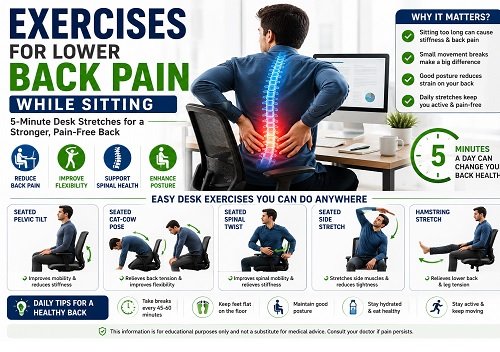
It is not necessary to visit the gym or use any equipment to keep your back muscles healthy. These desk exercises for lower back pain can be done within minutes. In addition to daily posture exercises, they may help prevent stiffness, increase your flexibility, and make you feel comfortable while sitting.
Seated Pelvic Tilt
Steps
Sit comfortably, keeping both feet flat on the floor. Maintain straight posture. Tilt your hips forward and then backward. Do it slowly without putting pressure on your body.
Benefits
It helps relax your lower back. Enhances pelvic joint mobility. Prevents stiffness from prolonged sitting.
Time: 30 seconds
Who shouldn’t do it: Those who have a serious injury in their back or have undergone any surgery in the past weeks must consult their doctor.
Seated Cat-Cow Pose
What to Do?
Sit down on a chair with your feet on the floor. Curve your spine and bring your head close to your chest. Now, extend your chest and slightly curve your back. Do it slowly with the rhythm of your breath.
Benefits
Makes your spine more flexible. Relaxes your back muscles. Is good for one of the best office posture stretches.
Time: 30 seconds
Who should avoid? Those who experience acute pain from it.
Spinal Twist
Performing the exercise
Sit up straight in your chair. Place your hand on the opposite knee. Rotate the upper body gently. Hold, then do the same with the other hand.
Benefits
Increases flexibility of the spine. Decreases stiffness of the waist and back. Helps improve sitting position.
Duration: 30 seconds
People who shouldn’t perform this exercise: People who have any issues with their spine.
Seated Hamstring Stretch
Instructions:
Sit close to the edge of your chair. Extend one leg out in front of you with your heel touching the floor. Bend forward while maintaining an erect back. Do the same for the other leg.
Advantages:
Stretches tight hamstrings. Helps reduce strain on the lower back. Increases flexibility.
Duration: 30 seconds
Who shouldn’t perform this exercise: Should not be done if you have a hamstring injury.
Standing Back Extension
How to perform the exercise
Stand with your feet apart at shoulder-width. Put your hands on your lower back. Gently bend backwards. Slowly get back to the initial position.
Advantages
Helps relieve stress after sitting for a long. Stretches the front part of your body. One of the easiest desk exercises for lower back pain.
Time: 30 seconds
Those who shouldn’t try it: Don’t attempt it if you experience dizziness or back pain.
Shoulder Roll
How to Do It
Sit or stand in a comfortable position. Rotate your shoulders five times forward. Rotate your shoulders five times backward.
Benefits
Loosens up your shoulders. Helps to maintain good upper-body posture. Ideal posture exercise for the office.
Time: 30 seconds
Who should Avoid It: Those who experience extreme pain while rotating their shoulders.
Neck Stretch
How to do it
Sit straight. Slowly lower your head towards one shoulder. Wait for a few seconds. Repeat for the opposite side.
Benefits
Reduces neck stiffness. Stretches out muscles after computer use. Increases neck mobility.
Time: 30 seconds
Whom should it be avoided by: People with neck injuries.
Seated Figure Four Stretch
Procedure for Performing the Stretch
Sitting down on a chair. Crossing one ankle over the other knee. Leaning forward. Doing the same for the other side.
Advantages of the Stretch
Opens up the hip joints. Helps reduce any stiffness in the lower back region. Allows improved mobility.
Duration: 30 seconds
People to avoid this stretch include: those who suffer pain in the hip or knees when stretching.
Ankle Pumps
How to perform the exercise
Sit with both feet touching the ground. Raise the toes, without raising the heels. Then raise the heels without lifting the toes. Do it slowly.
Benefits of the exercise
It improves blood flow. Helps to reduce stiffness in the legs. Also keeps the legs moving during the day at work.
Time required: 30 seconds
People who should not perform the exercise: Those who experience pain while doing it.
Marching At The Desk
Steps to Perform It
Sit straight on your chair. March by lifting one knee and then the other. Keep your core activated during the exercise. Perform it comfortably and consistently.
Benefits
Increases blood circulation in the body. Engages the core and leg muscles. An easy way to conclude your exercise routine for lower back pain.
Time: 30 seconds
People to avoid it: Avoid it if raising your knees causes discomfort in the hips and lower back.
Habits in the Office Making Your Posture Bad
There is another situation when it is not the work at the desk that makes you stressed but the habits. The thing is that the small posture problems made daily may cause you stiffness and pain. However, there are some solutions to make it easier for you.
Using the Computer in Wrong Position
When using computers, many people tend to lean closer to the screen which results in an additional strain on the neck, shoulders, and lower back. Keep your laptop at eye level and always try to sit back.
Legs Crossed for Hours
If you spend many hours with crossed legs, it will influence your posture badly and may have an effect on your hips and lower back. Make sure you have both feet resting on the floor.
Looking Down at Your Phone
Constantly looking down at your phone may cause strain in your neck muscles. Bring your phone up close to your eye level instead of looking down.
Never Changing Your Seat Setting
It is possible that using the same seat setting throughout the day does not support your body. Adjust your chair so that you have both your feet resting flat on the ground with your knees bent at a right angle while having good back support.
Keeping Your Wallet in Your Back Pocket
Carrying a thick wallet on one side of your back pocket causes your hips to tilt in one direction and causes additional pressure on the side of your back. It is best to leave your wallet at home if you plan to sit for an extended period of time.
Sitting without Back Support
If you constantly sit without your back support, your body will need additional effort to maintain its position. Sit comfortably in your chair, letting your body be supported by the chair while relaxing your shoulders.
Tips for Healthy Desk Ergonomics
Proper desk ergonomics play an important role in the feeling of your body at the end of the working day. In addition to the postural exercises performed throughout the day, proper sitting posture helps prevent strain of your neck, shoulder girdle, and lower back.
Sum up
It is not necessary to engage in extended exercise sessions to ensure proper care of your back. You only need to spend about five minutes on desk exercises for lower back pain each day to reduce stiffness and increase flexibility. The most important thing is to be consistent with the exercises rather than engaging in them only occasionally. Desk exercises for lower back pain will be more effective if you combine them with maintaining a correct posture, taking movement breaks, and having an ergonomically sound desk setup. Desk exercises for lower back pain will be effective in providing sustained comfort. In case of severe and recurrent pain or lack of improvement after doing desk exercises for lower back pain and movements, consult your doctor.