Today, proteins have been the center of discussions in relation to health and fitness for the last few years. Although other macronutrients, such as carbohydrates and fat, attract much attention in nutrition debates, protein is also gaining attention due to its impact on muscle strength, metabolism, healthy aging, immunity, and weight management. With more and more people trying to be active and stay healthy, the knowledge about the Protein Benefits and Sources becomes very valuable.
Numerous studies have proven that having enough protein in the diet can prevent muscle mass loss, facilitate recovery processes, and enhance satiety and, therefore, help manage weight. Moreover, higher protein quality in the diet was found to improve the state of muscles and physical performance, especially in older age groups. Some recent reviews indicate that having enough protein in your diet is crucial in preventing muscle loss related to aging and preserving a high quality of life.
Protein in 2026: Why Protein Has Suddenly Become So Important?
In recent times, the way people have been discussing nutrition has drastically evolved. Rather than counting their caloric intake only, people have begun to emphasize the quality of the nutrients they consume. Thus, the topic of proteins has started gaining importance. Now, professionals in the field of health recommend thinking about food not in the context of losing weight but rather the foods that help maintain one’s health, strength, and overall functionality of the body.
Medical professionals, nutritionists, and fitness experts often encourage a sufficient amount of protein consumption due to the involvement of protein in virtually all systems of the human body. Recent studies have proven that increased consumption of protein may help to keep muscle mass, promote healthy aging, boost satiety, and manage body weight. It is especially relevant today when more and more people become aware of the issue of muscle atrophy, metabolism, and physical performance.
Protein is usually associated with muscle building only; however, its importance is far from muscle building. The protein is required for the production of enzymes, hormones, antibodies, and structural elements. It helps the immune system, promotes tissue and wound recovery, and even helps with the transportation of nutrients and oxygen. Discovering the Best Sources of Protein will help people satisfy their requirements and stay healthy and fit in 2026 and later.
Functions of Proteins in the Body
Rebuilding and Repairing Body Tissues
Among the various discussions regarding the Protein Benefits and Sources, the topic that comes up first is that of rebuilding. Protein acts as a source of amino acids, which form building blocks for muscles, organs, skin, and other body tissues. The process of breakdown and regeneration of the cells within the body goes on constantly, and hence it needs proteins.
Maintaining the Immune System
Another function of protein is to maintain the immune system of the body. Antibodies are actually protein substances that are responsible for recognizing and fighting the pathogens entering the body. If there is a deficiency of protein in the body, then the response to such pathogens might be affected. Hence, the inclusion of the best sources of protein in the diet becomes necessary.
Aids in the Production of Hormones and Enzymes
There are many hormones and enzymes that consist of proteins. These enzymes assist in accelerating numerous chemical reactions within the body. For example, the enzymes are responsible for facilitating digestion and the generation of energy. There are certain hormones responsible for the regulation of growth, metabolic functions, appetite, etc. Also, some of these hormones are formed with the help of protein.
Contributes to Maintaining Healthy Skin, Hair, and Nails
Proteins play an important role in maintaining healthy skin, hair, and nails. For example, there are such types of proteins as collagen, keratin, and elastin. They contribute to maintaining skin elasticity, growing hair, and nails. That is one of the reasons why specialists in the field of nutrition pay much attention to protein consumption.
Contributes to Muscle Recovery after Exercise and Normal Day-to-Day Activities
After any intense training session or even a regular day filled with activities, there will be minor damage done to your muscles. Protein is necessary for muscle recovery and repair. Studies have found that adequate intake of protein aids in muscle recovery, prevents loss of lean muscle tissue, and enhances performance. This is why selecting the Best Sources of Protein is crucial.
Are You Consuming Sufficient Amounts of Protein? Most People Get This Wrong
Most people are under the impression that they consume enough protein due to the fact that they regularly have their meals. However, research indicates that the consumption of protein varies during the day since a lot of people consume the majority of the protein at dinner time, while having insufficient amounts for breakfast and snacks. With the increasing awareness of Protein Benefits and Sources, scientists recommend that people should be more attentive to the amount of protein they consume in a day, rather than just making assumptions.
Hunger Frequently
Another very common indicator of insufficient intake of protein is that one feels hungry soon after having a meal. The role of protein in increasing satiety is associated with hormones that influence our appetite. If meals have little protein content, chances are you will crave snacks frequently.
Lack of Energy
Apart from being responsible for muscle strength, protein helps perform several bodily metabolic functions. While carbohydrates provide most of the energy for the body, insufficient protein intake leads to fatigue and weakness, thus affecting your physical performance.
Slow Recovery Rate
The process of recovery from exercise, an injury, and even physical activity involves protein because it is responsible for tissue regeneration in the body. Sometimes, a slow rate of recovery and muscle soreness might be a sign of not getting enough protein.
Hair Fall
The major building block of hair is a special type of protein known as keratin. With an extended period of insufficient protein intake, the body might prioritize some other functions, thus causing hair loss.
Reduction in Muscle Strength
The muscles need to have an adequate amount of amino acids in order to remain strong. Lack of sufficient amounts of protein may cause a reduction in muscle mass, weakness, and inability to perform normal activities.
Knowledge of the Best Sources of Proteins will ensure that the person consumes enough protein to have healthy muscles, feel satisfied, recover, and avoid possible signs of protein deficiency.
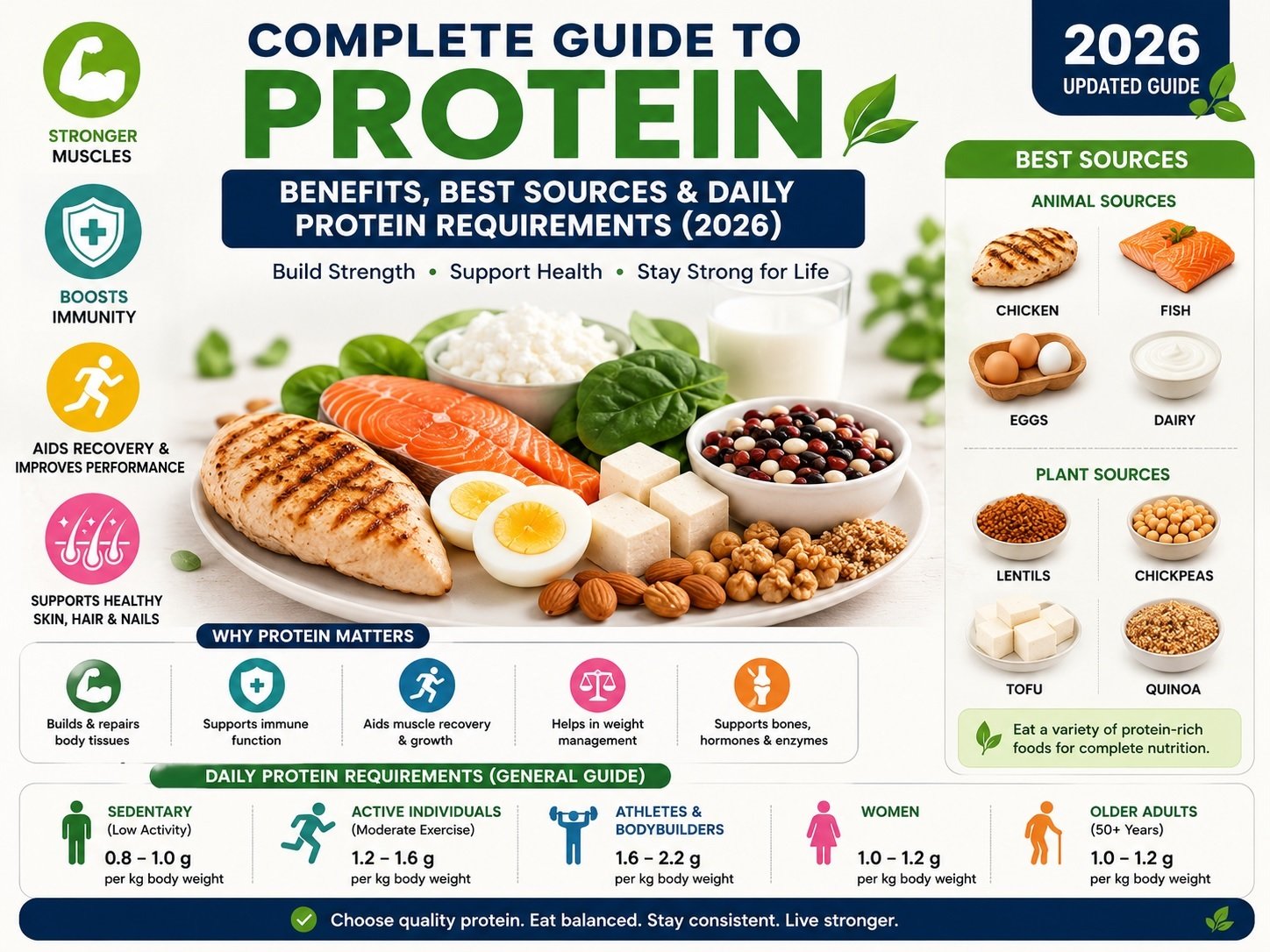
How Much Protein Does a Person Actually Need?
There is no universal formula for the amount of protein needed by everybody. Individual protein needs vary depending on the individual’s age, lifestyle, body weight, health condition, and personal objectives. As far as most people concentrate exclusively on their calorie consumption, specialists advise paying particular attention to their Protein Sources and Benefits and to meet their daily protein requirements.
Daily Protein Needs for Sedentary Adults
The minimum requirement of daily protein intake for a healthy adult without physical exercise is about 0.8 grams of protein per kilogram of body weight.
Daily Protein Intake for Active People
Regular athletes, walkers, cyclists, runners, or sportsmen have greater protein requirements. On average, sports nutritionists recommend 1.2 to 1.7 grams of protein per kilogram of body weight per day.
Protein Requirement for Losing Weight
It is believed that protein is necessary during weight loss since it promotes satiety and helps maintain muscle mass while losing body fat. The recommendation varies between 1.2-1.6 grams of protein per kg of body weight when undergoing calorie restriction.
Protein Requirement for Building Muscle Mass
When someone is trying to build their muscle mass, they should consume more protein than usual. Scientists have found that 1.6-2.2 grams of protein per kg of body weight will be optimal to maximize muscle protein synthesis if a person engages in weight lifting.
Protein Requirements after 40
It is well-known that after 40 years of age, humans start losing their muscle mass due to the phenomenon of sarcopenia. That is why most researchers recommend consuming 1.0-1.2 grams of protein per kg of body weight and sometimes even more for physically active senior people.
Protein Requirements during Pregnancy and Breastfeeding
The protein requirements rise during pregnancy and breastfeeding since there is an increased demand for the building of a new organism. Most doctors recommend that pregnant or breastfeeding women eat more protein than usual, which is about 1.1 grams per kg of body weight.
Simple Protein Requirement Calculation Table
| Body Weight | Sedentary Adult (0.8 g/kg) | Active Individual (1.2–1.7 g/kg) | Weight Loss (1.2–1.6 g/kg) | Muscle Gain (1.6–2.2 g/kg) |
|---|---|---|---|---|
| 50 kg | 40 g | 60–85 g | 60–80 g | 80–110 g |
| 60 kg | 48 g | 72–102 g | 72–96 g | 96–132 g |
| 70 kg | 56 g | 84–119 g | 84–112 g | 112–154 g |
| 80 kg | 64 g | 96–136 g | 96–128 g | 128–176 g |
| 90 kg | 72 g | 108–153 g | 108–144 g | 144–198 g |
Simple Equation
Protein Intake per Day = Body Weight (kg) x Protein Goal (grams of protein per kg)
Examples:
1st 70 kg inactive person = 70 x 0.8 = 56 grams of protein/day
70 kg active person = 70 x 1.5 = 105 grams of protein/day
70 kg to build muscle mass = 70 x 2.0 = 140 grams of protein/day
Knowing how much you need and using the Best Protein Sources for Your Body will ensure that you meet your daily requirements, all while promoting muscle wellness and good metabolic function.
Protein Timing: Is It Important to Time Your Protein Intake?
For decades, protein intake recommendations were mainly based on the amount of protein eaten daily. However, nowadays, attention is being paid not only to how much protein is ingested daily, but also to the timing of its consumption. Although the overall intake during the day is still the key issue, some data indicate that protein distribution across meals is useful as well for muscle maintenance, recovery, appetite management, and healthy aging. Combining Protein Benefits and Sources information with knowledge about protein timing may be very beneficial.
Morning Protein Benefits
The majority of people begin their day by having a carbohydrate breakfast with little to no protein content. Adding protein to one’s morning meal may have a positive effect on satiety, craving prevention, and sustained energy.
Protein After Exercise
Exercising induces small stresses within muscle fibers, and protein supplies the amino acids necessary for the muscles to recover from that stress and adapt to it. Although the concept of a very short “anabolic window” is generally exaggerated, it is considered that taking some protein after the workout in the first few hours post-exercise has some benefits. Combining protein with carbohydrates after the exercise may also have certain positive effects.
Taking Protein at Night
Some scientific studies suggest that taking protein before going to bed may aid overnight muscle recovery.
Is There a “30g Protein Cap”?
One of the most widely spread nutrition myths is that the body can assimilate no more than 30 grams of protein at a time. In fact, almost all protein consumed by an individual gets absorbed, but its effectiveness changes at different times. It is believed that the recent scientific studies prove that larger portions of protein are capable of helping to build muscles as well as taking part in different bodily processes, including muscle preservation, tissue repair, hormone synthesis, immune system functioning, and others. Instead of paying attention to the amount of protein, it is better to pay attention to the distribution of protein and to find the Best Sources of Protein to consume.
The newest data proves that the amount of proteins consumed daily plays a crucial role. Still, there is a possibility that regular consumption of protein during meals can help to provide maximum benefits from its consumption.
Complete vs Incomplete Protein – What You Should Be Aware Of?
In the context of the Protein Benefits and Sources, one of the aspects that causes a lot of confusion is the distinction between complete and incomplete proteins. Protein is not always created equally, and the quality of your protein source will depend on how many amino acids it includes.
Essential Amino Acids – What Are They?
Proteins consist of amino acids, which are the building blocks of life. The human body requires 20 amino acids to perform its different processes, like tissue maintenance and repair, muscle formation, immune support, and hormone production. However, there are nine amino acids out of twenty that are considered essential amino acids, which means that they can’t be produced by the body itself and therefore require an external supply in the form of food. Thus, getting a sufficient amount of essential amino acids is very beneficial for you.
Complete Protein Foods
Complete proteins have all nine essential amino acids, and thus, they are usually considered high-quality protein sources.
Among some of the best sources of Protein that are complete proteins are:
| Complete Protein Sources | Protein (Approx.) |
|---|---|
| Eggs | 6–7 g per egg |
| Chicken Breast | 30–31 g per 100 g |
| Fish | 20–25 g per 100 g |
| Greek Yogurt | 10–15 g per serving |
| Milk | 8 g per cup |
| Paneer | 18–20 g per 100 g |
| Soybeans | 16–18 g per 100 g |
| Tofu | 8–15 g per serving |
| Tempeh | 18–20 g per 100 g |
| Quinoa | 8 g per cooked cup |
How Do Vegetarians Manage to Take All Essential Amino Acids?
It is not uncommon for vegetarians to wonder whether they can take all essential amino acids without consuming meat products. Fortunately, they are able to get all essential amino acids. Recent discoveries by nutritionists indicate that complementary proteins need not be taken together within the same meal.
An effective combination includes:
- rice + beans,
- dal + roti,
- hummus + wholegrain bread,
- peanut butter + whole wheat toast,
- lentils + quinoa,
- chickpeas + brown rice.
Vegetarian diets can also be supplemented with complete protein sources like soy-based foods, tofu, tempeh, quinoa, dairy products, and eggs. With a combination of foods, one will have access to all the protein benefits and Sources required for proper muscle functioning, metabolism, immunity, recovery, and longevity without consuming any meat from animals. To put it in a nutshell, the point is clear. It does not matter what kind of diet one prefers — omnivorous, vegetarian, vegan, or any other one; the main thing is to combine the Best Sources of Protein during the day.