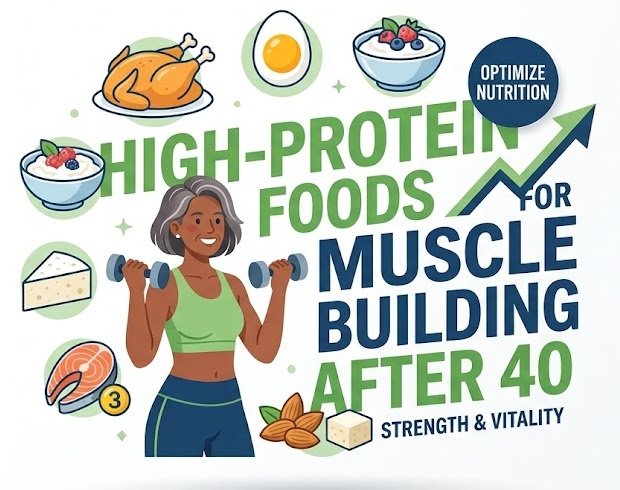
The natural process of muscle loss begins as we age, particularly after reaching 40 years old. Fortunately, this process can be slowed down through eating adequate amounts of protein, exercising regularly, and remaining physically active. A proper diet for muscle building after 40 would involve consuming lean proteins, dairy, eggs, beans, fish, soy products, nuts, and other nutrient-rich foods.
Key Takeaways
- Muscle loss begins slowly after one turns 30 years old and accelerates with age (learn more about muscle building after 30).
- Protein intake needs to increase due to increased demands for muscle retention and building in older individuals.
- Strength exercises and proper nutrition work effectively only in combination.
- One should aim at consuming some protein at each meal rather than eating all protein during one meal.
- Whole foods should provide primary nutritional sources, whereas supplements may only be used on an as-needed basis (see do supplements really work).
Introduction
Most people realize that their physical fitness has declined since the age of 40. They feel less fit and struggle with tasks such as carrying heavy bags, climbing up stairs, or picking up things. Ageing does affect muscle performance; however, there is no need to give up on your muscles because with proper lifestyle practices, you can sustain yourself. An appropriate muscle-building diet after 40, regular resistance training, and physical activity are important elements that help sustain your muscles. It is also important to know your protein needs after 40, as your body requires a sufficient amount of protein to build muscle mass. A muscle-building diet after 40 will contribute to muscle fitness, energy, and healthy aging.
Is Your Muscular Mass Reducing? A Self-Test
Stop for a few moments and ask yourself these questions:
- Is it difficult for you to carry items that were easily lifted earlier?
- Have your arms or legs reduced in size?
- Is it more difficult for you to climb up the stairs?
- Are you experiencing slow recovery after physical activity?
- Are you unable to carry the shopping bags comfortably?
In case you have answered “yes” to any two of the above questions, you need to consider your food habits and exercise routines (check out healthy lifestyle habits). Such symptoms are typical as one grows older; however, these could also be attributed to the lack of physical activity, improper eating habits, or other illnesses like feeling weak and tired.
Why Do People Lose Muscles After 40?
There are lots of physiological processes that occur in our bodies when we age, including muscle loss. In most cases, muscle atrophy occurs after 40 years of age and manifests itself in increased weakness, exhaustion, and fatigue when doing some everyday tasks.
The first factor leading to muscle loss after 40 is hormonal changes. With age, our body produces less of such hormones as testosterone, which helps preserve muscle tissue (read more about low testosterone symptoms). The second reason includes a sedentary lifestyle due to a person’s inability to lead an active life due to his/her workload and other health conditions.
It is important to mention that diet is crucial in this case. There are many cases when people who are 40 years old lack proteins that help rebuild the tissue. Besides, post-workout recovery takes more time than usual.
Sarcopenia might be another term that you will come across. Sarcopenia refers to the gradual reduction in muscle size and strength due to aging. The way you can manage this natural process and maintain healthy muscles is by following a proper diet to prevent sarcopenia, meeting your protein needs after 40, and engaging in strength training regularly (or exploring fat loss without muscle loss). As per the U.S. National Institutes of Health (NIH), people lose about 3-5 percent of their muscle mass in a decade starting from 30 years of age without taking any measures to retain it.
High Protein Foods For Muscle Building After 40
Selecting proper foods is one of the simplest methods to build up your muscles. If you are trying to build up muscle mass after 40, you have to include some protein in your nutrition plan because each food gives your body specific benefits.
Eggs
Amount of protein: 6-7 grams of protein per egg
These foods contain high amounts of protein and useful vitamins that will assist your body with muscle repair after exercising. Eggs can be consumed in boiled form or in the form of an omelet or sandwich. (Discover more benefits of eating boiled eggs).
Greek Yogurt
Amount of protein: 10 grams per 100 grams
This food contains high amounts of protein and calcium. That will assist in building up muscles and maintaining strong bones. This food is also easily digested by many people. Eat it at breakfast with fruit or as an evening snack.
Cottage Cheese (Paneer)
Protein: 18-20 g per 100 g
Paneer is the perfect food for vegetarians and is suitable in a muscle-building after 40 diet. The food contains slow-digesting proteins, which help provide support to the muscles for a longer period. Paneer can be added to salads, stir-fried, sandwiches, or grilled.
Chicken Breast
Protein: 30-31 g per 100 g
Chicken breast is considered one of the best lean muscle foods due to its high level of protein content. The food contains good-quality protein and supports muscle growth and recovery. Grill, bake, or cook the chicken breast along with other ingredients in the diet.
Fish (Salmon, Tuna)
Protein: 22-25 g per 100 g
Fish consists of high-quality proteins in addition to healthy omega-3 fats, which provide heart protection and recovery after exercising. Grill, bake or pan-cook the salmon and tuna and eat it with vegetables or grains.
Lentils
Protein content: About 9 grams per 100 grams (cooked)
Lentils offer inexpensive vegetable protein and help build muscles because they are rich in fiber and iron. Enjoy lentil soup, dal, and even mix cooked lentils with salads or rice dishes (an excellent option for protein for vegetarians).
Chickpeas
Protein content: About 8-9 grams per 100 grams (cooked)
They are delicious and nutritionally dense legumes with protein, fiber, and useful elements for healthy muscle development. Try adding chickpeas to your salad or preparing tasty hummus from them.
Soy / Tofu
Protein content: About 8-15 grams per 100 grams (according to the variety)
Vegetarian soy products contain high-quality protein, so they are great choices for vegetarians and vegans. It is easy to grill tofu and mix it with curries or vegetables as a muscle-building after-40 diet (see how it compares in paneer vs tofu).
Milk
Protein: Around 8 g per cup (250 ml)
Milk offers you not only protein but also calcium and vitamin D, which strengthen your muscles and bones. Have a glass with breakfast or add it to smoothies and healthy recipes such as oats (read more on milk benefits and side effects).
Nuts and Seeds
Protein: Around 5 – 7 g per 30 g portion (depends on the variety)
Peanuts, almonds, pumpkin seeds and chia seeds are high in protein, good fats and minerals. These products are very handy to eat as snacks, or you can add them to yogurt, oatmeal and other smoothies.
Quinoa
Protein: Around 8 g per cup (cooked)
It is a whole grain with complete protein and fibre content. If you want an ideal protein food for building lean muscle mass, quinoa is one of the best. Have it as an alternative to rice in salads or other vegetable dishes.
Beans
Protein: Around 8-9 g per 100 g (cooked)
Black beans, kidney beans and other beans have a lot of protein, fibre and complex carbohydrates. Beans will give you enough energy for the whole day. You can include them in soups, curries, salads and wraps.
The inclusion of different types of these foods in your meals will ensure that you have a balanced diet for building muscles after 40. Rather than depending on just one type of food, it is important to include a combination of different lean muscle foods during the course of your day to get enough protein and nutrients (explore more protein rich meals for muscles).
How Much Protein Do You Really Need?
Not all people have the same protein target. This means that the protein needs of someone over 40 will vary depending on their weight, lifestyle, state of health, and physical training goals. It is essential to determine the protein needs of someone over 40 when trying to retain or gain muscle (be careful to avoid protein overconsumption health risks).
| Person | Approximate Daily Protein Goal* |
|---|---|
| Less active adult | Around 0.8 g per kg of body weight |
| Active adult over 40 | Often around 1.0–1.2 g per kg of body weight (individual needs vary) |
| People doing regular strength training | May need more, based on activity level and professional guidance |
Note: Your needs for protein consumption after 40 years of age may be influenced by many factors such as your age, weight, health condition, physical activity level, etc. (check your daily calorie needs). If you do not know how much protein you need to consume, a registered dietitian can assist you.
Meal Plan for One Day
The correct diet for muscle building after 40 should have protein included in each meal rather than having the majority in one meal, dinner. In addition, including a variety of lean muscle foods will ensure that other essential nutrients are obtained (check high protein diet benefits and myths).
| Meal | What to Eat |
|---|---|
| Breakfast | A bowl of Greek yogurt topped with berries, oats, and a handful of almonds. You can also add one or two boiled eggs. This is a simple way to start your muscle-building after 40 diet with quality protein and healthy fats. |
| Morning Snack | A glass of milk with a handful of roasted chickpeas or mixed nuts. These lean muscle foods keep you full and provide steady energy between meals. |
| Lunch | Grilled chicken breast or paneer with quinoa, mixed vegetables, and a fresh salad. This meal is rich in protein, fibre, and nutrients, making it an important part of a muscle-building diet after 40. |
| Evening Snack | Cottage cheese (paneer) cubes or Greek yogurt with pumpkin seeds. These lean muscle foods are easy to prepare and help meet your daily protein needs. |
| Dinner | Grilled salmon or tofu served with steamed vegetables and lentil soup. This balanced meal completes your muscle-building after 40 diet while providing high-quality protein. Adding a variety of lean muscle foods throughout the day supports muscle maintenance and recovery. |
Sum Up
Loss of muscle after 40 years is a phenomenon that many people face, but it is certainly not a fate predetermined by natural aging. By sticking to a healthy muscle building after 40 diet plan and eating enough protein to meet your protein requirements over 40, as well as engaging in regular resistance training (like best workouts to do at home), you can preserve your strength and stay active. A muscle-building after 40 diet plan works better in combination with a proper daily routine rather than any quick fix. Knowing your protein requirements over 40 and getting enough protein intake with each meal will certainly pay off for you. Keep following your muscle-building after 40 diet plan, regularly evaluate your protein requirements over 40, and remember that daily effort always beats sudden change.