Understanding Fibre Deficiency
Fibre deficiency occurs when your diet lacks sufficient amounts of dietary fibre, which are necessary for your body’s physiological processes. It is a type of carbohydrate present primarily in plant-based foods like fruits, vegetables, whole grains, legumes, nuts, and other similar sources. While most carbohydrates are usually fully broken down in the process of digestion, dietary fibres are not, but rather have other physiological roles in the body.
The World Health Organization advises that adults should ensure the presence of adequate amounts of fibre in their balanced diets. According to recent studies published in The Lancet, higher consumption of fibre-rich foods correlates with decreased risks of coronary heart disease, strokes, type 2 diabetes, and colorectal cancer. A shortage of dietary fibres may upset the rhythm of gut movements and lead to some disorders related to your digestive tract, such as irregular bowel movements, constipation, or bloating. Moreover, there is evidence suggesting that dietary fibres also play a role in maintaining the population of gut microbiomes responsible for the proper functioning of your digestive system.
Importance of Fibre in Your Body
Fibre performs a lot more functions in the body than assisting in digestion only. It is important for your body because it supports your gut function, metabolism, heart, and well-being. Fibre adds bulk to stools, enabling the food you eat to travel smoothly through your body. This is the reason why one of the most common signs of a lack of fibre is an irregular bowel movement.
The other major benefit of fibre is supporting a healthy microbiome in your gut. There are certain kinds of fibres that help feed good bacteria in the gut. They help these bacteria produce substances that help with the integrity of your gut lining and boost your immune system. According to studies conducted at the National Institutes of Health, having a fibre-filled diet boosts digestion. Fibre consumption also helps with controlling weight since it makes you feel fuller for a longer period of time, thus reducing the chances of mindless snacking and overeating. Some of the signs that indicate you have a low fibre diet include bloating, constipation, excessive hunger, and altered digestion.
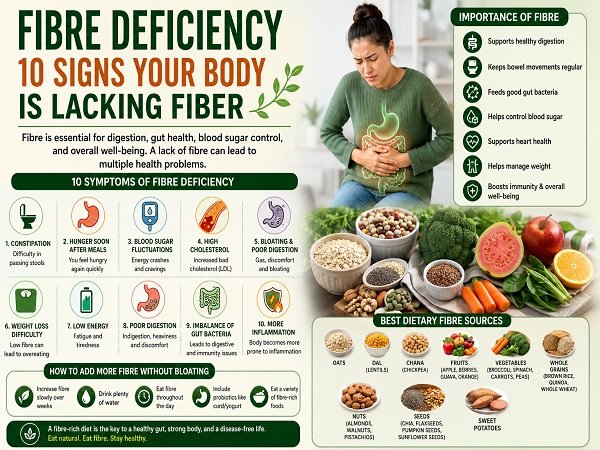
10 Symptoms Showing Your Body Is Lacking Fiber
Consumption of fiber plays an important role in digestion, bowel health, the regulation of blood sugar levels, and general well-being. However, many individuals have been reported to take less than the recommended amount of dietary fiber, which gradually leads to malfunctioning of the body’s systems. This condition is referred to as symptoms of fiber deficiency and indicates the need for more fiber in the body.
1. Constipation
Another major indication of a lack of dietary fibre is experiencing constipation. Dietary fibre contributes to bulky stool and helps move the waste matter easily in the digestive system. The two types of dietary fibre serve different purposes in the process of ensuring efficient movement of food within the gastrointestinal tract. Insoluble dietary fibre makes the stool bulky, while the soluble fibre regulates its formation.
2. Feelings of Hunger Soon After Meals
When one continues feeling hungry soon after having meals, chances are that such meals have low amounts of dietary fibre. Since dietary fibre plays an important role in slowing down digestion and thus making one feel satiated for some time, its lack results in fast digestion and thus feeling hungry. Foods with high fibre content take longer to digest and thus ensure that you do not experience hunger attacks after meals.
3. Fluctuations in Blood Sugar Levels
Fiber is helpful for reducing the speed at which sugar absorption takes place, hence enabling the maintenance of consistent blood sugar levels. Low fiber and high-carbohydrate meals are likely to cause a fast elevation in blood sugar levels followed by quick drops. The effects could result in feeling lethargic, craving more sugar, and struggling to maintain consistent energy levels throughout the day. Research indicates that adding more fiber to one’s diet could be beneficial in regulating blood sugar levels.
4. Risk of Having High Levels of Cholesterol
Fiber is known to aid in controlling the levels of cholesterol within an individual’s body. It helps to bind the cholesterol particles within the digestive tract and removes them out of the body. Studies indicate that people with high fiber content in their diets have improved cardiovascular well-being, and they are less susceptible to heart-related conditions. Failure to consume enough fiber over long periods can result in increased cholesterol levels.
5. Bloating and Poor Digestive Health
Several digestive disorders have been found to be associated with bloating, and the inadequate consumption of fibre can be responsible for this condition. Although an increase in fibre content can lead to increased gas formation, poor fibre consumption on a regular basis can result in digestive complications. Fibre serves as nourishment for good bacteria in the gut that help digest food and ensure that the gut remains healthy. Lack of fibre in the diet results in imbalances of gut bacteria that leads to bloating and other related complications.
6. Problems with Weight Loss
The consumption of dietary fibre can assist in controlling body weight because fibre provides feelings of satiety. Fibre-enriched foods such as fruits, vegetables, beans, and whole grains contain few calories compared to the satisfaction they deliver.
7. Low Energy
Low energy or fatigue can occur because of bad nutrition habits, including imbalanced nutrition intake. If one does not have sufficient fiber in his/her diet, digestion will take place more quickly, resulting in rapid changes in blood glucose concentration and leading to problems with consistent energy provision. Foods rich in fiber usually contain essential nutrients, including vitamins, minerals, and antioxidants necessary for good health. Consumption of sufficient amounts of fiber daily will contribute to balanced nutrition.
8. Poor Digestion
The process of digestion requires an adequate amount of fiber. Lack of fiber will negatively affect your ability to digest food. Some symptoms, such as poor bowel movement, fullness after eating, and digestive discomfort, can be experienced if a person lacks fiber in his/her diet.
9. Imbalance of Gut Bacteria
The gut harbours a wide range of microorganisms that play a role in digestion, immunity, and general well-being. Fiber is known as one of the main sources of nutrition for the good bacteria in your gut. With inadequate consumption of fiber, your good gut bacteria might not have sufficient nutrients, which could lead to an imbalance in the gut flora. It seems that the consumption of fiber helps in promoting diversity of bacteria, while a lack of fiber reduces the diversity.
10. More Susceptibility to Inflammation
Fiber provides proper gut functioning, whereas the latter affects the inflammation responses of our body. Consuming a low-fiber diet can lead to an imbalance of bacteria that could result in a low level of beneficial substances that regulate inflammation. Low fiber consumption can be a part of an unhealthy dietary pattern associated with inflammation.
Knowing these signs of a lack of fiber can help you implement several alterations in your eating habits.
How Many Grams of Fiber Do You Really Need?
The quantity of fiber needed by your body relies on certain criteria, such as age, gender, and your general state of health. Dietary guidelines indicate that adults need 25 to 38 grams of fiber each day. Nevertheless, people often take less than the recommended amount, thus experiencing such consequences of low fiber in their diet as constipation, abdominal bloating, or difficulty digesting food. The gradual consumption of more fiber from vegetables, fruits, whole grain foods, legumes, nuts, and seeds will help you avoid these issues. Adequate fluid intake while taking fiber is also very important since fiber works efficiently when taken with sufficient amounts of water.
Best Dietary Fibre Sources
Eating different types of fibre-containing foods in your meals can help you prevent symptoms associated with fibre deficiency. Below are some foods high in dietary fibre:
- Chia seeds – Good soluble fibre content, promotes healthy digestion
- Flaxseeds – Good sources of both fibre and healthy fats
- Oats – Contains beta-glucan, a type of fibre promoting heart health
- Dal (lentils) – Sources of both fibre and proteins
- Chana (chickpea) – Helps promote satiety and improve digestive health
- Rajma (black beans), beans, kidney beans – Good sources of fibre and probiotics
- Apples, pears, berries, guava, oranges – Sources of fibre, antioxidants, and vitamins
- Broccoli, carrots, spinach, peas – Help promote regular bowel movements
- Brown rice, quinoa, whole wheat – Whole grains provide more fibre compared to refined grains
- Almonds, pistachios, walnuts – Source of healthy fibres and other nutritious elements
- Sunflower seeds, pumpkin seeds – Good sources of fibre
- Sweet potatoes – Promote healthy digestive health due to fibre content
Eating different foods rich in dietary fibre can help you eliminate lack of fibre symptoms and avoid side effects linked with insufficient intake of fibre.
How to Add More Fibre Without Causing Bloating?
Consuming more fibre may result in bloating due to the fact that your body requires some time to adapt. The easiest way is to slowly increase the number of fibres you consume for several weeks. For example, try to add a little quantity of different fibres (fruits, veggies, oats, seeds, legumes). Drink plenty of water since fibre needs it to be efficient. Do not eat lots of fibre in one sitting; rather, consume it evenly during the day. Including probiotics in the diet, such as curd, will help the gut microbiota to be healthier.
Sum up,
Fiber deficiency is something that many people ignore, but it could be having a negative impact on their digestion, overall health, cholesterol level, and blood sugar. Symptoms such as irregular bowel movement, hunger pangs, bloating, fatigue, and changes in digestion could indicate that your body requires more fiber intake. Eating a lot of fiber provides your digestive system with good digestion while at the same time ensuring there is good health in your body’s microbiome and metabolism. Consuming more fiber from natural sources like fruit, vegetables, seeds, nuts, legumes, and whole grains would be highly recommended.