The condition of muscle cramps during nighttime is described as sudden involuntary contractions of muscles while you are sleeping and can affect your legs and feet.
One possible cause of this is due to the lack of electrolytes like magnesium, potassium, calcium, and sodium that assist muscles in functioning normally. Consuming a nutritious diet and drinking lots of water as well as eating foods rich in minerals, can help reduce the risk of cramps for some individuals.

Highlights
- Electrolytes are important for the functioning of nerves and muscles.
- People who get muscle cramps may be low in magnesium, potassium, calcium or salt.
- Drinking enough water and maintaining a balanced diet may assist good muscular function.
- Magnesium for muscle spasms is a hot topic, but supplements should only be taken after medical consultation if you think you are deficient.
- Occasionally, persistent or intense night cramps may be related to an underlying medical issue.
Introduction
It may be frustrating when you find yourself awakened at night by painful cramps in your leg or feet. Your muscle gets tight, and you cannot move until the cramp gradually starts to resolve.
Night muscle cramps are common and may affect people from any age group, although they tend to be more common in older individuals, pregnant women, and those who are physically active.
There may be different causes for these night-time muscle cramps. Sometimes, they might occur due to strenuous physical activities or dehydration. In other cases, they may be due to certain medicines or problems during pregnancy and certain medical conditions.
Another possible cause could be an imbalance in important minerals known as electrolytes. Electrolytes are essential for the normal functioning of your muscles and heart.
What are night-time muscle cramps?
Night muscle cramps are sudden, involuntary contractions of your muscles that occur when you are resting or sleeping.
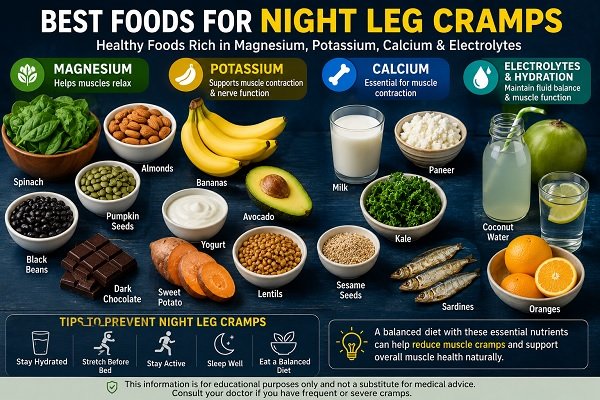
Most prevalent effects are to the:
- Muscles of the leg
- Feet
- Toes
- Thighs
A cramp may last a few seconds to several minutes. After the spasm is over, the muscle involved may feel sore or tender for several hours.
Muscle cramps are painful tightness of the muscle itself. There is no impulse to move the legs like in restless legs syndrome.
Occasional cramping is normally innocuous, but regular episodes can interfere with sleep and damage your quality of life.
Why Do Muscle Cramps Strike At Night?
In many cases, the cause is not evident. However, several conditions may raise the likelihood of having night cramps, such as:
- Dehydration
- Muscle tiredness after exercise
- Being sedentary over long periods of time
- Pregnancy
- Old age
- Certain drugs such as diuretics
- Diabetes
- Renal failure
- Thyroid disease
- Bad circulation
- Disorders of electrolytes
Sometimes, the problem may be caused by more than one factor.
What Are Electrolytes?
Electrolytes are minerals that dissolve in human fluids and can carry an electric charge. They are needed in small doses but are necessary for many important activities in the body.
Electrolytes help:
- Control of Muscle Contraction
- Nerve signalling support
- Fluid Balance
- Regulate the cardiac beat
- Helps muscles to relax after they contract
Too high or too low electrolyte levels might disturb the proper transmission between neurons and muscles. That’s why you typically hear about keeping your electrolyte balance in the appropriate range when it comes to general muscle health and preventing muscle cramps.
What are the important electrolytes for muscle function?
Many electrolytes operate in tandem to ensure your muscles work properly.
Magnesium
Magnesium helps muscles relax after they contract. It also helps support appropriate neuronal function and energy production.
Some persons with magnesium deficiency may develop cramps; however, not all cramps are caused by magnesium insufficiency.
We’ll explore magnesium for muscular spasms in more detail later in this post.
Potassium (K)
Potassium helps muscles contract appropriately, and it helps neurons communicate with muscles.
Low potassium levels can interfere with proper muscular functioning and could make the chance of weakness or cramping greater in some people.
Fortunately, many nutritious foods are natural sources of potassium, so you may meet daily demands with a balanced diet.
Calcium
Everyone knows that calcium is good for healthy bones, but calcium is also needed for muscular contraction.
Without adequate calcium, muscles can not contract and relax properly.
Calcium can be found in:
- Dairy products
- Fortified plant milks
- Leafy green vegetables
- Some seafood
It is part of a balanced diet.
Salt (Sodium)
Sodium helps to control fluid balance and nerve activity.
People who lose considerable amounts of sodium, for example through continuous sweating, vomiting or diarrhoea, might develop electrolyte imbalances which can compromise muscle performance.
But most people get plenty of sodium in their everyday diet already.
In general, one should not increase salt intake unless encouraged to do so by a healthcare professional.
Not all muscle cramps are caused by electrolyte deficiencies.
Not all the times.
Muscle cramps can be caused by electrolyte deficits, although it is not the only one.
Night cramps may also be related to:
- Overuse of Muscles
- Bad habits to stretch
- Pregnancy
- Some drugs
- Nerve compression
- Circulation issues
- Existing medical problems
So, using electrolyte supplements without addressing the underlying problem is not usually useful.
When to see a doctor: See your doctor if you get muscular cramps that are severe, regular, or don’t improve with lifestyle modifications.
Magnesium for Muscle Spasms: Does Magnesium Help Muscle Spasms?
Magnesium is one of the most talked about nutrients when it comes to muscular health.
It assists in muscular relaxation, neuron function, and energy production.
Magnesium allows your muscles to relax again when they contract.
If you are deficient in magnesium, this process may not be as efficient and may cause muscle cramps in certain people.
But it is crucial to know that muscle cramps are not always caused by a shortage of magnesium.
If you already have normal amounts of magnesium, taking extra supplements won’t automatically give you further benefits.
Some people might be at higher risk of low magnesium levels, such as:
- Elderly Adults
- People with poorly managed diabetes
- People with digestive disorders that limit nutritional absorption
- People using some drugs, such as some diuretics or proton pump inhibitors (PPIs)
- Chronic usage of alcohol people
Your healthcare provider could do blood testing or other tests to see if you have a magnesium shortage before recommending supplements.
Natural Sources of Magnesium
Instead of pills, many people can get enough magnesium by eating foods we all have on hand every day.
Good sources are:
- Pumpkin Seed
- Other nuts and almonds
- Cashew nuts
- Spinach
- Black bean
- Lentil
- Avocadoes
- Whole grain
- Dark chocolate (in moderation)
Eating a variety of these foods throughout the week may help with healthy muscle and nerve function.
Potassium Food Sources for Healthy Muscles
Another crucial mineral is potassium.
It helps muscles contract properly and helps nerves communicate with muscles.
If there is too little potassium, the muscles may not work properly, and this might cause weakness or cramps.
Fortunately, many healthful potassium-rich foods are easy to add to your diet.
Here are some of the greatest options:
- Bananen
- Sweet potatoes
- Potatoes in the jacket
- Spinach
- Avacadoes
- Tomato
- Oranges
- Cantaloupe
- Coconut water (no added sugar)
- Beans
- Lentils
- Yogurt
The best method to maintain appropriate potassium levels is to eat a balanced diet that includes fruits, vegetables, legumes, and whole foods.
People with kidney problems should not increase the amount of potassium they eat without first talking to a doctor.
The kidneys cannot get rid of the extra potassium correctly, and this could be hazardous.
Other Foods That Help Balance Electrolytes
A good diet will include a range of electrolytes, not just one mineral.
Foods that help in electrolyte balance are:
Dairy
Calcium, protein, and other nutrients essential for muscular function are supplied by milk, yogurt, and cheese.
Leafy Greens
Spinach, kale, and mustard greens are some of the vegetables that contain magnesium, potassium, and calcium.
Nuts & Seeds
They are a good source of healthful fats and vital minerals like magnesium.
Beans
Beans, peas, and lentils are high in magnesium, potassium, fiber, and plant protein.
Fruits
Bananas, oranges, kiwi, watermelon, and berries are all good sources of vital vitamins, minerals, and hydration.
Healthy muscles will generally get the nutrients they need from a healthy, balanced diet.
Cures for Night Leg Cramps
While there is no one-size-fits-all cure, several basic practices may help lessen the frequency of cramps.
Keep Well Hydrated
In certain people, not drinking enough water may contribute to muscle cramps, especially after exertion or in hot conditions.
Drink water consistently throughout the day; don’t wait to feel thirsty.
Stretch before bedtime
For some, gentle stretching of the calf and hamstring muscles before bed might help alleviate overnight cramps.
Hold each stretch for 20–30 seconds without bouncing.
Keep on moving
Moderate activity such as regular walking, cycling, swimming, or similar activities helps to maintain healthy muscle function.
Don’t suddenly increase the intensity of your workouts, as fatigued muscles may be more susceptible to cramping.
Wear comfortable shoes
Inappropriate shoes can add stress to the muscles of the feet and legs.
Well-fitted shoes can decrease muscle fatigue throughout the day.
Don’t Sit for Too Long
If your job requires long periods of sitting, be sure to get up and stretch every hour.
Gentle activity can aid circulation and may help with muscle tightness.
Sum up
Nighttime muscle cramps can be uncomfortable and annoying, but are typically controllable with good lifestyle behaviors.
A nutritious diet, sufficient hydration, and regular physical activity can help support normal muscle and nerve function by maintaining a suitable balance of electrolytes, which can help reduce muscular cramps.
A balanced diet rich in magnesium, calcium, and natural sources of potassium will help keep your muscles in good condition.
Magnesium for muscular spasms often comes up, but supplements aren’t the answer for everyone.
If you experience frequent cramps, seek out the root cause before taking any supplements.
Many people find that simple night leg cramp cures such as stretching before bed, drinking enough water, being active, and eating a balanced diet can help minimize the frequency of cramps.
If you get regular, severe muscular cramps or cramps with weakness, swelling, or other worrisome symptoms, visit a doctor to find out the reason and proper therapy.
Frequently Asked Questions
What foods have a lot of potassium?
Bananas, sweet potatoes, potatoes with the skin, spinach, avocados, oranges, tomatoes, beans, lentils and yogurt are all good sources of potassium.
What can I do right now for a night leg cramp?
Gently stretching the muscle, massaging it, walking cautiously, or applying a warm towel or heating pad may help the muscle relax.
Talk to your healthcare professional if the pain does not go away or keeps coming back.
Are Night Muscle Cramps a Sign of a Serious Illness?
Most nocturnal muscle cramps are benign and resolve with easy lifestyle adjustments.
However, sometimes frequent or severe cramps may be a sign of a medical issue such as diabetes, kidney illness, thyroid problems, or circulation problems.
Is it worth drinking sports drinks to help prevent muscle cramps?
Not normally.
Most people get enough fluids and electrolytes from drinking water and eating a balanced diet.
Sports drinks can be helpful during lengthy, hard workouts or if your doctor tells you to have them.
When should you worry about muscle cramps?
If you have cramps several times a week, they are severe, they are accompanied by muscle weakness, swelling, or numbness, or they interfere with your everyday life or sleep, see a doctor.
Author

With six years of experience, I turn ideas into engaging and easy-to-read content. Whether it’s blogs, website copy, or emails, I write in a way that connects with people and delivers the right message. Clear, creative, and impactful—that’s my writing style.
View all posts