If you experience a sudden, very bad headache that comes out of nowhere, you should not ignore it. Brain aneurysms usually do not cause headaches, but sometimes a sudden, strange headache can be a sign that there is bleeding in the brain. A brain aneurysm can be frightening because it can go symptomless for years. The person may have no headache, no difficulty seeing, or any other obvious sign. Sometimes the only way to find out what’s wrong is to look for some other reason or when the aneurysm starts to leak or burst.
What Does a Brain Aneurysm Mean, Really? How does it grow? Can we find it before it goes off? And what types of treatments are there? Let’s take a look at these questions and signs everyone should be aware of.
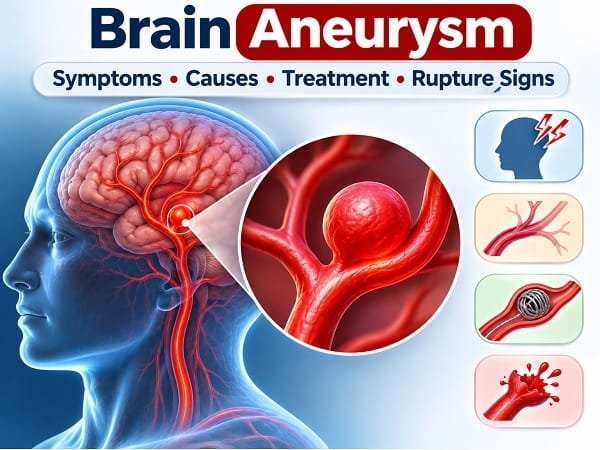
What is a brain aneurysm?
A brain aneurysm is a bulge or weak area in the wall of an artery in the brain. This makes the wall of the blood vessel start to bulge outwards, forming a small balloon-like swelling. It is like a water pipe developing a weak spot. That weak spot might begin to bulge under pressure. High blood pressure can also cause a weak spot in the wall of an artery. This is called an aneurysm. Some aneurysms are small and never cause any trouble. Some may in time increase in size. In the worst case, the aneurysm can burst, allowing blood to seep into the space surrounding the brain. This kind of bleeding is called subarachnoid hemorrhage (SAH), when the blood collects in the space between the brain and the thin membranes that cover it. Brain aneurysms can burst. If this happens, it is an emergency. The bleeding can damage brain tissue, increase pressure in the skull, and stop blood flow to the brain.
Why Is a Brain Aneurysm Called a Silent Condition?
Most unruptured brain aneurysms have no symptoms. This is one reason why they are sometimes called “silent aneurysms.” One can have an aneurysm and not even know it. It may be found incidentally on an MRI or CT scan being done for another medical reason. But a bigger aneurysm can push on nearby nerves or parts of the brain. This may result in some of the symptoms, such as: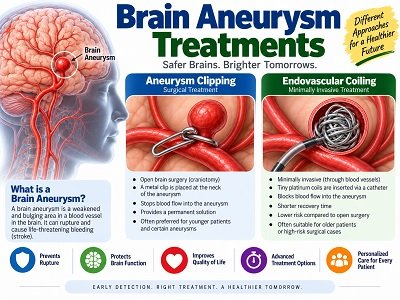
- One eye aches above or behind.
- Blurred vision or double vision.
- A droopy eyelid.
- One pupil is bigger than the other pupil.
- Numbness or weakness in one side of the face.
- Having difficulty with balance or coordination.
However, these signs don’t always mean someone has a brain aneurysm. Similar problems may occur with several other conditions. If these symptoms are new, last, or get worse, then it is important to see a doctor.
The most dangerous time is when an aneurysm ruptures. Symptoms can appear quickly and then progress very rapidly.
What are the signs that you have a ruptured brain aneurysm?
A ruptured brain aneurysm may bleed into the area around the brain. The most common warning sign is a sudden, very bad headache. This type of headache is often called a “thunderclap headache” because it comes on suddenly and becomes very severe very quickly. Some people might say it was the worst headache they ever had. It can happen to anyone, even if they have never had a bad head ache before.
Other symptoms might be:
1. Sudden severe headache
When it begins the headache might not feel like a headache at all. We shouldn’t ignore it, even if the person doesn’t have any other signs.
2. Being sick and vomiting
Bleeding around the brain can increase pressure inside the skull. This can affect the nervous system and make you feel sick and throw up.
3. Stiff neck
The membranes that cover the brain and spinal cord can get irritated by blood flowing around them. It can make your neck sore or tight.
4. Vision problems
Some people may have blurred or double vision, or be sensitive to light.
5. Numbness or weakness
People may suddenly feel weak or numb in their face, arm, or leg. This can happen on one side of the body.
6. Loss of consciousness or disorientation
Some patients might become lost, confused, or sleepy for no reason. Seizures can occur as well.
These are indicators of emergencies. If someone has a sudden bad headache, or any of these other symptoms, they should call India’s emergency number 112 or go to the hospital immediately. Do not drive yourself to the hospital or wait to see if the pain goes away. You should also know that a sudden, severe headache does not always mean that an aneurysm has burst. It could be from other very serious conditions as well. An emergency assessment is needed to find the real cause.
What Causes a Brain Aneurysm?
There isn’t one single reason why all brain aneurysms occur. For a lot of people, no one knows exactly what causes it.
However, there are certain things that can weaken the walls of blood vessels or make an aneurysm more likely to develop.
Important risk factors are:
1. Extremely high blood sugar
Uncontrolled high blood pressure over time adds extra stress to the walls of the arteries. This increases the chance of it developing into an aneurysm or growing faster, increasing the chance of it rupturing.
2. Tobacco use
Smoking: If you smoke, you are at a higher risk for developing a brain aneurysm because smoking may damage blood vessels. It is also more prone to rupture.
3. Family History
Having an immediate family member with a brain aneurysm can increase an individual’s risk. Tell your doctor if anyone in your family has had an aneurysm or bleeding connected with one.
4. Gene-induced diseases
People with autosomal dominant polycystic kidney disease or some connective tissue disorders are at increased risk for developing aneurysms in the brain.
5. Age and other factors that impact health
Brain aneurysms are more common in adults, and the risk may increase with age. Some diseases of the blood vessels, and other things, can also be a factor.
Having a risk factor or several risk factors does not mean that a person will get an aneurysm. Similarly, a person who has none of these risk factors can still get one.
How Is a Brain Aneurysm Diagnosed?
A brain aneurysm may be discovered during an investigation for another condition. However, if a doctor suspects an aneurysm or bleeding around the brain, specific imaging tests may be needed.
The choice of test depends on the patient’s symptoms and whether the aneurysm has ruptured.
1. CT Scan of the Brain
A CT scan is often one of the first tests performed when a patient arrives with a sudden, severe headache.
It helps doctors look for bleeding inside or around the brain. It is especially important in emergency situations because it can be performed quickly.
2. CT Angiography (CTA)
CT angiography uses contrast dye and CT imaging to show the blood vessels in the brain.
It helps doctors identify an aneurysm and understand its location, size, and shape. This information is useful when planning treatment.
3. MRI and MR Angiography (MRA)
MRI provides detailed images of the brain, while MR angiography focuses on blood vessels.
These tests may be used to detect and monitor unruptured aneurysms, depending on the patient’s condition.
4. Digital Subtraction Angiography (DSA)
DSA is a detailed blood vessel imaging test. A thin tube called a catheter is usually inserted through an artery in the wrist or groin and guided towards the blood vessels supplying the brain.
Contrast dye is injected to create detailed images of the arteries. It can help doctors understand the aneurysm’s exact shape and location and plan a suitable procedure.
5. Lumbar Puncture
Sometimes, a CT scan does not show bleeding even though doctors still strongly suspect a subarachnoid haemorrhage.
In selected cases, a lumbar puncture may be recommended. It involves collecting a small amount of cerebrospinal fluid from the lower back to look for signs of bleeding.
The medical team decides which investigations are needed based on the patient’s symptoms, examination, and the time since the headache started.
What Are the Treatment Options for a Brain Aneurysm?
Not all aneurysms need immediate surgery. What is done depends on whether it has ruptured, how big it is and where it is, whether it is growing, and the age and general health of the patient.
The doctor compares the risks of treating the aneurism with the risks of the aneurism bursting.
There are two main ways this can occur.
How to Treat an Aneurysm That Has Not Ruptured?
That could mean more imaging to see if the aneurysm is changing shape or size. Patients may also be advised to manage their other health problems, lower their blood pressure, and quit smoking. But if the aneurysm is thought to be more likely to burst, you may be offered a procedure to stop the bleeding.
Treatment for a Ruptured Brain Aneurysm
If an aneurysm bursts, you have to get to hospital straight away. The medical team first stabilizes the patient and takes care of any problems that occur, such as bleeding. The aneurysm is then treated to prevent it from bleeding more, usually by surgery or endovascular treatment.
The main types of treatment are:
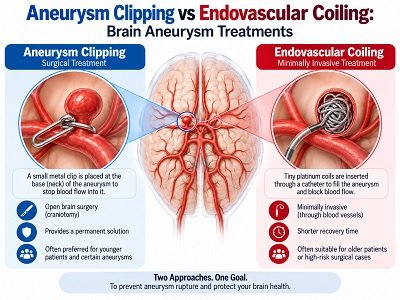
1. Clipping during the operation
Surgical clipping is performed when a neurosurgeon makes a hole in the skull to reach the aneurysm.
A tiny metal clip is placed around the neck of the aneurysm. This prevents blood going into the bulging area, but blood can still pass through the main artery.
The aim is to stop the aneurysm from bleeding or bleeding again.
2. Coiling inside-out
Endovascular coiling is done from inside the blood vessels, so it does not require cutting open the skull to reach the aneurysm. A thin catheter is guided to the aneurysm through an artery. This is usually started in the wrist or groin. Very small copper coils are put inside the aneurysm. These coils help the blood clot form inside the sac and keep blood from flowing into it. This might decrease the risk of it rupturing or bleeding again, depending on the aneurysm and the planned treatment.
3. Flow Change of
It is a small, mesh-like device that is placed inside the main artery across the opening of certain aneurysms. It changes the blood flow so less blood goes to the aneurysm. Over time, a clot can form inside the aneurysm, and the blood vessel wall can grow over the device. This treatment is good only for some aneurysms. But this may not be the best choice for patients, particularly in an emergency situation when stopping bleeding fast is crucial. The decision of whether to clip, coil, or divert the flow or just keep an eye on it relies on detailed imaging and expert evaluation.
What Happens After a Brain Aneurysm Ruptures?
Treatment of the aneurysm is one aspect of caring for a ruptured brain aneurysm. Patients may need to be watched closely because bleeding around the brain can cause a variety of problems. Vasospasm is a big problem that can occur. This happens when the blood vessels in the brain become smaller and permit less blood to reach some areas. In the long run, it can also lead to brain injury or stroke. Another possible problem is hydrocephalus, a condition in which cerebrospinal fluid builds up inside the brain, putting pressure on it.
Some may need a temporary drain to remove excess fluid. Doctors may also give medicines, such as nimodipine, to people who have had an aneurysmal subarachnoid hemorrhage to reduce the risk of poor outcomes from delayed cerebral ischemia. The patient’s recovery depends on the amount of bleeding, the speed of treatment, the patient’s condition on admission, and any complications. Some patients get better quickly. But others may have trouble moving, talking, remembering, or doing everyday activities and may need long-term rehab.
Can a Brain Aneurysm Be Prevented?
Not all brain aneurysms can be prevented, particularly when there is a genetic component. But there are some changes you can make in your lifestyle and health that can help reduce avoidable risks.
These steps are crucially important:
- Keep an eye on your blood pressure as your doctor recommends.
- If you smoke, get help to quit. Don’t smoke.
- Avoid recreational drugs, such as cocaine and amphetamines.
- Eat well and exercise regularly for a healthy lifestyle.
- Inform your doctor if there is a strong family history of brain aneurysms.
- If you know that you have an aneurysm, be sure to follow the imaging schedule that was recommended.
People with an aneurysm should talk to their doctor before starting or stopping medicines, or making big changes to their exercise routine.
Final Thoughts
Most brain aneurysms that haven’t burst cause no symptoms, and you might have one for years without knowing it. But if an aneurysm ruptures, it can cause bleeding around the brain, which is very dangerous and can kill the person. That’s why it’s important to know how to read emergency signs. You should get medical attention right away if you suddenly develop a very bad headache along with vomiting, a stiff neck, changes in your vision, weakness, confusion, or loss of consciousness. There are a number of ways to treat brain aneurysms now, including surgical clipping, endovascular coiling, and flow diversion. But the best way to treat an aneurysm depends on the overall health of the patient. If you want to understand the warning signs, diagnosis, and treatment options in more detail, read this Emergency guide on Brain Aneurysm symptoms by Dr Deepak Agrawal (LinkedIn profile).