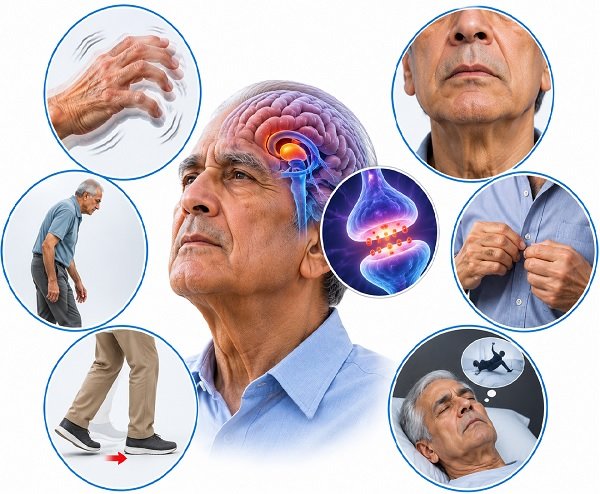
You might be able to walk, write, eat, or even keep your head straight, but your muscles keep moving or getting tighter without you controlling them. This is how life can be for people with dystonia. The disease can affect one or more parts of the body, making it difficult to do simple things on a daily basis. Many people can control dystonia with medications, physical therapy, and botulinum toxin injections. But what if these treatments aren’t enough? In this case, deep brain stimulation (DBS) may be a good choice. It is a procedure that employs controlled electrical impulses to change the activity of certain brain pathways that control movement.
It can reduce the contraction of muscles that don’t need to contract, in some carefully selected patients, and make life easier day to day.” Not everyone responds to DBS, though. It also doesn’t cure dystonia. So how does this treatment work, who could benefit, and what does the typical recovery look like?
What is dystonia? What does dystonia feel like?

People with dystonia have problems controlling their muscles, and their muscles contract when they don’t want them to. These contractions can result in twisting movements, repetitive muscle spasms, unusual body positioning, and sometimes pain. It might be a mild illness for some people, but very severe for others. Certain actions such as walking, writing, talking or performing a task can also aggravate them. For instance, someone with cervical dystonia might feel their neck being pulled or twisted over and over. People with hand dystonia may have trouble writing, holding a pen, or using their fingers as they normally would.
Dystonia can affect several different areas of the body:
- In focal dystonia, only one part of the body gets tight, such as the eyelids, neck, or hand.
- Segmental dystonia: Two or more contiguous parts of the body are tense.
- Generalized dystonia involves more than one area of the body, typically the trunk and arms and legs.
- Multifocal dystonia is when several different parts of the body are affected.
- The condition can be caused by genes, a brain injury, some medicines, or other neurological problems. And sometimes the exact cause cannot be found.
It’s not just that the muscles are weak. It is about how the brain plans and controls motion. That’s why treatment can include drugs, injections, therapy, and sometimes, brain stimulation.
What is deep brain stimulation (DBS) to treat dystonia?
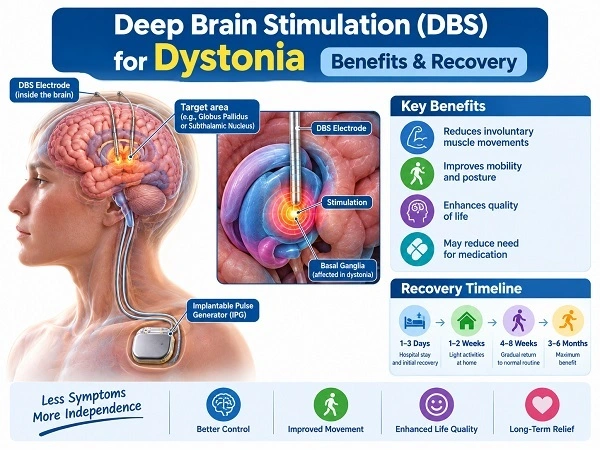
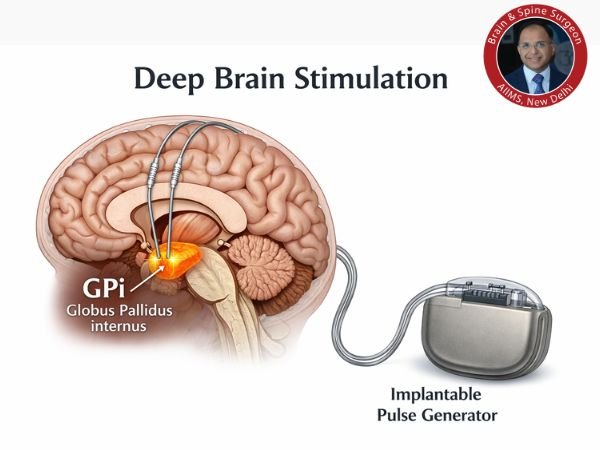
Deep Brain Stimulation involves putting thin wires, called electrodes or leads, in certain parts of the brain during surgery. These electrodes are connected to a small device, usually placed under the skin near the chest. The device sends controlled electrical pulses to the part of the brain it wants to affect. These signals help to control brain circuits that control movement when they are behaving oddly. Like a pacemaker, but instead of helping to control the heartbeat, a DBS system helps the brain deal with signals having to do with movement. The Globus Pallidus Internus (GPi) is a common target for treatment of dystonia. This region of the brain is very important in controlling movement. GPi stimulation is one of the most studied methods to aid people with dystonia who have not been able to improve with medicine.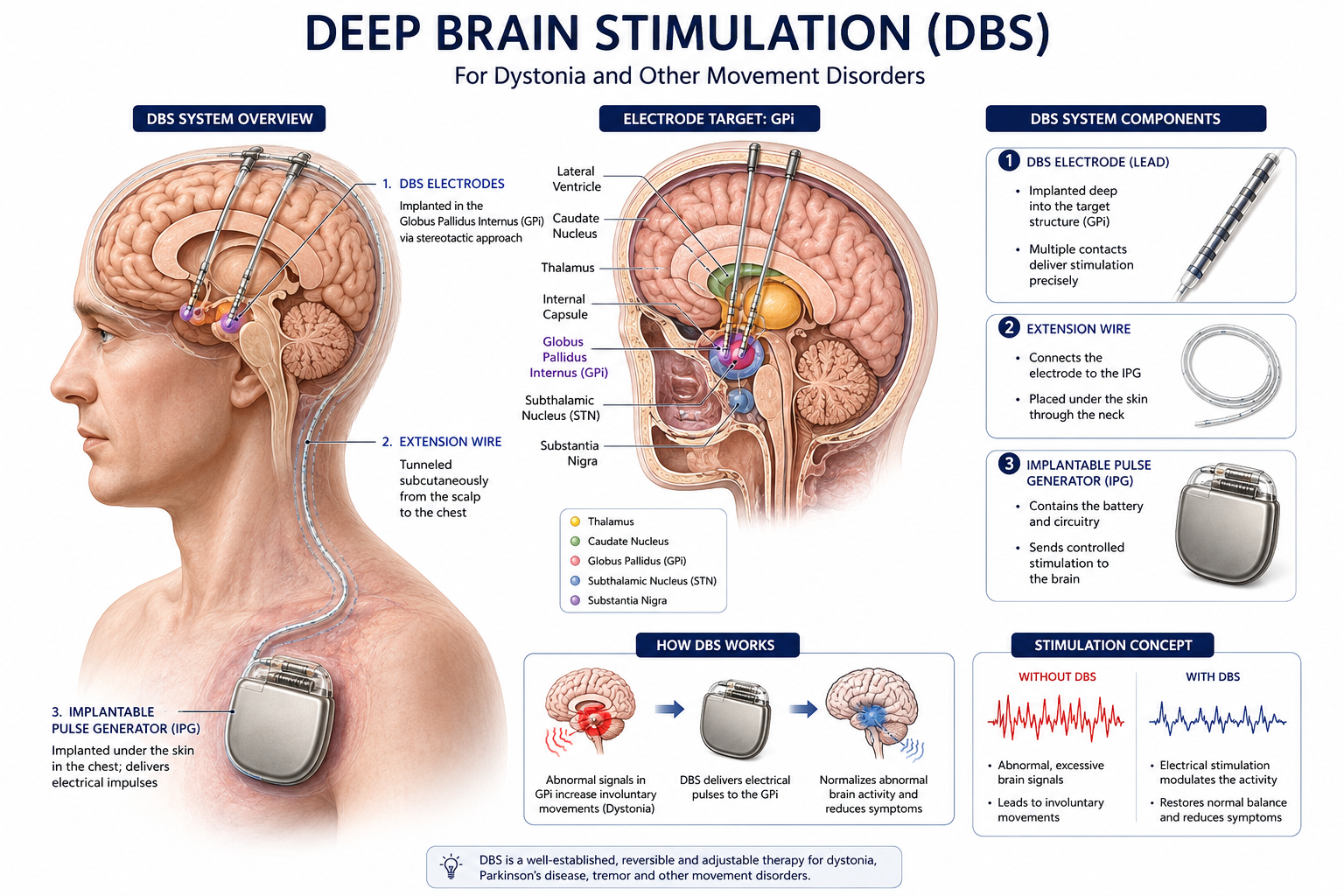
The treating specialist can alter the electrical settings in response to the patient’s response. This allows for the treatment to be adapted over time. It is important to understand that DBS does not get rid of the cause of dystonia, and it does not permanently fix the brain circuits. It helps control symptoms by changing how those circuits work.
How does DBS help with controlling dystonia?
Understanding how DBS works helps to know that different parts of the brain need to be able to talk to each other for normal movement to occur. They are places where you send and receive the signals that help your muscles move at the right time and with the right amount of force. In people with dystonia, these networks that control movement don’t work right. This can cause muscles to contract when they should be relaxing, or movements to become stuck and difficult to control.
DBS delivers electricity to a specific brain region. This changes what is going on in the network controlling movement, which can help to prevent muscles from contracting in the wrong way.
The change could take various forms:
- Fewer or less severe muscle spasms.
- More control over postures/movements that don’t “feel right”.
- Better ability to sit, walk, write, or do everyday things.
- Reduced pain from repeated muscle contractions.
- More freedom to manage your day-to-day life.
Not all patients will have an immediate response. Some people notice changes slowly over time as the stimulation settings are changed over weeks or months.
Who Can Deep Brain Stimulation for Dystonia Help?
DBS is generally considered when dystonia severely disrupts daily activities and other therapies have not provided sufficient relief. But just because someone has dystonia doesn’t mean they’re a candidate for surgery. This is something we have to fully assess before we can pick.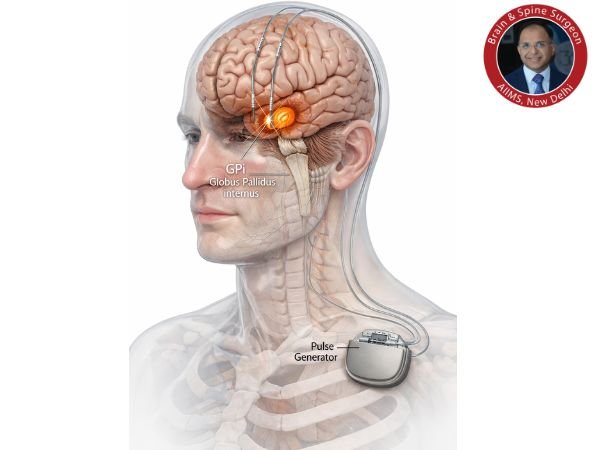
A specialist may consider DBS for people:
- The person has moderate to severe dystonia. This makes it hard for them to do normal activities.
- The medicines either don’t work well enough or have side effects that are hard to live with.
- Botulinum toxin injections have not worked well enough in the right circumstances.
- The symptoms make it very difficult to move, stand up straight or do normal things.
- The person is well enough for surgery.
- The expected benefits are considered to outweigh the possible risks.
GPi-DBS may be particularly beneficial for patients with certain forms of primary or hereditary dystonia. The outcome can depend on what is causing the dystonia, the parts of the body that are involved, how long it has been present, and whether there is an associated brain injury. People with secondary dystonia can also be considered, but it may be harder to know how they will respond. Thus, the type of dystonia and its etiology must be taken into account in planning treatment. A team of neurosurgeons and a movement-disorder neurologist usually collaborates to decide whether DBS makes sense.
What Comes Before DBS Surgery?
The DBS treatment begins long before the surgery. The first thing the medical team needs to know is what the problem is, what symptoms the patient is experiencing, their medical history, and how they have responded to previous treatment.
The evaluation may contain:
1. Examination of the brain
The specialist will examine the person’s posture, gait, muscle rigidity, and the body parts affected by dystonia. The team could also examine how much the condition hinders normal activities.
2. Visualizing the brain
The brain can be viewed with MRI or CT scans to see the safest way to insert the electrodes. Imaging also helps the surgeons to find the right place for surgery.
3. Previous treatments in review
The doctor looks at the patient’s medicines, injections, and other treatments and how well they worked.
4. A summary of your health
It considers the overall health of the patient, their suitability for surgery, and any other medical conditions they might have.
5. Talk about what you expect to happen
The team discusses possible advantages, disadvantages, limitations, and the need for long-term follow-up. This helps both the person with DBS and their caregivers understand what it can actually do.
This evaluation is important because choosing the right patient is a big part of the final result.
How is deep brain stimulation surgery performed?
The exact scheme of the surgery may differ depending on the patient’s condition, the tool that is used, and the hospital’s rules. Here are the procedures that are normally part of DBS.
Step 1: Planning target areas
The neurosurgeon looks at pictures of the patient’s brain and decides where to put the electrodes. The Globus Pallidus Internus (GPi) is most often targeted in patients with dystonia.
Step 2: Positioning the Electrodes
In small places, the skull is carefully opened up and thin electrodes are carefully placed into the right parts of the brain. Imaging and other surgical techniques help the team place the leads in the right location.
Depending on the type of surgery and the needs of the patient, the procedure may be done with the patient awake for some parts or with general anesthesia.
Step 3: Wire the device.
The electrodes are connected to additional wires that are placed under the skin. Then those wires are attached to a pulse generator, which is usually implanted under the skin near the chest.
The pulse generator holds the battery and the electronic system that controls the electrical stimulation.
Step 4: Power on the device and set it up
The plan for the treating team is for the device to be utilized post the acute recovery phase from surgery. The specialist adjusts the stimulation settings based on the patient’s symptoms and responses.
First settings aren’t always last settings. It may take more than one visit to find the optimal balance of side effects and relief of symptoms.
DBS for dystonia does many good things.
DBS can be a meaningful help for good candidates moving around and doing daily tasks.
A Cochrane review found that GPi-DBS might help adults with moderate to severe cervical, segmental, or generalized dystonia by decreasing the severity of their dystonia and facilitating the ability of them to complete daily tasks. However, the review did state that evidence quality for some outcomes was low.
Some of the potential benefits are:
1. Improved control of muscle movement
DBS can prevent muscles from standing, twisting and contracting in odd ways. That could help patients control their movements more easily.
2. Improved mobility
Dystonia of the legs, trunk or neck can interfere with even simple things. If these symptoms improve, some patients may be able to walk, sit or change positions more easily.
3. Less pain and discomfort.
Soreness and fatigue may result from repeated muscle contraction. If DBS stops these contractions, then the pain that goes along with it may get better.
4. Improved daily functioning
Some patients may find it easier to do things like work, eat, write or get dressed. How much better you feel depends on the type of dystonia you have and how severe it is.
5. Therapy variations
The specialist can adjust the settings on the DBS, which is not possible with some treatments once they have been administered. You can also turn off the device but that may cause your symptoms to return.
Important to keep in mind that not all patients receive all these benefits. Many people who have surgery may still need medicines, Botulinum toxin injections or physical therapy.
Final Words
Dystonia can affect so much more than just your muscles moving. It can make it hard to walk, write, work and do other normal things. For some carefully selected patients, if standard treatments are not enough, Deep Brain Stimulation may be an option. The treatment uses controlled electrical signals to regulate brain activity related to movement. It can help you stand taller, relax your muscles and accomplish more in your day to day life. But the surgery results are not the same for everyone and there are risks and a long aftercare period.
When considering DBS, it is important to consult with a movement disorder specialist and a neurosurgical team with extensive experience. A full assessment can be useful in judging whether or not the treatment will be of benefit and what sort of change is likely to take place. To know more about the procedure and what may happen post-procedure, read this guide on Deep Brain Stimulation benefits for Dystonia by Dr Deepak Agrawal (LinkedIn profile).