While fibre is commonly known for its impact on digestion and constipation issues, it has several functions within the body. Over the years, nutritional studies have shown that fibre is involved in weight regulation, controlling appetite, regulating blood glucose, and maintaining gut microbiota.
While other carbohydrates undergo complete enzymatic digestion, fibre is partially digested. It travels through the digestive tract, where it comes into contact with the gut environment, providing substrates for gut bacteria, adding volume to food, and ensuring easy digestion.
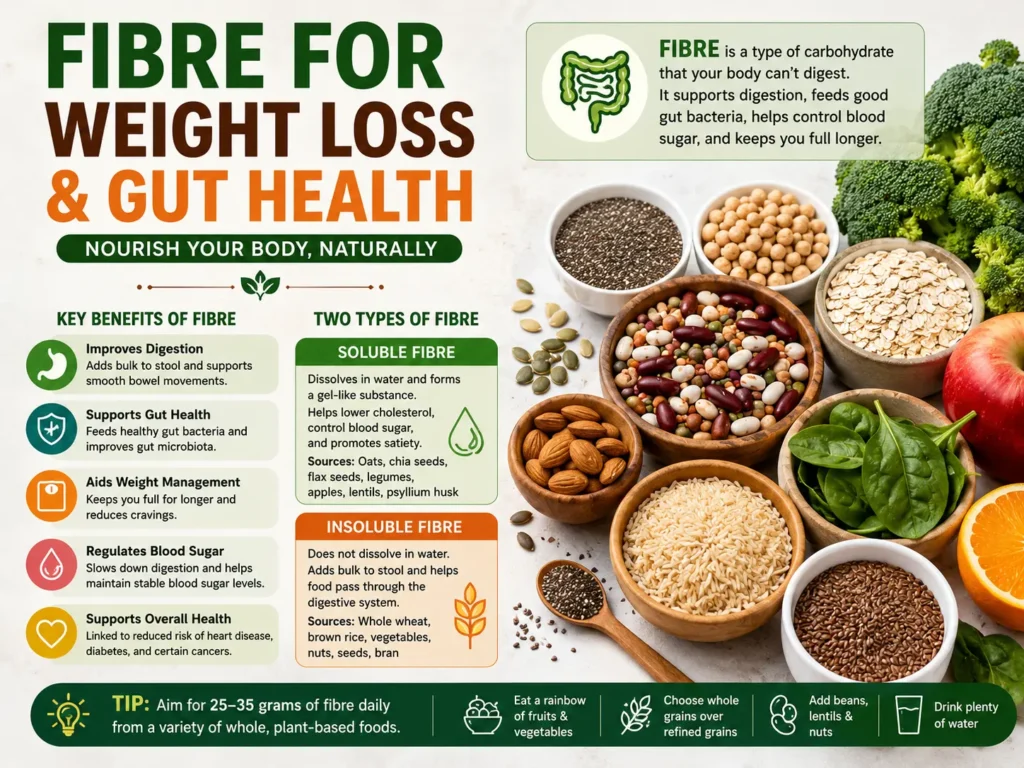
Low fibre intake has become increasingly common in recent years due to changing dietary habits such as increased consumption of processed food at the expense of whole products like fruits, vegetables, beans, nuts, and whole-grain cereals. The new dietary habit can impact digestion, cause hunger, and lead to difficulties managing weight.
According to a study in The Lancet, a high fibre intake is associated with a decreased incidence of various diseases, such as cardiovascular disease, type 2 diabetes, and colorectal cancer. It was noted that participants who consumed between 25 and 29 grams of fibre daily showed significant health benefits when compared to those with low dietary intake.
What is Dietary Fibre?
Dietary fibre is a kind of carbohydrate that is naturally found in plant foods. This kind of carbohydrate is mostly found in foods such as vegetables, fruits, grains, legumes, nuts, and seeds. The main distinguishing feature of dietary fibre from other types of carbohydrates is that the human body does not have the capacity to completely break it down into smaller pieces.
The ability of the fibre makes it suitable for performing several functions:
Improves Digestive Health
Some types of fibres increase the volume of stool in order to allow smooth movement of food inside the digestive tract. This may contribute to proper functioning of the digestive system.
Promotes Gut Microbiota Health
There are some fibres that provide food for healthy bacteria that live inside the digestive tract.
Provides Satiety
Fibre takes more time to be digested, and thus it helps to stay full for longer periods.
Maintains Stable Levels of Glucose
Since high levels of fibre slow down the process of digestion, this leads to a reduction in glucose levels in the blood, especially in individuals who consume lots of carbohydrates.
It should be noted that the presence of fibre in the diet usually implies increased amounts of nutritious products in the body; therefore, the positive effects of dietary fibres on general well-being are obvious.
Dietary Fibres: What Are Soluble Fibres and Insoluble Fibres?
Different fibres have their different effects in the body; however, there are two types of dietary fibre: soluble fibres and insoluble fibres. Both of them play an important role in our diet; however, each one works differently inside the body.
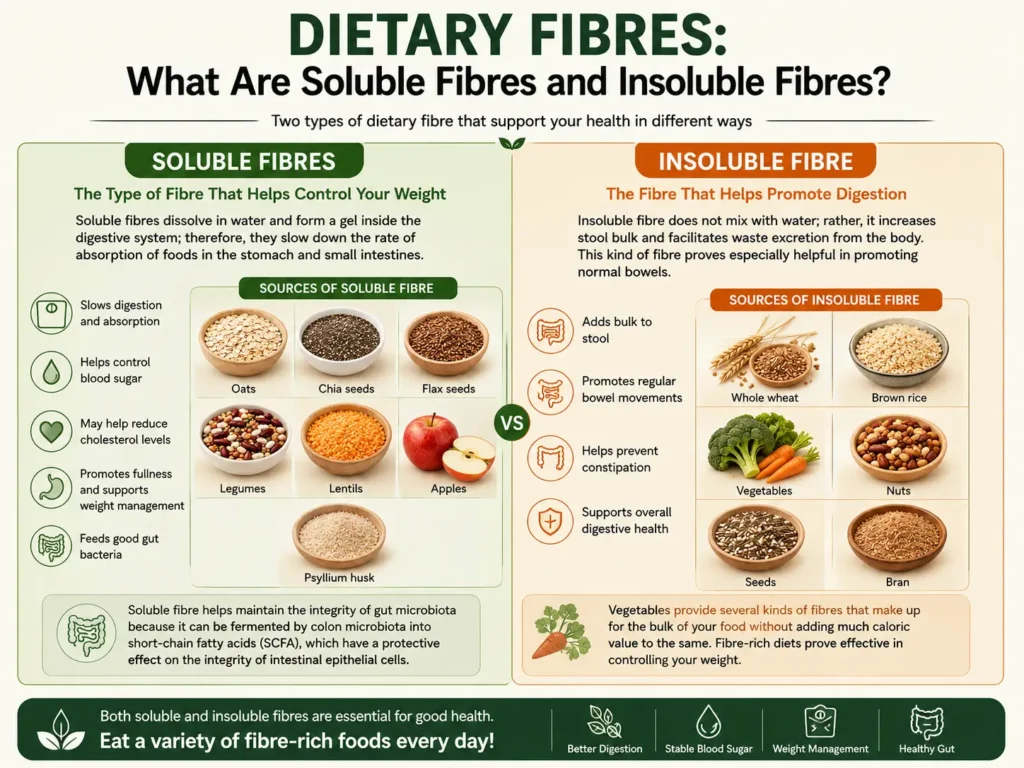
Soluble Fibres: The Type of Fibre That Helps Control Your Weight
Soluble fibres dissolve in water and form a gel inside the digestive system; therefore, they slow down the rate of absorption of foods in the stomach and small intestines.
Sources of soluble fiber include:
- Oats
- Chia seeds
- Flax seeds
- Legumes
- Lentils
- Apples
- Psyllium husk
The best-studied form of soluble fiber is beta-glucan, which is found in oats and barley. Beta-glucans have been reported to have the potential to help reduce cholesterol levels and promote satiety. It is also worth noting that soluble fiber helps maintain the integrity of gut microbiota because it can be fermented by colon microbiota into short-chain fatty acids (SCFA), which have a protective effect on the integrity of intestinal epithelial cells.
Insoluble Fibre: The Fibre That Helps Promote Digestion
Insoluble fibre does not mix with water; rather, it increases stool bulk and facilitates waste excretion from the body. This kind of fibre proves especially helpful in promoting normal bowels.
Some common foods containing insoluble fibre are:
- Whole wheat
- Brown rice
- Vegetables
- Nuts
- Seeds
- Bran
An interesting thing about vegetables is that they provide several kinds of fibres that make up for the bulk of your food without adding much caloric value to the same. And this is precisely why fibre-rich diets prove effective in controlling your weight. Fibre-rich foods must necessarily contain both types of fibre.
Role of Fibre in Losing Weight
People generally consider calories and proteins, as well as exercise, while trying to lose weight. However, fibre is also an essential component of this weight-loss process as it regulates appetite and satiety levels. Fibre itself does not act upon the reduction of body fat. Rather, it helps in losing weight due to the physiological responses it produces.
Fiber Makes You Feel Full for Long Periods
The other main benefit offered by fiber for effective weight loss is satiety. The consumption of foods that contain fiber usually involves chewing the food for longer. Foods that contain fiber absorb water in the gut, thereby swelling and filling up more space in the gut.
For instance, a meal consisting of oats, chia seeds, and fruits will make you feel full for a longer period than one that comprises refined carbohydrates due to the slower process of digestion.
This way, you would be less likely to do the following:
- Consuming unneeded snacks
- Having frequent cravings
- Overeating during meals
A study carried out by scientists showed that consuming more fiber per day is enough to promote weight loss. It was noted that those people who consumed more fiber lost weight effectively regardless of any diet regimen.
Fiber Makes It Easier to Decrease Caloric Intake
High-fiber foods are naturally low-calorie yet high-volume.
For instance:
Vegetables contribute to the bulk of your meals.
Fruits offer you natural sweetness and fiber.
Legumes contribute both fiber and plant protein.
The result is a satisfying amount of food intake without an increase in calorie content.
Rather than trying to reduce the size of your food intake, increasing fiber content can help achieve that.
A plate with:
- Vegetables
- Proteins
- Grains
- Fiber foods
It is likely to make you fuller compared to just carbs.
Fibre and Hormones Regulating Hunger
It is not only through the power of your will that you can regulate your hunger. It also depends on communication between the digestive system and the brain. Fibre can have an impact on such communication because it slows down digestion and affects the regulation of hormones connected to the feeling of satiety. There is evidence from scientific studies that short-chain fatty acids resulting from fibre fermentation can affect such hormones as:
- GLP-1 – glucagon-like peptide-1
- PYY – peptide YY
Both hormones play an important role in regulating appetite.
Fiber and Gastrointestinal Health: Microbiome
Probably one of the most promising and exciting aspects of nutritional science research in recent years is the human microbiome. The term microbiome is used to describe the huge number of microbes residing in your digestive tract. Some of these microbes can affect the digestion process, immune system, inflammatory reactions, and metabolism. The food you consume will greatly impact these microbes, especially fiber.
How Does Fibre Feed Your Gut Beneficial Bacteria?
In contrast to other nutrients, some fibres can get to the large intestine, where they come into contact with gut bacteria.
This allows bacteria to digest fibres, producing what is called short-chain fatty acids (SCFA).
These include the following:
- Acetate
- Propionate
- Butyrate
SCFAs contribute to gut health in many ways.
Increasing Gut Bacterial Diversity Through Fibre Intake
Normally, the gut contains lots of various beneficial bacteria. Intake of various types of fibres increases bacterial diversity since various bacteria use different types of fibres.
For instance:
- Oats have beta-glucan
- Legumes have resistant starch and fibre
- Fruits have pectin
- Seeds contain soluble fibre
That is the reason why it is better to eat various types of plant foods rather than rely on a single source of fibre.
Fibre, Gut Health and Metabolism
The relationship between fibre and gut health extends far beyond the digestive process itself.
As noted in Nature Reviews Gastroenterology & Hepatology, fibre intake appears to be vital in creating the gut microbiome that leads to healthy metabolism.
Maintaining good gut health could be beneficial for several reasons, including:
- Better digestion
- Proper blood sugar regulation
- Decreased levels of inflammation
- Increased nutrition absorption
This link is particularly relevant since poor gut health and poor weight control are often intertwined. In other words, maintaining an unhealthy gut environment can negatively impact the digestive process and increase cravings.
Impact of Fibre on Blood Glucose Levels
Fibre might impact how fast your blood sugar increases after a meal, too. After consuming a lot of foods containing refined carbs, glucose could enter your body swiftly, leading to an increase in blood glucose levels. Soluble fibre works by slowing down the process of digestion and absorption.
It does this to:
- Lower sudden increases in blood sugar
- Maintain steady blood sugar levels
- Avoid feeling hungry just after eating
Stable blood sugar levels could be beneficial for those attempting to control their weight since spikes in their glucose levels lead to hunger pangs and overeating.
Examples include: Consuming a single meal consisting of white rice is bound to be absorbed fast, but when combined with other foods like dal, vegetables, and salad, the level of fibre in the meal increases. This explains why typical Indian meals have more fibre content.
How much fibre do you need per day?
The recommended amount of fibre will depend on various factors such as age, gender, and dietary habits, but the recommended value is usually about 25-35 grams per day.
However, many people fail to achieve the recommended values since the current diets may be highly processed foods, while having less plant-based foods.
Some common patterns that make people have inadequate fibre in their diet include:
- Going for white bread over whole grains
- Reduced consumption of vegetables
- Consumption of more juices than fruits
- Having more packaged food products than other foods
The recommendation to increase fibre does not mean that one should immediately increase intake in a drastic manner since there is a need for adjustment.
A gradual intake can be better since your gut bacteria need time to adapt.
This can be achieved as follows:
- By adding one fruit per day
- Taking vegetables in every main meal
- Gradual addition of dal, beans, or legumes
- Slight intake of seeds
Increasing Fibre Intake Without Getting Bloated
While there are many advantages to consuming dietary fibre, some people suffer from symptoms such as gas production or bloating when increasing their fibre consumption. This occurs because some fibres ferment in the gut, releasing gases during the process. This does not indicate that fibre is bad for your body; it only indicates that the fibre intake was increased too rapidly.
The following are some of the methods to increase fiber intake easily:
Fiber intake gradually
In case the current intake of fiber is less, it should be increased gradually over a period of many weeks rather than all at once.
For instance:
First Week:
- Add one fruit
- Add more vegetables
Second Week:
- Include legumes/whole grains
Third Week:
- Add seeds/higher fiber foods
Consume Adequate Amounts of Water
Water plays an integral role in the effectiveness of fibre in your body. Fibres can absorb water, causing them to swell up and help in the formation of softer stools. Failure to take enough amounts of water could make fibre intake exacerbate your problem.
Eat Different Fibres
Consuming a single type of fibre may not give you the variety your intestines need.
Rather than relying on a single food such as oats or psyllium husks, use a combination:
- Fruits
- Vegetables
- Lentils
- Beans
- Nuts
- Seeds
- Grains
This is because each kind of fibre benefits different bacteria in your intestines.
Sum up,
Fiber is among the most crucial nutrients that help maintain a healthy digestive system and achieve sustainable weight management. Apart from its contribution to digestion, fiber plays an essential role in regulating hunger, gut flora maintenance, enhancing meal satiety, and overall metabolic function. Instead of trying to incorporate a single nutrient into your eating habits and expecting positive changes, you should consider including various fibers daily from foods such as fruit, veggies, legumes, whole grains, nuts, and seeds. The right combination of fiber and other nutrients like proteins, alongside adequate fluid intake and nutritious meals, could lead to a healthier digestion and attitude towards food.