The development of a white coating on the tongue may be because of the buildup of dead cells, bacteria, food, and other particles trapped in the tiny bumps on the surface of the tongue known as papillae. This is not a cause for concern, as it can be improved with proper oral hygiene practices. However, a non-reversible white coating or painful white patches could be indicative of certain diseases.
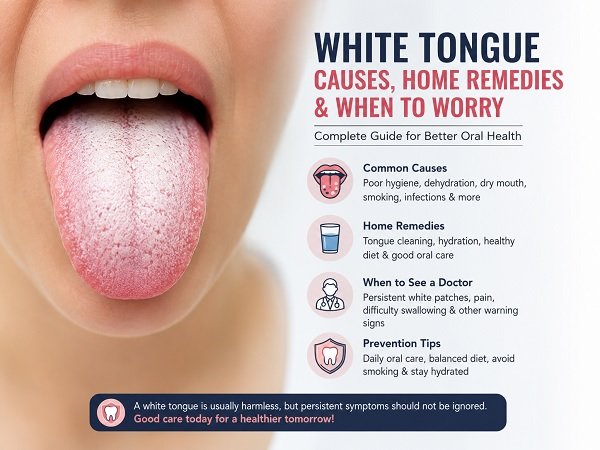
Pointers:
- A white tongue is usually a temporary condition.
- Bad oral hygiene, dehydration, and xerostomia are among the top three reasons for a white tongue.
- A white film on the tongue can also be associated with infectious conditions such as oral thrush.
- Self-treatment through cleaning the tongue regularly and hydration works in many cases.
- Prolonged white patches or those associated with pain require a dental professional.
Introduction
Have you ever woken up with your tongue looking white instead of its natural pink color? That would be pretty strange, and you would probably be sure that something must have happened to make you ill. The fact of the matter is that this is a common phenomenon, and in most cases, there is nothing to worry about. This happens because of poor tongue hygiene, dehydration, or having a dry mouth. All of these conditions are easy to overcome by simply changing your lifestyle a little bit. However, sometimes it can be a sign of some illness that needs treatment. You must recognize when the tongue is white for normal reasons and when it signals that something is wrong. Here is everything you need to know about white tongue causes, home remedies, and when to visit your doctor.
What Does It Mean If Your Tongue Is White?
From the definition provided, it should be clear that the tongue of an ordinary individual is expected to appear pinkish in color and have little bumps on it called papillae that allow one to taste food and move it inside the mouth when chewing. The tiny lumps of the tongue may swell more than usual and trap debris, bacteria, dead skin cells, and food particles between themselves. This leads to the tongue turning into a white or pale coating instead of looking pink. Such a condition usually does not last for a long time and can disappear after brushing teeth or tongue cleaning and sufficient fluid intake. One needs to remember that white tongue coating should not be mixed up with white thick patches.
White Tongue Causes
It should be understood that a white tongue is just a symptom and not a condition per se. There are multiple reasons why people suffer from a white tongue, some of which are minor while others are more severe.
1. Poor Oral Hygiene
Poor oral hygiene is one of the common white tongue causes. In the case of not having brushed one’s teeth or having removed the white film from one’s tongue, then food bits as well as bacteria can collect on one’s tongue and result in a white coating on the tongue. Individuals who forget to brush their teeth and clean their tongues are at risk of developing white films on their tongues.
What Should You Do?
- Brush your teeth twice daily.
- Clean your tongue gently using a tongue scraper or a soft-bristle toothbrush.
- Floss every day.
Dehydration
Another factor that may lead to having a white tongue is a lack of sufficient amounts of water intake. The saliva in the mouth naturally cleans the mouth of bacteria and food remnants. In cases of dehydration, there will be less saliva produced, and thus debris accumulates on the tongue. Other symptoms include a feeling of dryness in the mouth, especially after exercise, in hot weather, and early in the morning after sleeping.
Symptoms of Dehydration
- Dry mouth
- Dry lips
- Dark yellow color of urine
- Thirst
- Headache
Intake of sufficient amounts of water helps keep the mouth clean.
Dry Mouth
Dry mouth is a condition where your mouth does not make sufficient saliva. Some reasons why this occurs are:
- Medicines
- Breathing through the mouth during sleep
- Smoking
- Diabetes
- Old age
- Certain diseases
The absence of sufficient saliva increases bacterial growth, leading to a risk of developing a white tongue coating. Most people will realize that their tongue turns white when they wake up due to mouth breathing during sleep.
Smoking and Tobacco Consumption
Smoking impacts almost every aspect of the mouth, including the tongue. Tobacco causes dryness of the mouth as well as irritation of the tongue’s surface. It further leads to bacterial growth and results in swollen papillae that easily collect debris.
In addition, smokers may experience the following symptoms:
- Bad breath
- Discoloration of teeth due to yellowing and/or darkening
- Changes in taste perception
- Permanent discoloration of the tongue
The positive changes to your tongue when stopping smoking will be followed by a reduction in the probability of gum diseases, oral cancer, and many others.
Oral Thrush
Another disease that causes a white tongue is oral thrush.
Oral thrush is a fungal infection characterized by an overgrowth of Candida – a yeast present in our mouths. Due to certain factors, this yeast grows and develops creamy white patches on the tongue and in the mouth.
In contrast to a mere white layer, these patches can hardly be removed. They may appear sore when scraped off and can leave red spots prone to slight bleeding.
Signs of Oral Thrush
Common signs of oral thrush include:
- White lesions appearing on the tongue and inside cheeks
- Mouth pain and burning
- Red areas beneath the lesions
- A loss of taste
- Soreness and cracking in the corners of the mouth
- Swallowing problems in severe cases
The following groups of people are more likely to suffer from this disease:
- Infants
- People suffering from diabetes
- Patients wearing dentures
- Patients using inhaled steroid medications
- Individuals taking long-term antibiotics
- Individuals with weakened immune systems
Oral thrush requires special treatment prescribed by a doctor.
Leukoplakia
Leukoplakia refers to the appearance of thick white patches in the mouth, including on the tongue. While the white discoloration seen in individuals with poor dental hygiene is easily removable through brushing, that caused by leukoplakia is hard to brush away. Individuals who smoke and those who chew tobacco are more susceptible to this problem. However, leukoplakia may also arise as a result of prolonged irritation in the mouth. Leukoplakia is non-cancerous in most patients. But in some individuals, patches may change into cancer cells after some time.
Geographic Tongue
Although the name might suggest otherwise, geographic tongue is not a harmful disease. This condition causes the appearance of smooth red lesions on the surface of the tongue, which are surrounded by white or light borders. The location of these spots changes as time passes, and they can move to different parts of the tongue. Sometimes, mild discomfort may be experienced when eating hot and spicy foods, but some patients are asymptomatic. Despite its strange appearance, geographic tongue is not a dangerous condition and does not need any treatment.
Additional Symptoms that Could Accompany a White Tongue
A white tongue can occur alone, or it could be accompanied by additional symptoms, depending on the underlying reason behind the condition.
These might include:
- Bad breath
- Dry mouth
- Disagreeable taste in the mouth
- Burning sensation or pain
- Red spots on the tongue
- Difficulty swallowing
- Cracks in the corners of the mouth
- Pain during the consumption of spicy foods
The symptom combination usually provides physicians with vital information regarding the cause of the condition.
White Tongue Home Remedy

There are many cases when a person can get rid of white tongue symptoms due to improper oral care, dehydration, or the condition known as “dry mouth.” It is possible to do so just through making certain lifestyle changes. Nonetheless, the home remedy works well in case there is no medical condition behind the problem.
1. Cleaning the Tongue Daily
Many people tend to brush their teeth without caring about tongue hygiene. The tongue scraper or soft-bristled toothbrush will do a great job at removing bacteria and dead cells that accumulate in the mouth. Remember not to be rough when you clean your tongue. This procedure should become your daily routine before sleep.
2. Brush and Floss Daily
Maintaining proper oral hygiene is one of the simplest methods to avoid developing a white tongue coating.
It is recommended by dentists to:
- Brush your teeth daily using fluoride-containing toothpaste.
- Use dental floss once a day to clean out the plaque between your teeth.
- Replace your toothbrush every three or four months.
- See your dentist for routine examinations and teeth cleaning.
A clean mouth means less presence of bacteria that may form on the tongue.
3. Drink Plenty of Water
Consuming an adequate amount of water increases production of saliva in the mouth, which acts as a natural cleanser, ridding the mouth of any bacteria or food particles. You should drink water regularly rather than drinking when you feel thirsty. Your fluid needs increase if you engage in physical activity, stay outside in warm conditions, or suffer from a fever. Your urine is usually pale yellow. Dark-colored urine indicates your need for increased fluid intake.
4. Stop Smoking and Using Tobacco Products
Tobacco smoking irritates the tongue surface and promotes bacterial growth, hence one of the frequent causes of white tongue.
Stopping tobacco use can help not only your tongue appearance but will also benefit your oral health in general. This habit reduces the risks of developing periodontal disease, halitosis, leukoplakia, and oral cancers.
If you find it hard to stop, ask your health care provider about programs for stopping tobacco use or about some cessation aids.
5. Have a Balanced Diet
Proper nutrition boosts your immune system and your oral health.
Foods which you should eat include:
- Fresh fruits
- Vegetables
- Whole grain foods
- Lean protein sources
- Milk products or their substitutes
Deficiencies of vitamins and minerals, especially those of iron, B12, and folate, can influence the tongue appearance. Your doctor can advise you on taking appropriate tests and supplements if any deficiency is present.
6. Avoid Too Much Sugary Foods and Drinks
Sugar acts as nourishment to bad bacteria and yeast that live in the mouth. Frequent consumption of sweets or sugary beverages might make it easier for dental and other health issues to arise, such as oral thrush.
Selecting healthier food and avoiding excessive intake of sweet drinks will contribute to better oral flora.
When Should You See a Doctor?
Having a white tongue does not necessarily indicate any serious health issues, but certain cases may require medical intervention.
You should see a physician or a dentist in case:
- White coating persists for two weeks or more.
- There is no way to get rid of white spots on your tongue by means of washing.
- Patches are painful and bleed easily.
- Difficulties with swallowing and chewing are noticed.
- You find out about having a lump or a thick spot in your mouth.
- Suffer from recurring oral thrush.
- You have diabetes or a weak immune system and experience a whitish coating.
- Fever, unexpected weight loss, or mouth sores accompany a white tongue.
Is It Possible to Avoid a White Tongue?
Yes, it is possible for most people. It is possible through good hygiene practices on your part. Good practices that promote oral health include:
- Brushing your teeth two times a day.
- Cleaning your tongue daily.
- Flossing your teeth regularly.
- Drinking plenty of water.
- Having a healthy diet.
- Avoiding smoking and other tobacco products.
- Avoiding foods high in sugar content.
- Going for regular dental checkups.
- Controlling any medical problems such as diabetes as directed by your doctor.
Not only will you avoid a white tongue, but you will also avoid tooth decay, periodontal disease, and foul breath.
White Tongue Myths
Several myths exist about white tongue, which continue to be circulated across the Internet. Learning the truth can help you make informed decisions regarding your dental hygiene.
Myth: A white tongue is always caused by an infection.
Truth: This is not always true because poor oral hygiene, dehydration, dry mouth, and smoking are some of the main causes of white tongue. Although infections such as oral thrush can lead to white tongue, they are just one of the various causes.
Myth: Scrubbing your tongue vigorously will help get rid of white tongue.
Truth: Gently brushing your tongue is adequate. Vigorously scrubbing your tongue can hurt it and irritate it.
Myth: Rinsing with mouthwash will cure the problem.
Truth: Mouthwash might work to kill bacteria; however, there are certain cases where the white tongue is caused by oral thrush, leukoplakia, or any other medical condition requiring special attention.
Myth: A white tongue is a serious problem.
Truth: White tongues are usually not serious issues. However, a persistent white tongue that is painful or accompanied by other symptoms requires a professional diagnosis.
In summary,
A white tongue is one of the most common problems associated with poor oral hygiene, dehydration, dry mouth, and smoking. In the majority of cases, some simple changes in people’s lifestyles, including daily cleaning of the tongue, regular brushing and flossing of teeth, drinking enough water, and consuming a balanced diet, are sufficient to address the issue.
However, the presence of a long-term white coating on the tongue, painful white spots, or any difficulty swallowing needs to be treated seriously. Some illnesses, such as oral thrush or leukoplakia, require professional medical care.
Monitoring the changes in the mouth cavity and seeking the necessary professional help will ensure the health of the patient’s mouth.
FAQs
Does a white tongue always indicate an underlying disease?
No. A white tongue is usually a result of temporary reasons such as dehydration, dry mouth, and improper oral hygiene. But if the problem is persistent or accompanied by pain, consult a health expert immediately.
Does dehydration lead to a white tongue?
Yes. Dehydration decreases saliva production, which results in the accumulation of bacteria, food debris, and dead cells on the tongue, causing it to appear white.
What are the symptoms of oral thrush?
The symptoms of oral thrush are creamy white spots on the mouth, pain and burning sensation, redness beneath the spots, and, in some cases, inability to eat and drink.
Do I need to scrape my tongue every day?
Yes. Scraping your tongue with a tongue cleaner or soft-bristled toothbrush daily will help eliminate bacteria that cause white film on the tongue.
How long does it take for a white tongue to heal?
If it is a result of bad oral hygiene or lack of water, then a couple of days of good oral hygiene and rehydration will do the trick. However, if it persists more than two weeks or keeps recurring, you need to consult a doctor or dentist.
Can smoking lead to tongue discoloration?
Yes. Smokers might have tongue discoloration as a result of the irritative effects of tobacco on the tongue and a decrease in saliva that causes increased bacterial formation.