This Relationship Between High Blood Pressure and Chronic Kidney Disease
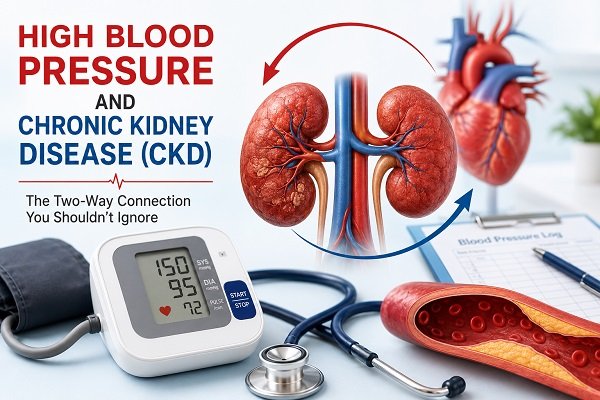
This relationship between high blood pressure and chronic kidney disease is two-sided. High blood pressure can gradually damage the small blood vessels of the kidneys and become one of the major reasons for hypertension and kidney disease. On the other hand, the damage done to the kidneys will affect the regulation of blood pressure, thus creating a vicious circle. The early detection of high blood pressure, proper nutrition, physical activity, and regular checkups may prevent hypertension and kidney problems.
Main Points to Remember
- The World Health Organization (WHO) states that almost 1.28 billion adults suffer from high blood pressure globally, and most of them are unaware of their condition.
- High blood pressure is the second major cause of chronic kidney disease (CKD), next only to diabetes.
- About 9 out of 10 patients suffering from chronic kidney disease develop high blood pressure at one time.
- Maintaining your blood pressure below the level prescribed by your doctor helps avoid any harm to your kidney function and prevents heart disease.
- Making minor modifications to your lifestyle in terms of diet and exercise can help prevent kidney problems along with heart ailments.
What Is Blood Pressure?
Blood pressure is the pressure of blood against the walls of your arteries when your heart is pumping. Your body relies on blood pressure to deliver oxygen and other nutrients to all organs, including kidneys.
Blood pressure is represented by two numbers.
For instance:
120/80 mmHg
- 120 (Systolic Pressure): Blood pressure when the heart is pumping blood.
- 80 (Diastolic Pressure): Blood pressure when the heart is relaxing between beats.
Normal blood pressure level for most adults would be about 120/80 mmHg. Long-term presence of high blood pressure levels can lead to damage of crucial organs without showing any symptoms. According to the WHO, hypertension occurs in about one-third of the world’s adult population, which makes it the number one cause of preventable diseases.
What Is Hypertension?
Hypertension is an illness characterized by high blood pressure. It occurs whenever there is continuous excessive blood pressure against the arterial walls.
It has earned the nickname of “the silent killer” because of its lack of symptoms despite causing severe damage.
Long-term high blood pressure can lead to problems such as those related to:
- Heart
- Brain
- Eyes
- Blood vessels
- Kidneys
Studies have found that patients with uncontrolled high blood pressure are at a significantly higher risk of heart attack, stroke, and kidney disease than those whose blood pressure is regulated.
Risk factors include:
- Excess salt in the diet
- Obesity
- Sedentary life
- Tobacco
- Diabetes
- Stress
- Genetic predisposition
- Old age
Fortunately, it can be managed with proper diet and medication.
Relationship Between Hypertension and CKD
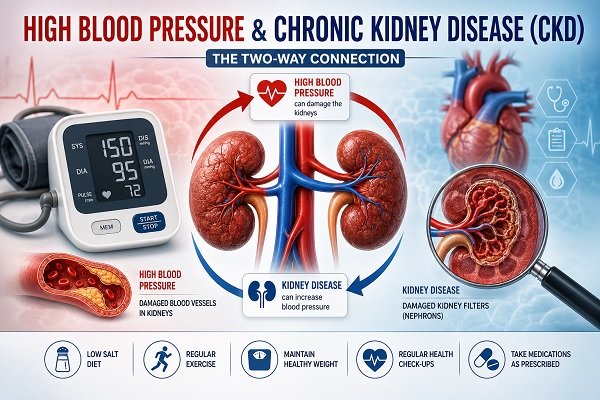
There is a notion that one disease causes another – kidney disease leads to high blood pressure or vice versa. Both opinions are true at the same time.
The relationship between high blood pressure and CKD includes two aspects.
High Blood Pressure → Kidney Problems
In case when blood pressure stays elevated for too long, it adds extra strain on the blood vessels located inside the kidneys. Blood vessels narrow down, weaken, and get damaged, which leads to poor oxygen supply and inability to filter waste products from the bloodstream.
Kidney Diseases → High Blood Pressure
If kidneys do not work properly and cannot remove excess fluids and sodium, it increases the volume of fluids in the body and raises blood pressure levels.
This vicious circle works as follows.
High blood pressure affects the kidneys.
↓
Damage to kidneys increases blood pressure.
↓
Kidneys become damaged.
↓
Blood pressure rises.
It can repeat for years until it becomes apparent. According to the statistics from the National Kidney Foundation, up to 85–90% of patients with advanced CKD suffer from high blood pressure as well.
How High Blood Pressure Harms the Kidneys?
Each kidney has about one million filters known as nephrons.
They filter the blood 24/7.
High blood pressure is like water passing through a pipe at high pressure.
The first effect is usually insignificant.
In the end, the blood vessels become:
- Thinner
- Hardened
- Stiff
This leads to a decrease in the supply of oxygen-filled blood to the kidneys.
Consequently:
- The filtering system becomes scarred.
- The waste products accumulate in the blood.
- There is protein leakage in the urine.
- The efficiency of the kidneys goes down.
This is what doctors call hypertension and kidney damage. It appears from scientific research that people with poorly controlled hypertension are two to three times more prone to suffer from kidney failure than those with controlled blood pressure levels.
Silent Damage Timeline (2026)
Kidney disease is very hazardous because the harm caused by it occurs gradually. The majority of individuals feel well even when the harm is occurring to the kidneys.
This is what usually takes place.
This generally occurs without any pain. In fact, many individuals find out that they have kidney disease through their blood tests or their urine tests. This is the reason why your doctor suggests getting your blood pressure tested from time to time, especially if you suffer from diabetes or obesity.
Kidney Disease as the Cause of High Blood Pressure
Although most people are aware of the effects of high blood pressure on their kidneys, very few people know that kidney disease can also lead to high blood pressure. That is why doctors always say that the relation exists in both directions.
Healthy kidneys filter excess fluid, salts, and other wastes from the body. In addition, they regulate hormones responsible for maintaining normal blood pressure. Damaged kidneys cannot perform these functions normally, and the body begins to accumulate extra fluids and sodium. This causes fluid retention and sodium imbalance and makes the heart pump harder, thus increasing the blood pressure. The kidneys may produce too much or too little of the hormones responsible for regulating blood vessel constriction. Narrowed blood vessels make the blood pressure higher and create a vicious circle when one disease leads to another. As studies show, almost 85% of patients with chronic kidney disease suffer from high blood pressure.

Symptoms to Look Out for
High Blood Pressure and Chronic Kidney Disease generally manifest very gradually. Most people do not realize that they have one of these problems until their health starts getting worse.
If you suffer from both problems, you may have:
- Recurrent headaches
- Blurred vision
- Fatigue
- Dizziness
- Difficulty breathing
- Swelling of feet, ankles, or hands
- Retained fluid, imbalance of sodium, which causes swelling of your eyes or legs
- Foamy urine
- Blood in your urine
- Changes in urination pattern – increased urination during the night or decreased amount of urine
These symptoms do not necessarily indicate kidney disease, but they should never be ignored. Simple measurement of your blood pressure and kidney function will show if there is something wrong.
Factors that Raise the Probability of Having These Two Diseases
There are health issues and habits that make one vulnerable to having both diseases.
| Risk Factor | How It Affects the Kidneys |
|---|---|
| Diabetes | Damages the tiny blood vessels in the kidneys. |
| High blood pressure | Injures kidney filters over time. |
| Obesity | Increases the workload on both the heart and kidneys. |
| Smoking | Reduces blood flow to the kidneys. |
| High-salt diet | Raises blood pressure and causes water retention. |
| Family history | Some kidney diseases run in families. |
| Older age | Kidney function naturally declines with age. |
Studies indicate that people suffering from both conditions (diabetes and hypertension) are more likely to suffer from CKD than individuals with one of the above conditions.
Tests for Identifying the Problem
Doctors apply several tests in diagnosing the state of both the person’s blood pressure and kidneys.
Blood Pressure Test
It should be done several times because a one-time increase in blood pressure is not always evidence of hypertension. Most doctors also prescribe a home blood pressure test for a more precise result.
Blood Test
It consists in testing the content of blood creatinine to measure filtration by the kidneys.
eGFR Test
Estimated Glomerular Filtration Rate reflects the work of the kidneys. The lower its value, the more damaged the kidneys are.
Urine Test
The Urine Albumin-to-Creatinine Ratio measures the presence of protein in the urine that is often a sign of kidney dysfunction.
Other Tests
Your doctor can recommend you to do such tests as:
- Kidneys ultrasound
- Blood sugar test
- Cholesterol test
- Electrocardiogram
This approach allows treating the problem in time before kidney damage progresses.
Hypertension and Renal Treatment
Though there is no definite cure for CKD, one effective way to prevent the progression of kidney injury is through managing hypertension.
Blood Pressure Drugs
The following medications are widely used in the treatment:
- ACE inhibitors
- ARBs (angiotensin receptor blockers)
- Diuretics (water pills)
- Calcium channel blockers
Studies have proven that the use of ACE inhibitors and ARBs can effectively manage high blood pressure while providing additional benefits in preventing proteinuria.
Decrease Sodium in Your Diet
Most nephrologists advise consuming less than 2,300 mg of salt a day, although in some cases it should be even less.
Restriction of salt consumption reduces blood pressure and helps eliminate fluid retention.
Get Moving
Do at least 150 minutes of exercise weekly. Activities such as walking, cycling, swimming, or yoga may be helpful in reducing blood pressure levels.
Keep a Healthy Weight
A loss of 5 to 10 percent of your weight will contribute greatly to maintaining blood pressure and decreasing chances of getting hypertension and kidney diseases.
Stop Smoking
Cigarette smoking affects your blood vessels. It can affect your kidneys by damaging their vessels.
Heart-Kidney Tips to Safeguard You
Daily efforts in small ways may bring big results after some time.
- ✔ Increase consumption of fresh fruit and vegetables (as prescribed by your physician).
- ✔ Select homemade food instead of processed food.
- ✔ Check food labels regarding salt.
- ✔ Get 7–9 hours of sleep per night.
- ✔ Cope with stress via exercise, relaxation, or a hobby.
- ✔ Do not take pain medications without your physician’s recommendation because regular usage can hurt your kidneys.
- ✔ Maintain physical activity most days per week.
Scientists found that a healthy way of living helps lower the chances of heart disease and slows down the development of kidney disease.
Author

With six years of experience, I turn ideas into engaging and easy-to-read content. Whether it’s blogs, website copy, or emails, I write in a way that connects with people and delivers the right message. Clear, creative, and impactful—that’s my writing style.
View all posts