If your body loses significant amounts of water along with vital minerals, an electrolyte imbalance occurs. This usually happens due to heavy sweating, vomiting, severe diarrhea, or intense physical exercise. When fluid loss goes unmanaged, your body may show signals like weakness, dizziness, fatigue, and muscle cramps. If you are wondering why your body feels weak and tired, a loss of key minerals could be a major contributing factor.
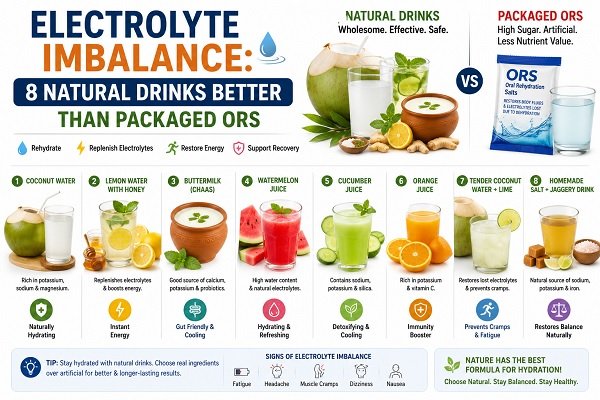
While various natural beverages can help replenish lost fluids and mild mineral deficits, it is crucial to note that natural drinks are not a direct replacement for Oral Rehydration Salts (ORS). In cases of acute dehydration—especially from severe diarrhea or vomiting—WHO-recommended ORS remains the gold standard treatment because it contains the precise ratio of sodium, glucose, and water required for optimal absorption.
5 Quick Key Takeaways
- Essential Minerals: Electrolytes comprise key minerals like sodium, potassium, chloride, calcium, and magnesium.
- Primary Causes: Excessive perspiration, fever, vomiting, and diarrhea trigger rapid fluid and electrolyte loss.
- Natural Hydration: Coconut water, buttermilk, and soups provide mild hydration and essential minerals.
- Caution Required: Homemade sugar-salt solutions must be prepared with precise measurements to avoid risks.
- Medical Priority: Moderate-to-severe dehydration requires proper medical evaluation and standard ORS therapy.
What Is an Electrolyte Imbalance?
An electrolyte is an essential mineral in the body that carries an electric charge. These minerals play critical roles in maintaining fluid balance, supporting muscle contractions, regulating heart rhythm, and ensuring normal nerve functionality.
The primary electrolytes in human physiology include:
- Sodium & Chloride: Maintain fluid balance and blood pressure.
- Potassium: Regulates heart function and muscle performance.
- Calcium & Magnesium: Support muscular contraction and cellular function.
The body naturally tightly regulates these mineral concentrations. However, significant fluid loss via perspiration, gastrointestinal illness, or kidney issues can disrupt this equilibrium. Drinking excessive plain water alone during high electrolyte loss may not resolve the condition, as water does not restore essential sodium levels. Recognizing the subtle warning signs of dehydration early can help prevent severe mineral losses.
Common Causes of Electrolyte Imbalance
Electrolyte deficiencies and imbalances occur due to various biological and environmental factors:
- Excessive Sweating: Prolonged physical activity or exertion in hot conditions.
- Gastrointestinal Illness: Persistent vomiting and diarrhea leading to rapid fluid depletion.
- Fever & Heat Illness: Increased fluid loss through respiration and perspiration.
- Underlying Health Conditions: Chronic kidney disease, metabolic disorders, or certain medications (like diuretics).
Key Symptoms of Electrolyte Imbalance
Symptoms vary depending on the severity of the loss and the specific mineral affected. Common signs include:
- General weakness and persistent fatigue
- Frequent headaches and lightheadedness (dizziness upon standing)
- Nausea and sudden muscle spasms; incorporating specific foods for muscle cramps can support recovery
- Painful spasms at night; learn more about how to prevent leg cramps at night
Medical Warning: Severe electrolyte imbalances can trigger irregular heartbeats (arrhythmias), seizures, or profound confusion. These symptoms require immediate emergency medical care.
8 Natural Drinks for General Hydration & Mild Mineral Loss
Note: The following natural beverages are suitable for daily hydration and mild post-workout fluid recovery. They do not replace clinical ORS during medical dehydration.
1. Coconut Water
Coconut water is a natural source of potassium with lower concentrations of sodium. It serves as an effective, low-calorie beverage for routine hydration after mild exercise. However, because it lacks sufficient sodium and glucose ratios, it should not be relied upon as the sole remedy for acute diarrhea.
2. Traditional Buttermilk (Chaach)
A popular traditional drink, buttermilk provides fluids, calcium, protein, and small amounts of electrolytes. Preparing it with plain curd, water, and a light pinch of salt helps with cooling and recovery during hot weather. If you enjoy dairy for health, you may also explore how curd is good for diabetes management.
3. Diluted Lemon Water with Salt
Lemon water offers vitamin C and refreshing hydration. Adding a slight pinch of salt provides minimal sodium recovery after light sweating. While great for general daily intake, it does not replace the structured glucose-sodium formula of medical ORS.
4. Homemade Rice Water (Kanji)
Rice water provides easily digestible carbohydrates and fluids, making it gentle on the stomach when appetite is low. Adding a minimal amount of salt offers basic sodium recovery, though it remains a food-based supportive drink rather than a clinical dehydration cure.
5. Clear Vegetable Soup
Homemade clear soups made from carrots, spinach, or pumpkin supply bioavailable minerals and fluids. A light sprinkle of salt aids sodium intake. Avoid heavy, high-sodium packaged soup mixes, as they can worsen dehydration.
6. Fresh Watermelon Juice
Watermelon has exceptionally high water content and natural potassium. Consuming fresh watermelon or blending it without added sugars offers refreshing summer hydration. Like papaya fruit health benefits, fresh water-rich fruits play a helpful role in digestive wellness.
7. Salted Plain Lassi
Diluted salted lassi provides hydration along with calcium and protein from yogurt. It is best consumed lightly salted and unsweetened for optimal hydration. Those with lactose intolerance should seek dairy-free alternatives.
8. Properly Prepared Homemade Sugar-Salt Solution
When commercial ORS is completely unavailable during emergency diarrhea management, a carefully prepared home solution (6 level teaspoons of sugar and 1/2 level teaspoon of salt per 1 liter of clean water) can be used. Precise proportions are critical, as incorrect ratios can worsen fluid loss.
When Should Commercial ORS Be Preferred?
Standardized ORS packets (WHO-formulated) are essential during acute fluid loss from loose stools or persistent vomiting. Standard water or simple fruit juices lack the specific glucose-sodium co-transport system ratio required by the small intestine to absorb fluids rapidly into the bloodstream.
Beverages to Avoid During Dehydration
To prevent worsening fluid depletion, avoid the following during active dehydration:
- Alcoholic Beverages: Act as diuretics, accelerating fluid loss.
- High-Sugar Soda & Energy Drinks: High sugar content can draw water into the gut, worsening diarrhea (osmotic effect).
- Excessive Caffeine: Highly concentrated coffee or tea can promote mild diuresis. Choosing healthier options like ajwain tea benefits digestion much better than sugary drinks.
- Overly Salty Solutions: Excess salt without proper water ratios can lead to hypernatremia.
Do You Need Electrolyte Drinks Daily?
Healthy individuals eating a balanced diet do not require specialized electrolyte drinks or daily supplements. Natural food sources and routine water intake sufficiently maintain electrolyte balance. Unnecessary daily consumption of salted or sugary electrolyte beverages can lead to excess sodium and sugar intake. Instead, maintaining healthy lifestyle habits is the best strategy for sustainable energy and balance.
Conclusion
Maintaining adequate fluid levels is essential, especially during hot weather, physical exertion, or mild illness. While natural options like coconut water, buttermilk, and clear soups offer excellent routine hydration, clinical dehydration caused by severe vomiting or diarrhea requires standard Oral Rehydration Salts (ORS). Always prioritize best natural detox tips for body care and consult a healthcare provider if severe symptoms persist.