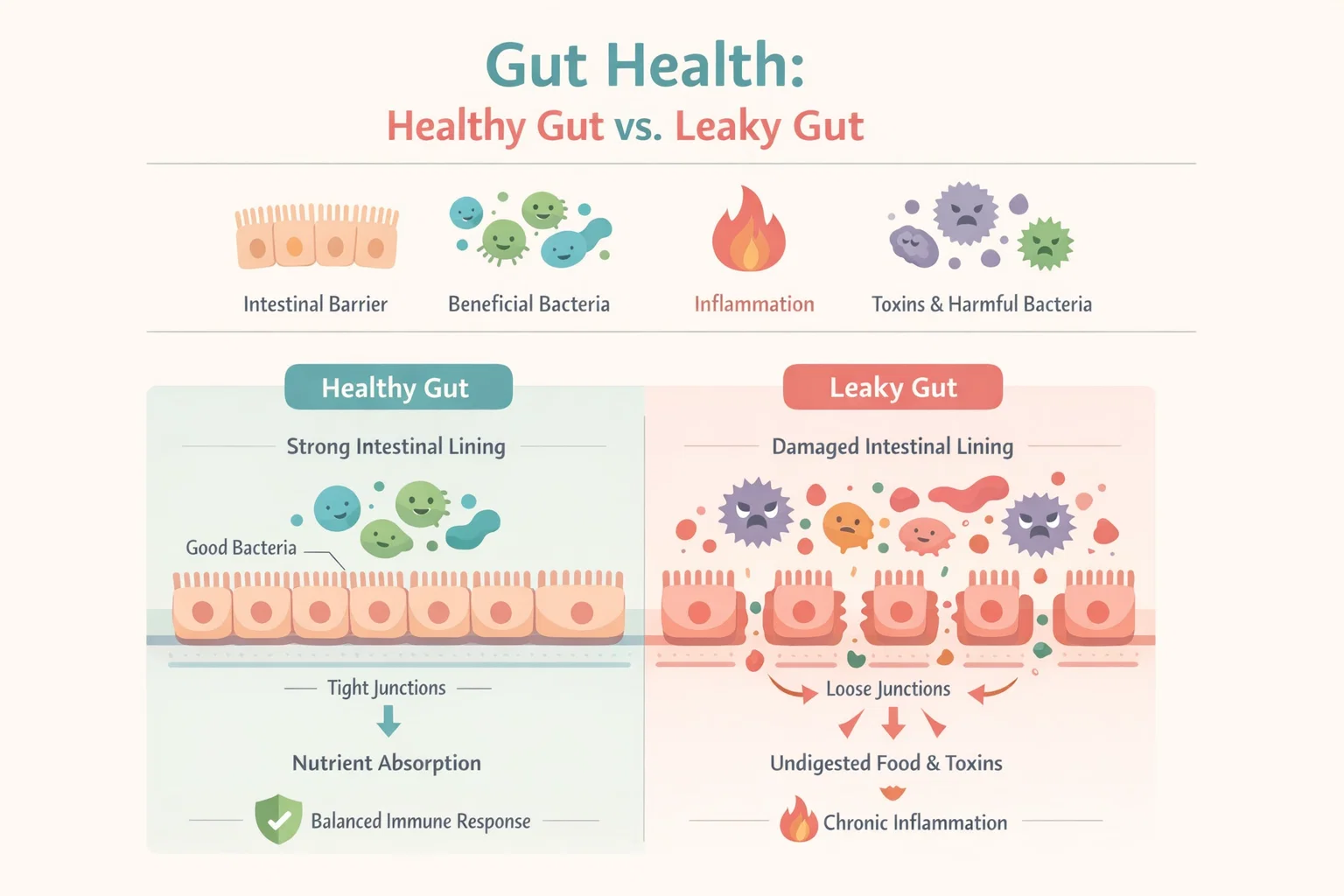
“Leaky gut,” technically known as intestinal hyperpermeability, is a condition where the cells of the lining of the gut become inefficient as a barrier. This allows the passage of elements such as bacteria and their toxins into the bloodstream, potentially causing inflammation. Although there is no medical condition called leaky gut syndrome, the scientific understanding of the process is well-documented.
This scientific article will give you more information:
5 Important Points
- The gut lining works as a barrier; if it is impaired, it might allow harmful elements to pass through
- Not all symptoms involve the digestive system
- Inflammation is the primary problem to look out for
- There isn’t one test for the condition
- Preventive care for the gut is essential
Beyond the Leaky Gut Trend
When looking for information online, leaky gut syndrome is commonly discussed as a cure-all for numerous health problems. In practice, though, the condition is known as increased intestinal permeability, which occurs in conjunction with other illnesses. The small intestine wall is lined with densely arranged cells linked together by tight junctions, which regulate what passes into the bloodstream. Any disturbance in this mechanism leads to increased permeability.
There’s no speculation involved here, either – this phenomenon has been seen in:
Inflammatory bowel disease (IBD)
Celiac disease
Specific infections
The real controversy lies in determining whether increased intestinal permeability can be considered a cause of generalized complaints in healthy people. That’s where the difference lies – and it’s an essential one that isn’t covered by most websites.
What Really Occurs within the Body?
In a healthy state, the intestines allow nutrients to pass through while keeping dangerous things out. However, when permeability is increased:
Bacteria parts (such as endotoxins) might leak into the bloodstream.
An immune response takes place.
There could be low-level inflammation.
With time, this might lead to systemic changes. Studies have demonstrated that factors such as zonulin can influence tight junctions. Elevated zonulin has been associated with higher permeability in certain cases. But once more, this is situation-specific and not universal.
Symptoms: The Reason They Are So Nonspecific
The problem is, symptoms that could be associated with leaky gut are extremely nonspecific.
Gastrointestinal Symptoms
Bloating
Unpredictable bowel function
Abdominal pain
Non-Gastrointestinal Symptoms
Fatigue
Inability to concentrate
Skin problems
They could also be found with a number of other diseases, such as:
Irritable bowel syndrome (IBS)
Conditions related to stress
Nutritional deficiencies
A medically oriented writer will not jump to conclusions based on a single symptom.
Causes: The Scientific Basis for Root Causes
Instead of pinpointing one cause, several possible causes exist according to scientific research.
Dietary Causes
A diet rich in highly processed foods
Low dietary fiber content
Both of the above can change the microbiome in the gut, thus the lining of the gut.
Medications
Consistent consumption of NSAIDs
Consistent use of antibiotics
Both can change the gut lining in some cases.
Diseases and Infection
Disease states and infections in the gastrointestinal system
Environmental Causes
Stress
Inadequate sleep
Stress in particular impacts the gut lining through the gut-brain axis, which is controlled by stress hormones.
The Gut-Brain-Immune Axis: An Improved Perspective
Rather than considering the gut in isolation, modern studies examine the connection among the gut, brain, and immune system.
This helps us understand why:
Stress impacts digestion
Digestive problems can impact moods
Inflammation can have broader consequences
But this doesn’t suggest that all mental or skin conditions begin with the gut. The link is multifactorial and two-way. A reliable piece would avoid exaggerations in this case.
2026 Scenario: Lifestyle as an Unspoken Variable
The one thing that becomes increasingly important, yet remains underexplored, is the influence of current lifestyle trends.
Let us think about this:
Meal timing inconsistencies
Distracted eating
Low levels of exercise
Excessive screen time
All these can indirectly impact digestion:
Inadequate chewing and hurried meals impair digestive function
A sedentary lifestyle can have an impact on gut mobility
Stress affects gut signaling pathways
In the long run, this combination can lead to gut malfunctions without any underlying diseases. That is where the modern world of health journalism must move forward beyond dietary charts.
Diagnosis: Why It Isn’t Simple
Unlike diabetes or hypertension, the diagnosis of “leaky gut” does not follow a precise diagnostic pathway.
Permeability to sugar
Zonulin levels
Analysis of stool
Instead, doctors concentrate on:
Finding an underlying cause
Determining whether the symptoms fit into any context
Excluding other major diseases
One critical point about this concept is that it can often lead to misinformation. For instance, many tests claim to “diagnose leaky gut.”
Treatment: What Really Works
However, here are several universal methods to consider:
1. Diet Enhancement
Fiber intake increases
Diversity of plant-based foods
Ultra-processed food decreases
The diet affects the gut microbiota composition that maintains the integrity of the intestinal wall.
2. Cause Elimination
Infection control
Medications review
Condition therapy
3. General Gut Health Improvement
Meals on time
Water intake
Physical exercise
4. Stress Reduction
Sleep regulation
Chronic stress minimization
On Supplements
Despite aggressive advertising of various dietary supplements such as probiotics and glutamine, there is conflicting scientific data. A medically reputable publication would not advocate using these supplements universally.
Diet: More Important Than “Superfoods”
Rather than concentrating on a few “superfoods” that heal your gut, the overall trend is more important.
Better Diet Strategy:
Well-balanced meals
Fruits and veggies according to seasonality
Fermented foods such as curd
Worse Diet Strategy:
Relying on individual “superfoods.”
Elimination diets without proper supervision
Recovery Timeframe: Expectations Management
There is no set timeframe.
Minor problems may resolve within weeks
Chronic problems will require time and medical intervention
The emphasis should be on progressive recovery, not immediate effects.
When to Contact a Doctor
One should visit a doctor when:
The problem persists for weeks
Unexplained weight loss occurs
There is presence of blood in the stool
Chronic disease indicators appear
Misdiagnosis of “leaky gut” can lead to missed diagnoses of underlying diseases.
Myths That Need Correction
| Claim | Reality |
|---|---|
| Leaky gut is a disease | It is not officially classified as one |
| It explains most health issues | It does not |
| Supplements can cure it | Evidence is limited |
| Everyone has it | Not supported by data |
Sum up,
The idea of leaky gut refers to actual science, but there are many misconceptions in the health sphere regarding the subject. The best way to deal with this problem is to consider it a component of overall gut health instead of something that happens on its own. For the average person, maintaining good gut health revolves around healthy lifestyle choices and medical interventions as needed.