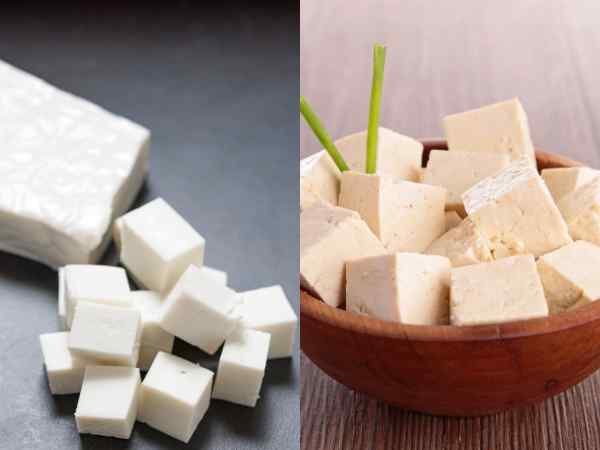
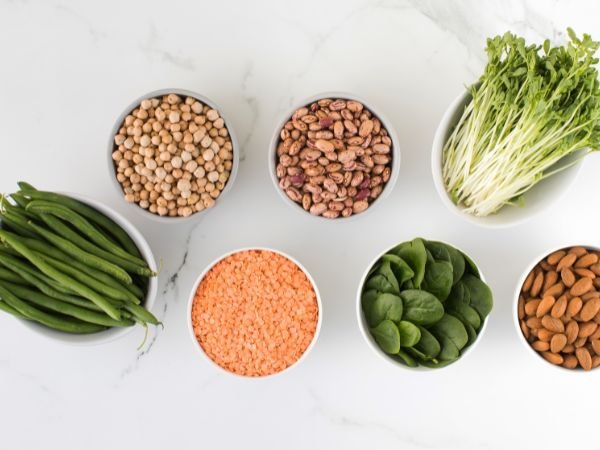
Overview: Best Protein Sources for Vegetarians in India
India has one of the largest numbers of vegetarians in the world, which makes the choice of protein foods for vegetarians a matter of considerable nutritional importance. Nevertheless, there is scientific evidence that Indians’ protein intake is rather low. In fact, the survey carried out by the Indian Market Research Bureau (IMRB), with the sponsorship of the Right to Protein organization, has revealed that close to 73% of Indians suffer from protein deficiency, and 93% of them are not aware of their daily protein needs. Furthermore, data from the National Family Health Survey (NFHS) and other nutrition surveys prove that problems with a diverse diet and high protein quality persist among various age groups.
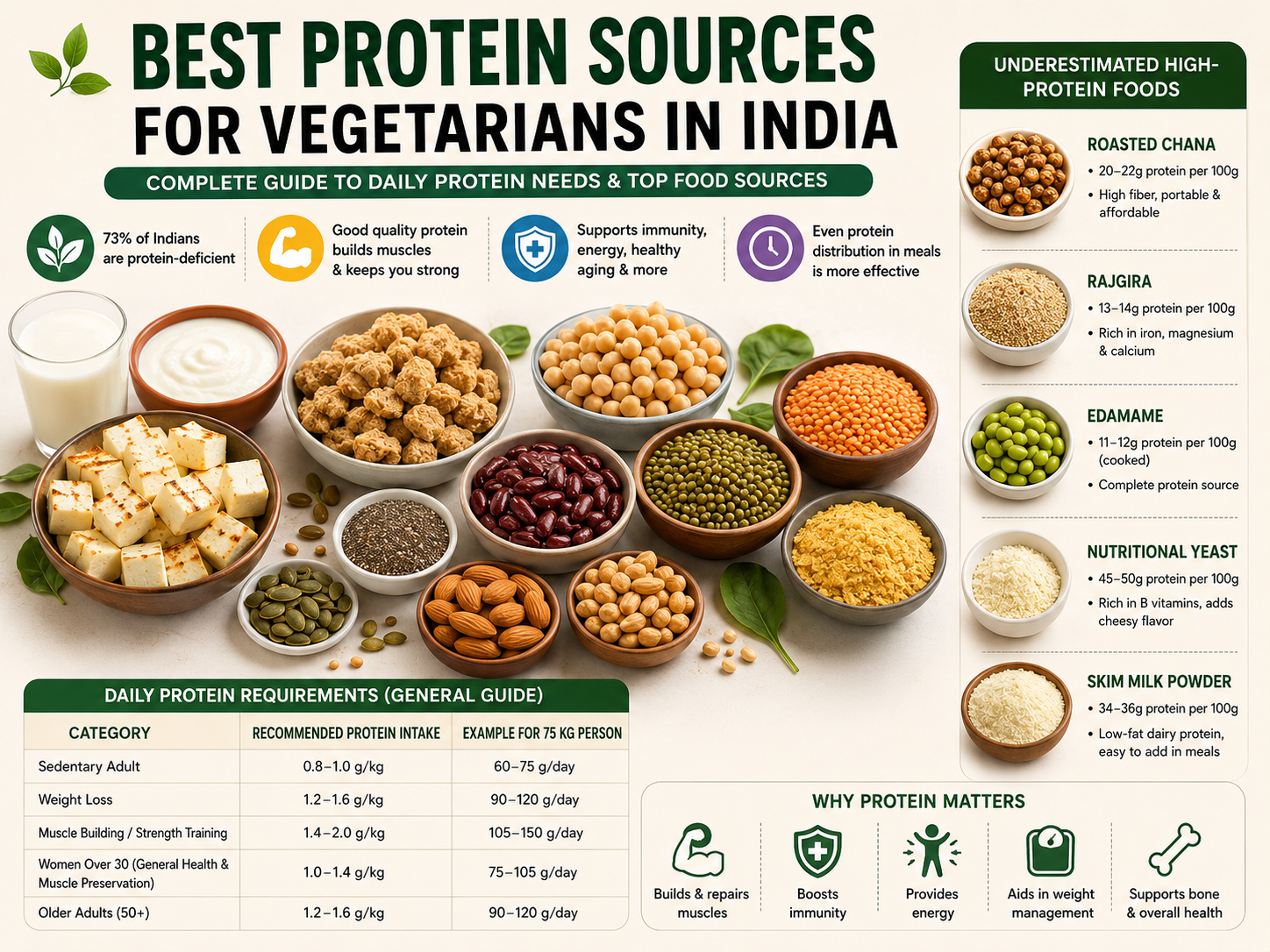
The problem is not in the lack of food, but in poor protein quality, insufficient consumption of nutritious vegetarian protein foods, and excessive consumption of refined carbohydrates. Moreover, scientific studies have proven that a balanced consumption of protein foods throughout meals may favorably impact muscle protein synthesis as compared to higher consumption of protein at dinner time. In the current guide, we will talk about the best protein foods for vegetarians, factors influencing protein absorption, mistakes in a diet, and methods of incorporating vegetarian protein foods into your regular diet.
Quick Points
- Almost 73% of Indians are protein-deficient.
- Good quality protein is as important as an adequate amount of protein.
- Soy, paneer, lentils, and milk are rich sources of protein for vegetarians.
- Even distribution of protein during meals might contribute to healthier muscles.
- Selecting vegetarian protein foods wisely can ensure protein intake.
Hidden Protein Deficiency among Vegetarians in India
Even though there are plenty of protein-rich products for vegetarians available in the Indian market, it appears that many Indians find themselves lacking protein in their diet. According to research performed by the Indian Market Research Bureau (IMRB) for the Right to Protein campaign, almost 73% of Indians may be protein-deficient. One of the key issues is that the Indian diet is mostly based on carbohydrates. The staples like rice, roti, and potatoes occupy most of the plate, leaving vegetarian proteins in small quantities. Thus, even though the number of calories consumed is enough, the amount of protein in the diet may be inadequate.
The other factor that gets ignored is breakfast. Typical foods like poha, upma, toast, or biscuits, along with tea, may help you get some energy; however, they lack protein. It means that many people don’t include vegetarian protein sources in their breakfasts. In addition, there are some studies that show that people consume proteins in just one meal per day – either lunch or dinner. In addition, being full does not always indicate the consumption of the right amount of protein. A plate filled with carbs can contain lots of calories but no vegetarian protein foods.
What Is The Amount Of Protein That You Really Need Per Day?
Protein needs vary among individuals depending on various factors like age, exercise intensity, body weight, and goals. As per the Recommended Dietary Allowances (RDA), the protein requirement for healthy adults is about 0.8 grams of protein per kilogram of body weight. Nonetheless, some nutritionists have argued that it is the minimum amount required to maintain a certain level of protein to avoid deficiency rather than the ideal amount. Proper choice of proteins for vegetarians and adequate amounts of vegetarian protein foods are key to meeting the protein needs.
About 0.8 – 1.0 grams of protein per kilogram of body weight is adequate for sedentary individuals in one day. In addition, people who aim to lose weight should be eating more protein since it helps preserve muscle tissue while maintaining a feeling of fullness. About 1.2 – 1.6 grams of protein per kilogram body weight is recommended to achieve healthy weight loss.
Muscle builders or those who engage in strenuous workouts have even higher requirements. According to the findings of research conducted by the International Society of Sports Nutrition (ISSN), the daily protein requirement for active people is estimated to be 1.4-2.0 grams of protein per kilogram of body weight. The inclusion of protein-containing foods for vegetarians, including paneer, soy, Greek yogurt, lentils, and tofu, would help build muscles.
The protein requirement for women above 30 years of age requires special attention. According to studies, age-related muscle loss, referred to as sarcopenia, can start as early as the third decade of age and increase with advancing age. In addition to other reasons like hormonal imbalance, reduction in physical activities, and lack of proper protein intake, all of these would further lead to muscle deterioration.
Daily Protein Requirements Table
| Category | Recommended Protein Intake | Example for 75 kg Person |
|---|---|---|
| Sedentary Adult | 0.8–1.0 g/kg | 60–75 g/day |
| Weight Loss | 1.2–1.6 g/kg | 90–120 g/day |
| Muscle Building / Strength Training | 1.4–2.0 g/kg | 105–150 g/day |
| Women Over 30 (General Health & Muscle Preservation) | 1.0–1.4 g/kg | 75–105 g/day |
| Older Adults (50+) | 1.2–1.6 g/kg | 90–120 g/day |
Protein Comparison Table: Best Protein Sources for Vegetarians in India
| Food | Protein per 100g* | Best For |
|---|---|---|
| Soya Chunks (Dry) | 52g | Highest protein, muscle building, budget-friendly nutrition |
| Paneer | 18–20g | Muscle maintenance, satiety, calcium intake |
| Tofu | 8–15g | Vegan diets, complete plant protein |
| Greek Yogurt / Hung Curd | 10–20g | Gut health, high-protein snacks, weight management |
| Lentils & Dal (Dry) | 22–25g | Daily protein intake, fiber, affordability |
| Chickpeas (Dry) | 19–21g | Sustained energy, fiber, plant protein |
| Rajma (Dry) | 22–24g | Protein-rich meals, digestive health |
| Milk | 3.2–3.5g | Complete protein, bone health, easy protein addition |
| Peanuts | 25–26g | Budget-friendly protein, healthy fats |
| Pumpkin Seeds | 29–30g | High protein, magnesium, zinc |
| Chia Seeds | 16–17g | Protein plus omega-3 fats |
| Hemp Seeds | 31–32g | Complete protein, essential fatty acids |
The Most Underestimated High-Protein Foods in India
Whenever there is talk of vegetarian protein sources, people tend to talk about paneer, dal, and soy. But there are quite a few other vegetarian sources of proteins which could help you increase your protein intake by a lot while providing other nutrients too.
Roasted Chana
- Has around 20-22g of protein per 100g.
- Is high in fiber content, hence very filling but low-calorie at the same time.
- Portable, affordable, and does not require any preparation.
- Is a far better protein snack compared to most packaged foods.
Rajgira
- Has around 13-14g of protein per 100g.
- Is one of the few grains that have somewhat balanced amino acids.
- Very high in iron, magnesium, and calcium.
- Can be used for making roti, porridge, laddoos, and breakfast bowls.
Edamame
- Has around 11-12g of protein per 100g when cooked.
- Is a complete protein source as it has all essential amino acids.
- High in folate and fiber, and other nutrients beneficial for the heart.
Nutritional Yeast
- Provides about 45-50g of protein per 100g.
- Rich in B vitamins, even more so when supplemented.
- Enhances the taste of soups, salads, and pasta dishes with a cheese-like flavor.
- Good for vegan diets to broaden the sources of protein intake.
Skim Milk Powder
- Provides around 34-36g of protein per 100g.
- Provides an efficient dairy-based protein with low-fat content.
- Can be added to smoothies, oatmeal, curd, and other homemade protein-based meals.
- Affordable but underestimated source of protein for a vegetarian diet.
Such products are rarely found in any protein charts, but still, they may help to boost the quality of protein intake and the diversity of nutrients in one’s diet.
Sum up,
It is true that getting adequate amounts of protein in a vegetarian diet is somewhat challenging; however, you should not get frustrated because of this. The point you should remember about this is that the quality of protein is as important as the amount of protein you take. It is clear that when you include different types of proteins for vegetarians in your diet, your body is able to take in all the amino acids required for your muscles, metabolism, immune system, and healthy aging process.
As far as meal timing and distribution are concerned, experts state that taking in protein through breakfast, lunch, dinner, and snacks can be better for you in comparison to concentrating on a single meal during the whole day. Taking in some vegetarian protein foods will help you promote protein synthesis in your muscles.
Fortunately, it does not mean that getting enough protein should involve high costs. You will be happy to know that lentils, roasted chana, milk, peanuts, soy chunks, and curd are inexpensive foods rich in protein. With the help of some proteins for vegetarians and vegetarian protein foods, most people can cover their daily protein requirements easily.