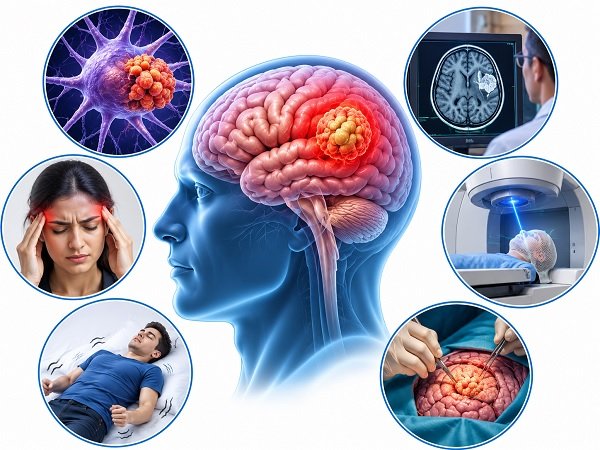
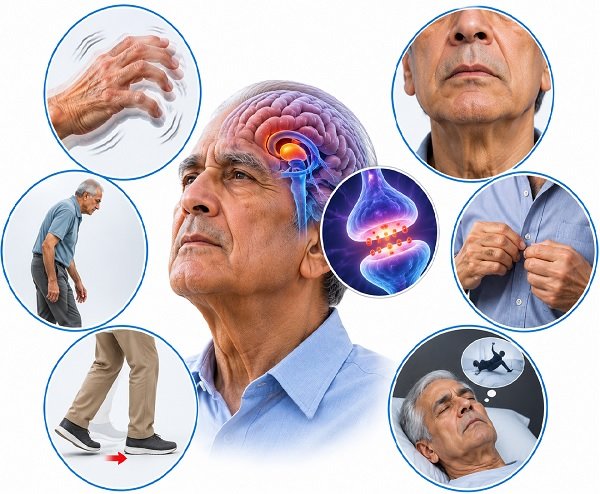
Try to imagine trying to walk, or write, or eat, or even just hold your head up, and your muscles just keep moving or tightening, and you can’t control it. This is what life can be like for someone with dystonia. It can affect one part of the body or many parts of the body, making it difficult to do everyday tasks. For many people, medicines, physiotherapy, and botulinum toxin injections can manage dystonia. But what if these treatments don’t bring enough relief? This is where Deep Brain Stimulation (DBS) may help.

It’s a surgical therapy that uses controlled electrical signals to change activity in specific brain circuits involved in movement. In carefully selected patients, it can reduce unwanted muscle contractions and improve function in daily living. DBS is not a cure for dystonia and is not for everyone. Let’s explore how this treatment works, who it might be suitable for, and what the recovery process generally looks like.
What is dystonia and what does it do to the body?
Dystonia is a neurological movement disorder that causes involuntary muscle contractions. These contractions can cause twisting motions, repetitive spasms, abnormal postures, and sometimes pain. For some, it will be a mild illness; for others, it will be severe. They can also get worse when you do certain things like walking, writing, talking or doing a certain activity.
For example, a person with cervical dystonia might experience the sensation that their neck is being pulled or twisted again and again. Hand dystonia can make it difficult to write, hold a pen or use your fingers in a normal way.
Dystonia can involve several different parts of the body:
- Focal dystonia is when a person has difficulty controlling one part of their body such as their eyelids, neck or hand.
- Segmental dystonia: This type affects two or more neighboring parts of the body.
- It affects many areas of the body, usually the trunk and limbs. This is known as generalized dystonia.
- Multifocal dystonia affects more than one part of the body.
It can be caused by genetics, brain damage, some medications, or other neurological conditions. Sometimes the cause is not clear. But it’s not just the strength that is missing. This has to do with how the brain plans and controls movement. Consequently, treatment may include medication, injections, rehabilitation and sometimes stimulation of the brain.
What Is DBS for Dystonia?
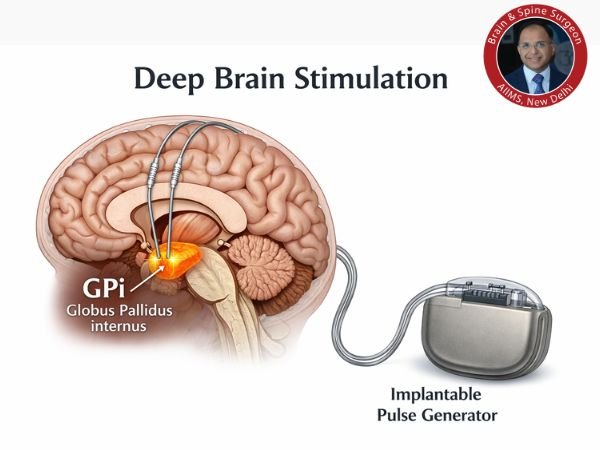
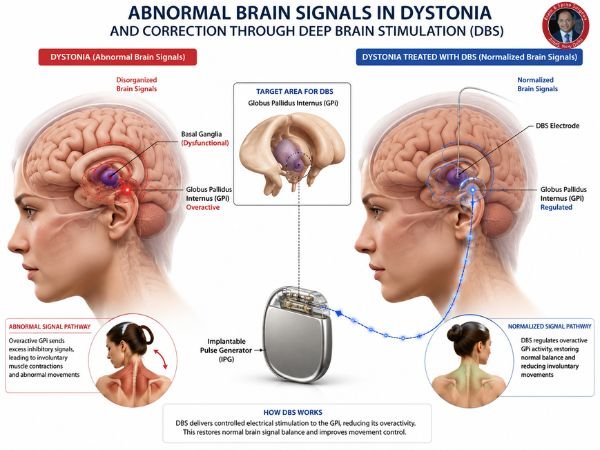
Surgery is aided by implanting electrodes, or leads, which are thin wires, in particular areas of the brain for deep brain stimulation. At the ends of these electrodes is a small device that is usually placed under the skin near the chest. The right side of the brain is given tiny electric shocks. These signals prevent the brain circuits that control movement from going into overdrive.
Like a pacemaker, a DBS system helps regulate brain signals associated with movement, rather than keeping the heart beating in time. Most people with dystonia work on the Globus Pallidus Internus (GPi). One part of the brain helps you to move around. One of the most studied methods of helping people with medically untreatable dystonia is GPi stimulation. The specialist treating the patient can change the electrical settings depending on the patient’s response. The treatment can be modified as time goes on. Important to keep in mind that DBS does not remove the cause of dystonia or permanently repair brain circuits. It helps to control symptoms by changing the activity of these circuits.
How Does DBS Help Control Dystonia?
To get a better idea of how DBS works, it is useful to know that normal movement is based on brain cells talking to each other. These body parts send and receive signals that tell muscles to move at the right time and with the right amount of force. These circuits for movement don’t function properly when someone has dystonia.” Sometimes muscles get tight when they should be loose, and movements become dull and hard to control. DBS is the electrical stimulation of a specific area of the brain. It alters how the movement-control network operates and may help prevent muscles from contracting when they shouldn’t be.
The improvement could take different forms:
Spasms that are not as severe or do not happen as frequently.
Better control of movements and postures that feel wrong.
Ability to sit, walk, write or do other everyday activities better.
Less pain from muscles that are tight and keep contracting.
Better ability to do your daily tasks on your own.
None of the patients have an immediate response. In some people, the changes happen slowly over weeks or months as the stimulation settings are adjusted.
Who Might Benefit from Dystonia Deep Brain Stimulation?
DBS is generally considered when dystonia is severely affecting daily activities and other treatments have not been effective. But it doesn’t mean that because someone has dystonia they need surgery. This is a choice that must be made after careful consideration.
When a specialist would consider DBS:
The patient has moderate to severe dystonia that interferes with the ability to do normal activities.
Either it didn’t work or the drugs made things worse.
Botulinum toxin injections have not been effective enough in some cases.
The symptoms make it so hard to move, to stand up straight, to do normal things in your daily life.
The patient is fit enough for an operation.
People think the potential risks are outweighed by the potential benefits.
GPi-DBS may be particularly helpful for people with certain kinds of primary or inherited dystonia. However, results can differ depending on what causes dystonia, which parts of the body are involved, how long the condition lasts, and if there is a brain injury. People with secondary dystonia may also be considered, but their response may be more difficult to predict. That is why it is important to know the cause and type of dystonia to plan treatment. A movement-disorder neurologist and a team of neurosurgeons typically work together to figure out if DBS is a good option.
What to Expect Before DBS Surgery?
DBS treatment begins well before the operation. First and foremost, the medical team must know the patient’s condition, symptoms, medical history, and previous response to treatment. The evaluation may comprise:
1. Study of the nervous system
The specialist examines muscle movements, posture, walking pattern, muscle stiffness, and areas affected by dystonia. The team may also evaluate how much the condition interferes with daily activities.
2. Brain scans
MRI or CT scans of the brain may be taken to help plan the safest route for placement of the electrodes. Imaging also aids the surgical team to find the target area.
3. History of previous treatments
The doctor goes over any medicines, injections, or other treatments the patient has had and how well they worked.
4. Overall health evaluation
The patient’s overall health, surgical capability, and other medical conditions are evaluated.
5. Anticipated results
The team discusses possible benefits, risks, limitations, and the need for long-term follow-up. This helps patients and caregivers have realistic expectations of what DBS can deliver.
This assessment is important because selecting the right patient for the outcome is very important.
What is Deep Brain Stimulation Surgery?
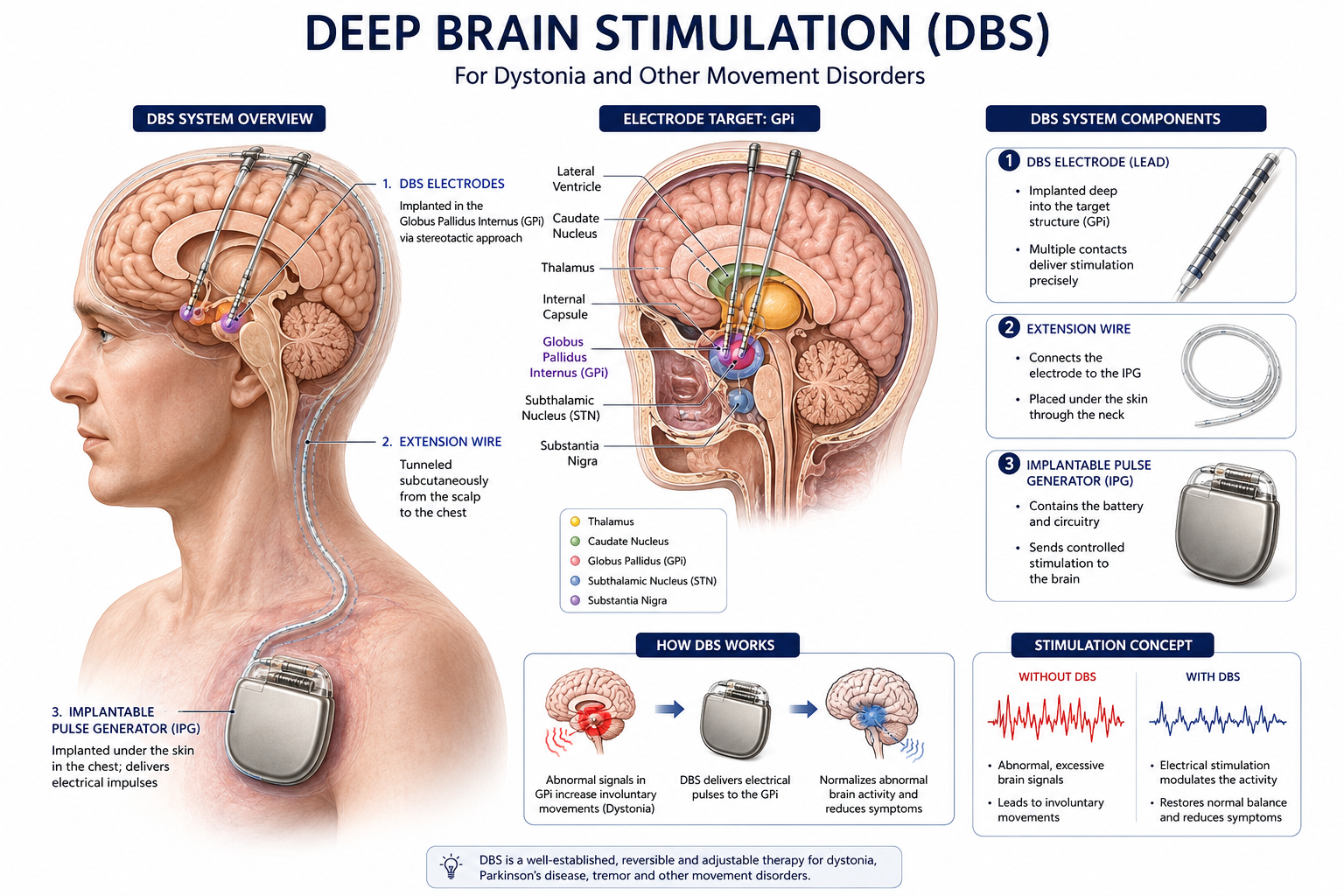
The precise surgical plan is determined by the patient’s condition, the device that is used, and the hospital’s protocol. The following steps are generally involved in DBS.
Step 1: Planning the target region
The neurosurgeon reviews the patient’s brain scans and plots out the locations for the electrodes. The Globus Pallidus Internus (GPi) is the target of choice in many dystonia patients.
Step 2: Electrode Placement
Through tiny holes drilled in the skull, thin electrodes are carefully guided to the appropriate areas of the brain. Imaging and other surgical techniques help the team to position the leads accurately. The procedure can be performed under general anesthetic, or with the patient awake for selected parts, depending on the surgical approach and clinical indications.
Step 3: Connecting your device
The electrodes are attached to wires that run under the skin. These wires are then connected to a pulse generator that is usually implanted under the skin near the chest. The pulse generator consists of the battery and the electronics that control the electrical stimulation.
Step 4: Power on the Device and Program It
The treating team may plan on activating the device after initial surgical recovery. The specialist adjusts the stimulation parameters based on the patient’s symptoms and response. First settings are not always final settings. It may take a number of visits to find the best balance between side effects and symptom relief.
Benefits of DBS for Dystonia? What Are the Benefits?
For appropriate candidates, DBS can result in important improvements in movement and daily functioning. A Cochrane review found that GPi-DBS may reduce the severity of dystonia and improve functional ability in adults with moderate to severe cervical, segmental or generalized dystonia. But the review also found limited quality of evidence for some outcomes.
Here are some possible benefits:
1. Better Control of Your Muscles
DBS can help reduce unwanted muscle contractions, twisting movements, and abnormal postures. This may allow patients to move more in control.
2. Enhanced Mobility
Dystonia in the legs, trunk, or neck can make even simple movements difficult. Reducing these symptoms may help some patients walk, sit or change positions more comfortably.
3. Less Pain and Discomfort
Repeated muscular contractions may result in pain and tiredness. If DBS reduces these contractions, it may also improve the discomfort associated with them.
4. Improved Daily Functioning
Patients can find it easier to eat, write, get dressed, or work. How much better you get depends on the type of dystonia you have and how severe it is.
5. Treatment modifiable
But the specialist can adjust the parameters of DBS, unlike a treatment that cannot be changed once administered. The device can also be switched off, but symptoms may recur.
It is worth remembering that not all patients experience all of these benefits. Some people still need medicines, botulinum toxin injections, or physiotherapy after surgery.
What Are the Possible Risks and Side Effects of DBS?
DBS is a proven treatment for some movement disorders, but it’s still brain surgery. As with any surgical procedure, it carries potential risks. Some of these risks are related to the procedure itself and some may be related to the implanted device or the electrical stimulation.
Potential complications include:
- Bleeding: There can be bleeding inside the brain when the electrodes are placed. Rarely, it may lead to serious complications like stroke.
- Infection: Infection can occur around the surgical wounds or implanted device.
- Device problems: Wires may move, snap, or stop working. The battery may also have to be replaced or recharged.
- Speech or balance changes: Some patients might have changes in speech, balance, or coordination.
- Effects related to stimulation: If stimulation settings are not correct, unwanted movements, unusual sensations or other side effects may occur.
- Risks associated with anesthesia: As with any other operation, there is the risk associated with general anesthesia.
The doctor can adjust the device settings to improve some side effects related to stimulation. But there can be surgical complications that require further treatment. Prior to deciding on DBS, patients should discuss their individual risk factors with the neurosurgical team.
What is the patient experience after DBS?
DBS is not a one-off treatment that finishes after surgery. It requires long-term surveillance and care of the implanted system. Patients may need regular appointments to check the device, change its settings, and monitor changes in symptoms. Battery care is important too. Some systems use rechargeable batteries; others require surgical replacement when the battery is dead. Patients also should notify healthcare professionals about their DBS system prior to undergoing MRI scans or other medical procedures. The device should be checked for compatibility, and the correct safety instructions should be followed. If symptoms suddenly worsen, the device stops working, or there is redness, swelling, or pain around the implant, contact the treating team. Most importantly, the patient needs to have realistic expectations. DBS can improve symptoms and quality of life but does not guarantee normal movement or cure the underlying condition.
Conclusion
Living with dystonia does not affect just the way the muscles move but makes the activities of walking, writing, and working challenging. Deep Brain Stimulation could be a choice for some patients who cannot be relieved with other forms of therapy. The therapy involves sending electrical impulses to stimulate certain brain functions regarding movement. The technique helps reduce involuntary muscle contractions, improves posture, and increases daily functioning. However, the treatment is different for each patient and includes surgery and the maintenance of the implanted device. For those who want to try the therapy, consulting a neurologist and neurosurgeon experienced in treating movement disorders would be wise. They will evaluate the condition and decide whether it is worth undergoing the therapy. For a detailed overview of the procedure and possible results, see this guide about the Deep Brain Stimulation for Dystonia Benefits prepared by Dr. Deepak Agrawal.