Fiber is among the key sources of nutrients necessary for general well-being; however, it is not consumed in sufficient quantities by many people daily. When talking about fiber intake, the digestive effects of fiber are considered, while this nutrient may be helpful for promoting other functions of our body, including heart functions, blood glucose regulation, improving gut health, and promoting satiety. In this regard, when discussing fiber consumption, it is common to distinguish between soluble and insoluble fibers. The latter belong to two different types of dietary fiber, which have different physiological mechanisms of action in the body.

Soluble vs Insoluble Fibre
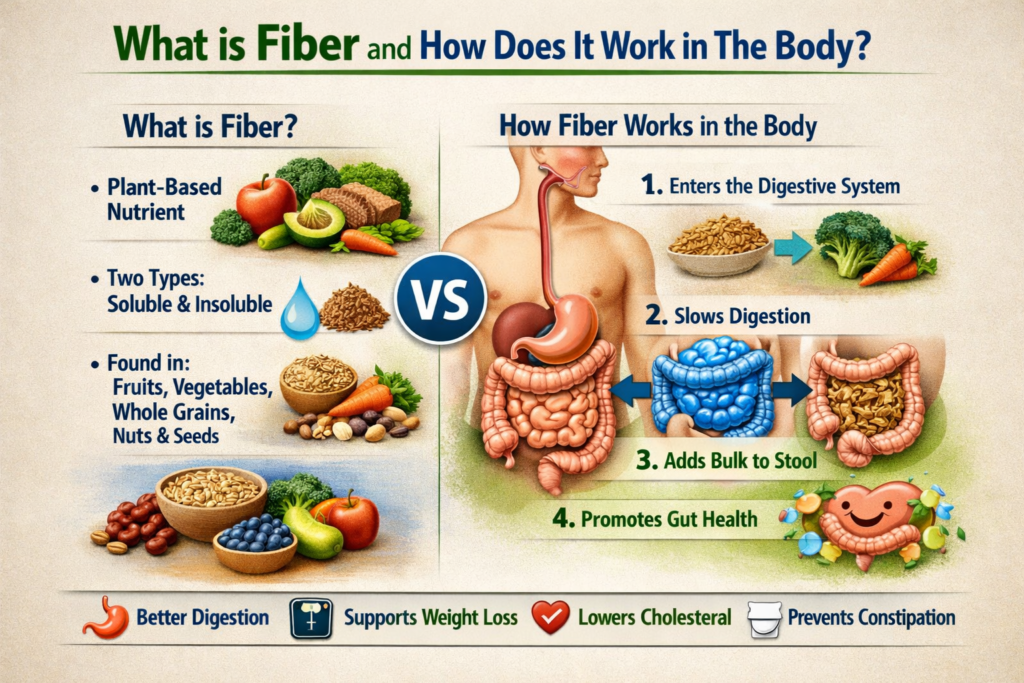
What is Fiber and How Does It Works in The Body?
Dietary fiber is a special kind of carbohydrate found only in plants. Unlike other types of carbohydrates, fiber cannot be completely digested in the human body. Rather, fiber passes through the digestive system and helps perform other functions within the body.
It assists in maintaining proper digestion, ensures healthy blood cholesterol levels, regulates bowel movements, and is essential for providing nutrition to the friendly intestinal bacteria. Even though dietary fiber is known primarily for its digestive benefits, numerous scientific studies reveal that it affects the entire body.
What is Fiber and How Does It Works in The Body
Soluble fiber and insoluble fiber are two major types of dietary fiber. Usually, plant products contain both forms of fiber; however, certain plant-based foods may have more soluble or insoluble fiber.
Soluble vs. Insoluble Fibres – What Differentiates Them?
The differences between soluble and insoluble fibres depend on their reactions when mixed with water.
Soluble Fibre – What Does It Mean?
The definition of soluble fibre lies in its ability to dissolve in water. This leads to the formation of gel, which slows down the digestion process.
Sources of foods with soluble fibre are as follows:
- Oats
- Barley
- Apples
- Citrus fruits
- Lentils
- Legumes
- Chia seeds
- Psyllium husks
Insoluble Fiber: Definition
Insoluble fiber does not dissolve in water but provides bulk and increases the efficiency of digestion of foods by moving them quickly through the digestive tract.
The foods that contain insoluble fibers are:
- Wheat bran
- Wheat-based foods
- Brown rice
- Cauliflower
- Green beans
- Nuts
- Seeds
Soluble vs Insoluble Fibre Comparison
| Feature | Soluble Fibre | Insoluble Fibre |
|---|---|---|
| Dissolves in water | Yes | No |
| Main role | Slows digestion | Adds bulk to stool |
| Supports | Cholesterol and blood sugar management | Regular bowel movements |
| Fermented by gut bacteria | Highly | Limited |
| Common sources | Oats, beans, apples | Bran, vegetables, nuts |
While the debate between soluble vs insoluble fibre continues, the fact remains that both types are vital and complement each other in promoting good health.
Proven Soluble Fibre Benefits
Most of the proven soluble fibre benefits have been linked with the way it works as a gel during digestion.
Good for Heart Health
Soluble fibre is capable of binding with cholesterol, helping in its removal from the body. This contributes towards maintaining proper cholesterol levels.
Good for Controlling Blood Glucose Levels
Due to the slowing effect that it creates on digestion, soluble fibre becomes very important for those individuals who need to maintain their blood glucose levels.
Leads to Satisfaction
Foods containing high amounts of soluble fibre can satisfy you for long periods, thus reducing the risk of snacking and obesity.
Aids in the Functioning of Beneficial Gut Bacteria
The most important soluble fibre benefit is its capability of feeding the good bacteria in the gut. These bacteria make short-chain fatty acids.
As stated in a review in the scientific journal Nutrients from 2024, fermentable fibres positively influence the activities of the microbes inhabiting the intestines by increasing the production of short-chain fatty acids.
The Importance of Insoluble Fibres
Soluble fibres are usually in focus, but insoluble fibres have their significance.
Promotes Regular Bowel Movement
Insoluble fibres add volume to stools for better movement through the digestive system.
Prevents Constipation
Many food sources of insoluble fibres may help prevent constipation by promoting digestive regularity.
Colon Health
The ability of insoluble fibres to facilitate the quick passage of food helps promote intestinal health.
Improves Digestion Experience
For some individuals, a combination of both types of dietary fibres promotes proper digestion and bowel function.
Food Items to Add in Your Meal Plan
There is no need to purchase any fibre supplements to meet the required amount. Both soluble and insoluble fibres are available in many natural food items consumed by people.
Soluble Fibres: Some Examples
- Oats
- Barley
- Lentils
- Chickpeas
- Apples
- Oranges
- Chia seeds
- Flax seeds
Insoluble Fibres: Some Examples
- Wheat bran
- Whole-grain bread
- Brown rice
- Almonds
- Walnuts
- Cauliflower
- Carrots
- Green beans
Effect of Fiber on Your Microbiome
In recent years, gut health has been one of the most extensively talked-about health issues.
It has become apparent to researchers that not all fibers impact the gut microbiome in the same way.
Benefiting Bacterial Growth
Some kinds of fiber can be fermented by gut bacteria in the colon, resulting in the production of short chain fatty acids.
The benefits that these compounds offer include:
- Gut barrier integrity
- Improved digestion
- Boosted immunity
- Metabolic health
Why Fibre Effects Vary between Individuals?
Two individuals may take in the same amount of fibre-containing food yet experience different outcomes. While one feels excellent, another suffers from bloating.
The variation may be linked to the makeup of an individual’s gut microbiota. The bacteria residing in the digestive system of each individual vary, thus making the effects of fibre intake differ depending on each individual.
This is what makes the recent studies on the advantages of soluble fibre revolve around personalized nutrition.
Selecting the Ideal Fibre to Suit your Needs
To Treat Constipation
Food products high in insoluble fibre might prove beneficial due to their bulking effect, which helps eliminate waste from your body.
To Lower Cholesterol Levels
Soluble fibre can help maintain normal cholesterol levels if eaten in sufficient quantities.
Also Know: Top 7 Drinks to Lower Cholesterol Naturally at Home
To Help Regulate Blood Glucose Levels
Numerous pieces of research indicate that soluble fibre can aid in reducing postprandial glucose absorption.
For Maintaining a Healthy Body Weight
Since both types of fibre induce satiety, they can help achieve appetite regulation.
When trying to select between soluble and insoluble fibre, it would generally be best to strive to include both.
Why High Fiber Foods Lead To Bloating?
Many people eat more fiber and ask themselves why they experience bloating.
Consuming Excessive Fiber Too Fast
When the intake of fiber is increased very fast, one feels bloated.
Lack Of Water Consumption
Fiber requires an individual to consume enough water. Otherwise, it could lead to discomfort.
Adaptation Process
The body has to adapt to the presence of fiber in the body. This process takes time.
It is important to know about the various forms of fiber for easier fiber consumption.
Effects of Food Preparation on Fiber Functioning
Another issue that is usually not touched upon in fiber-related guides is the cooking effects on fiber.
Comparison between Raw and Cooked Plants
Cooking breaks down the cell walls of plants, which makes such food more digestible but does not usually reduce the amount of fiber contained.
Differences between Blending and Juice Extraction
Blending fruits and veggies keeps the fiber, whereas juice extraction usually eliminates much of it.
Food Procession and Effects on Fiber Amounts
Foods that go through highly complex processing may have less fiber compared to natural ones, even if they look alike.
Ways to Preserve Fiber
The best source of fiber is fresh fruits, vegetables, legumes, and grains that have had minimal processing applied.
It is worth remembering in regard to the comparison of soluble vs insoluble fiber.
Common Myths About Fibre
Myth 1: All Types of Fibre Act the Same Way
Not all types of fibre affect the body the same way. Therefore, learning more about soluble fibre uses and insoluble fibre advantages is essential.
Myth 2: The More Fibre, the Better
Fibre excesses can lead to side effects, including gas and bloating, and they should not be increased too rapidly.
Myth 3: All Supplements Contain the Same Nutrients
Although some individuals may benefit from fibre supplements, food sources contain additional nutrients and other beneficial types of fibre.
FAQs
Soluble fibre or insoluble? Which one is best?
There is no best between the two types of fibres since they both have different benefits. However, the most beneficial way to consume them is through a varied diet which includes both.
Can one food source provide both types?
Yes, many vegetables and fruits usually contain both types of dietary fibre in varying amounts.
Does fibre have any value in weight loss?
Fibre makes one feel fuller, thus lowering total caloric intake.
Can you take too much fibre?
Yes, very high intake of fibre, especially rapid increases, can result in discomfort like bloating and gas production.
Conclusion
Choosing whether to consume either type of fibre is not necessary because they both have their importance in the maintenance of good health. Soluble fibre ensures proper cholesterol levels, blood sugar regulation, healthy bacteria population in the gut, and satiety, while insoluble fibre is helpful in the digestion process. A better strategy would be to consume a large number of high-fibre foods on a daily basis. These foods contain balanced proportions of both kinds of fibres. Knowing the advantages of each fibre type, as well as consuming greater quantities of soluble fibres and insoluble fibres, will definitely help in promoting digestive and cardiovascular health in the future.