You might be eating healthy every day—salads, fruits, protein, maybe even vitamins or supplements. But still, you feel tired, bloated, or low on energy. Your skin may look dull, your hair may fall more than usual, and your immunity may feel weak.
If this sounds familiar, the problem may not be your diet. The real issue could be that your body is not absorbing nutrients properly.
Our digestive system does more than just break down food. It also absorbs vitamins, minerals, protein, fats, and other nutrients so the body can use them. When this process does not work properly, the body slowly starts showing warning signs.
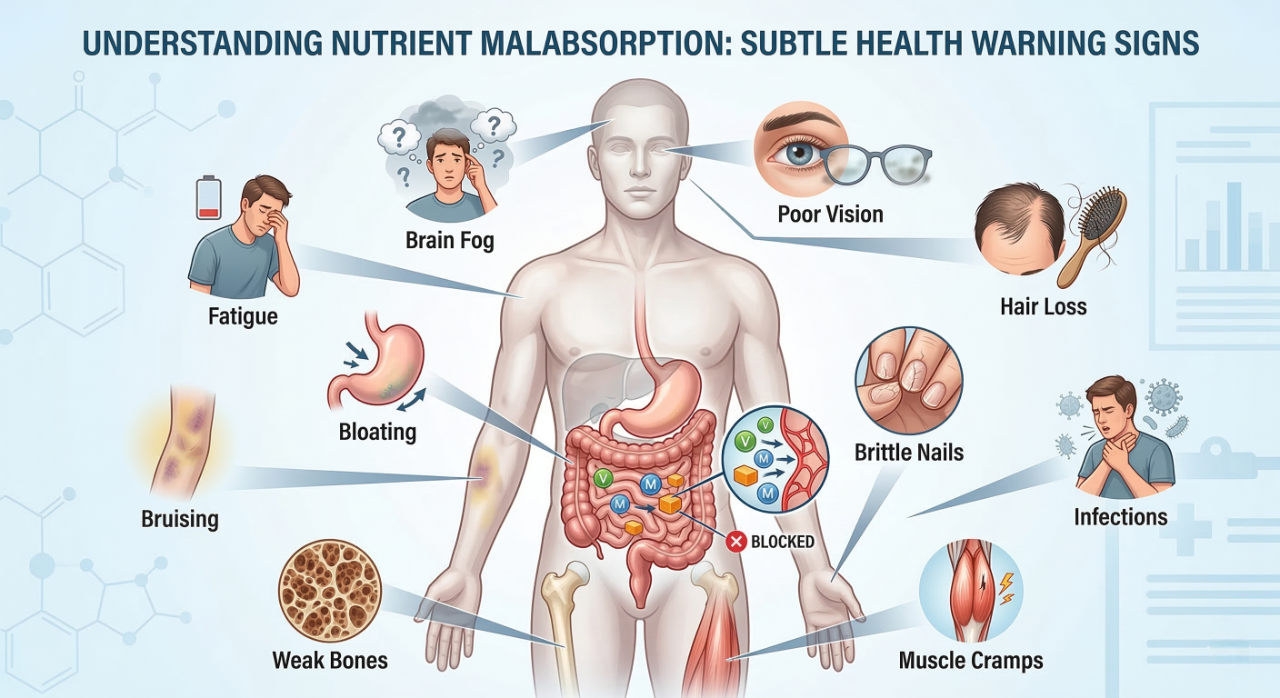
This condition is called malabsorption. It means the body is not able to absorb enough nutrients from the food you eat.
According to research published by the National Institutes of Health, digestive disorders, gut inflammation, and enzyme problems can interfere with nutrient absorption and lead to long-term deficiencies if not treated.
In recent years, experts have also noticed that modern lifestyle habits—stress, processed foods, frequent antibiotic use, and poor gut health—are increasing the risk of nutrient absorption problems.
The good news is that your body usually gives you clear signals when something is wrong. Understanding these signals can help you fix the issue before it becomes serious.
Below are 15 common signs that your body may not be absorbing nutrients properly, along with simple ways to improve it.
What Causes Poor Nutrient Absorption?
Before we talk about the symptoms, it helps to understand why nutrient absorption problems happen in the first place.
Our digestive system is designed to break food into small nutrients and send them into the bloodstream through the small intestine. But if something interrupts this process, the body may not get the nutrition it needs.
Here are some common reasons.
Gut Health Problems
The lining of the intestine plays a big role in nutrient absorption. When the gut becomes inflamed or damaged, it may stop absorbing nutrients properly.
Some conditions linked to this include Celiac disease, Crohn’s disease, and Small Intestinal Bacterial Overgrowth.
These conditions can affect digestion and make it harder for the body to absorb nutrients.
Low Stomach Acid
Stomach acid helps break down food before it moves into the intestine. If stomach acid is too low, food may not digest properly, and nutrients may pass through the body without being absorbed.
Certain Medicines
Some medicines can affect digestion if used for a long time. For example, acid-reducing drugs such as Omeprazole may reduce stomach acid and affect the absorption of vitamin B12 and magnesium.
Long-Term Stress
Stress does not only affect the mind. It can also slow down digestion and disturb the gut. When this happens, the body may struggle to absorb nutrients.
Aging
As people grow older, the body may naturally produce fewer digestive enzymes. This can make digestion slower and slightly reduce nutrient absorption.
15 Signs Your Body Is Not Absorbing Nutrients Properly
The body often gives warning signs when nutrients are not being absorbed properly.
Here are some symptoms you should not ignore.
- You Feel Tired All the Time
If you feel tired even after sleeping well, it could be a sign of nutrient deficiency.
Low levels of iron, vitamin B12, or magnesium can affect the body’s ability to produce energy.
What may help:
Include iron-rich foods like spinach, beans, eggs, and lean meat in your diet.
- Frequent Bloating or Digestive Problems
If you often feel bloated, gassy, or experience diarrhea, your digestive system may not be processing food properly.
This can affect the absorption of many nutrients.
What may help:
Eat more gut-friendly foods such as yogurt, kefir, and fermented vegetables.
- Unexplained Weight Changes
Sudden weight loss or weight gain without changing your diet can sometimes point to poor nutrient absorption.
When the body cannot absorb nutrients properly, metabolism may become unstable.
- Hair Fall and Weak Nails
If your hair is thinning or your nails break easily, your body may not be getting enough nutrients.
Deficiencies in protein, zinc, and biotin often show up in hair and nails first.
- You Catch Infections Often
If you fall sick frequently or get colds often, your immune system may be weak.
Vitamins like A, C, D, and minerals like zinc are important for immunity.
If these nutrients are not absorbed properly, the body struggles to fight infections.
- Brain Fog or Poor Focus
Many people notice that they cannot focus well or feel mentally tired.
This may happen when the body lacks vitamin B12 or healthy fats needed for brain function.
- Muscle Cramps
Frequent muscle cramps or weakness can be linked to low magnesium or potassium levels.
These minerals are important for proper muscle function.
- Bruising Easily
If you notice bruises appearing easily on your skin, it may be due to low vitamin C or vitamin K.
Both nutrients help maintain healthy blood vessels.
- Difficulty Seeing in Dim Light
Poor night vision may sometimes indicate a lack of vitamin A.
Vitamin A plays an important role in maintaining healthy eyesight.
- Tingling in Hands or Feet
A tingling or numb feeling in the hands or feet may be related to vitamin B12 deficiency.
B12 is important for nerve health.
- Wounds That Heal Slowly
If cuts or injuries take longer to heal, your body may not be getting enough nutrients needed for repair.
Vitamin C and zinc are especially important for healing.
- Bone Pain or Weak Bones
Weak bones or frequent fractures can sometimes happen when calcium and vitamin D levels are low.
These nutrients help maintain bone strength.
- Persistent Anemia
Anemia happens when the body does not have enough healthy red blood cells.
One common reason is poor absorption of iron, vitamin B12, or folate.
- Hormonal Imbalance
Hormones depend on many nutrients to work properly.
If the body lacks minerals like magnesium, iodine, or selenium, hormone balance may be affected.
This can sometimes lead to irregular periods, mood changes, or low energy.
- Sudden Food Sensitivities
If you suddenly become sensitive to foods you used to tolerate well, it may be linked to gut health problems.
Inflammation in the digestive system can make the body react differently to certain foods.
The Hidden Thyroid Connection
One lesser-known reason for nutrient absorption problems is Hypothyroidism, a condition where the thyroid gland does not produce enough hormones.
The thyroid controls many body functions, including digestion. When thyroid levels are low, digestion may slow down.
This slower digestion can affect how the body absorbs important nutrients such as iron, vitamin B12, zinc, and selenium.
These nutrients are also important for thyroid health, which creates a cycle where the thyroid problem worsens nutrient deficiencies and the deficiencies worsen thyroid function.
That is why many doctors now recommend checking both thyroid levels and nutrient levels if someone has long-term fatigue or digestive problems.
Tests That Can Detect Nutrient Absorption Problems
If you suspect nutrient absorption issues, doctors may suggest a few tests.
Blood Tests
Blood tests can measure levels of vitamins and minerals such as iron, vitamin B12, and vitamin D.
Stool Tests
These tests help doctors understand how well your digestive system is working.
Breath Tests
Breath tests are often used to detect bacterial overgrowth in the small intestine.
Endoscopy
In some cases, doctors may examine the digestive tract to look for inflammation or damage.
How to Improve Nutrient Absorption Naturally
The good news is that many nutrient absorption problems can improve with simple lifestyle changes.
Support Your Gut
Eating fermented foods such as yogurt, kimchi, and sauerkraut can support healthy gut bacteria.
Eat Healthy Fats
Some vitamins need fats to be absorbed. Foods like avocados, nuts, seeds, and olive oil can help.
Chew Your Food Well
Digestion starts in the mouth. Chewing food slowly helps the body break it down better.
Reduce Stress
Managing stress through exercise, meditation, or simple relaxation can improve digestion.
Stay Active
Regular movement helps digestion and supports overall gut health.
Tips to Maintain Healthy Nutrient Absorption
To keep your digestive system working well in the long term:
- Eat a balanced diet with plenty of fruits and vegetables
• Drink enough water during the day
• Limit processed foods and excess sugar
• Avoid unnecessary antibiotics
• Stay physically active
Small daily habits can make a big difference in your digestive health.
Sum up,
Eating healthy foods is important, but it is only part of the story. Your body must also absorb those nutrients properly to stay healthy.
If you notice symptoms such as constant fatigue, digestive problems, hair fall, or frequent infections, it may be a sign that your body is not absorbing nutrients well.
Paying attention to these early signals can help you fix the problem before it becomes serious.
With the right diet, better gut health, and proper medical advice when needed, most nutrient absorption problems can be improved and your body can start getting the nutrition it truly needs.