If you deal with daily bloating, gas, constipation, or loose motions, chances are someone has told you, “It’s just IBS.” But here’s the thing — not all gut problems are IBS. In many cases, it could be something called SIBO. That’s why the confusion around SIBO vs IBS is so common. Both conditions feel similar. Both can make your stomach uncomfortable. And both can disturb your daily life. But the reason behind them is different. And when the reason is different, the treatment is also different. Let’s understand this clearly in simple words.
What Is SIBO?
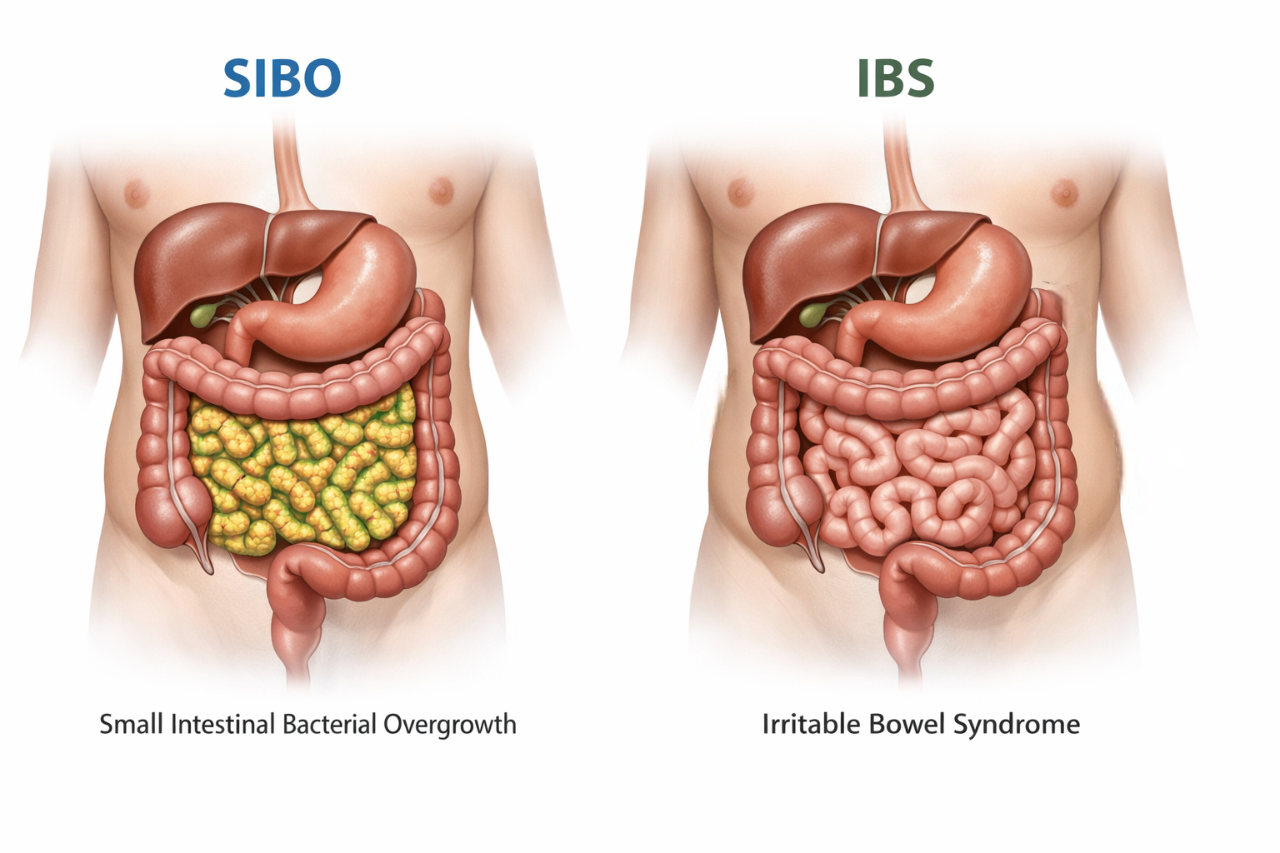
SIBO stands for Small Intestinal Bacterial Overgrowth. In normal digestion, most bacteria live in the large intestine. The small intestine usually has fewer bacteria. In SIBO, too many bacteria start growing in the small intestine. These bacteria start fermenting the food you eat — especially carbohydrates — before your body can digest it properly. That fermentation produces gas. This leads to common SIBO symptoms like bloating, discomfort, and bowel problems. So in simple terms, SIBO is a bacterial imbalance problem.
What Is IBS?
IBS stands for Irritable Bowel Syndrome. It is called a “functional” disorder. That means tests like scans and blood work usually look normal, but the person still has symptoms. IBS mainly affects how the gut moves and how sensitive it is. The intestine may react strongly to normal digestion. Stress, food, hormones, and infections can trigger it. Unlike SIBO, IBS is not automatically caused by bacterial overgrowth. That’s why understanding IBS symptoms vs SIBO symptoms is important.
Common SIBO Symptoms
Now let’s talk about the typical SIBO symptoms people notice.
1. Severe Bloating After Eating
This is the most common complaint. Many people feel fine in the morning but look and feel heavily bloated by evening. The stomach may feel tight or stretched. The bloating often starts 30 minutes to 1 hour after eating, especially after foods like bread, rice, sweets, onions, or garlic.
2. Gas and Burping
Because bacteria ferment food early, a lot of gas forms. Some people burp a lot. Others pass gas frequently.
3. Diarrhea or Constipation
Some people get loose stools several times a day. Others struggle with hard stools and difficulty passing them. It depends on the type of gas the bacteria produce.
4. Nutrient Deficiency
Since bacteria consume nutrients, small intestinal bacterial overgrowth symptoms can include low vitamin B12, iron deficiency, weakness, or fatigue.
5. Brain Fog
Many people say they feel mentally slow, tired, or unfocused.
6. Weight Loss
In more serious cases, poor absorption of nutrients can cause weight loss.
These whole-body effects are important when comparing SIBO vs IBS, because IBS alone usually does not cause nutrient problems.
Common IBS Symptoms
Now, let’s understand IBS clearly.
1. Stomach Pain Linked to Bowel Movements
In IBS, pain often improves after passing stool. This is one key difference in IBS symptoms vs SIBO symptoms.
2. Alternating Constipation and Diarrhea
Some people have IBS with diarrhea. Few have constipation. Some switch between both.
3. Stress-Related Flare-Ups
Stress, anxiety, travel, and emotional changes can trigger IBS symptoms easily.
4. Mucus in Stool
Some people see mucus in their stool.
5. No Serious Nutrient Deficiency
Unlike small intestinal bacterial overgrowth symptoms, IBS usually does not cause vitamin deficiencies or weight loss.
Why Do SIBO and IBS Feel So Similar?
This is where the confusion around SIBO vs IBS increases.
Both conditions can cause:
- Bloating
- Gas
- Irregular bowel movements
- Food sensitivity
Some research suggests that many people diagnosed with IBS may actually have SIBO underneath. That’s why symptoms overlap so much. Without proper testing, it is easy to assume everything is IBS.
Main Differences Between SIBO and IBS
Let’s simplify this clearly:
Cause
- SIBO: Too many bacteria in the small intestine
- IBS: Gut movement and sensitivity problem
Bloating
- SIBO: Often severe and worse after eating carbs
- IBS: Present but usually not extreme
Deficiencies
- SIBO: Possible vitamin and mineral deficiency
- IBS: Rare
Diagnosis
- SIBO: Breath test
- IBS: Based on symptoms after ruling out other diseases
This comparison helps make sense of IBS symptoms vs SIBO symptoms practically.
What Causes SIBO?
SIBO usually happens when the gut does not move food properly.
Risk factors include:
- Long-term use of acid-reducing medicines
- Diabetes
- Thyroid problems
- Past abdominal surgery
- Slow gut movement
- Frequent antibiotic use
When food stays in the small intestine too long, bacteria grow more. This leads to SIBO symptoms.
What Causes IBS?
IBS can start after:
- A stomach infection
- Food poisoning
- Long-term stress
- Emotional trauma
- Hormonal changes
IBS is strongly linked to the gut-brain connection. The intestine becomes extra sensitive. That’s why stress management plays a big role in IBS, but may not fully fix small intestinal bacterial overgrowth symptoms.
How Doctors Diagnose Them?
Symptoms alone are not enough to decide SIBO vs IBS.
For SIBO
Doctors use a breath test. You drink a sugar solution, and your breath is tested over a few hours. If certain gases rise too quickly, it suggests bacterial overgrowth.
For IBS
Doctors use symptom guidelines and rule out other conditions like celiac disease or inflammatory bowel disease.
If someone with IBS does not improve with normal treatment, testing for SIBO may be considered.
Treatment for SIBO
Treatment focuses on reducing excess bacteria and improving gut movement.
Common treatments include:
- Antibiotics like rifaximin
- Medicines to improve gut motility
- Short-term low FODMAP diet
- Addressing root causes like thyroid issues
Diet alone usually does not cure SIBO, but it can reduce SIBO symptoms.
Treatment for IBS
IBS treatment focuses on symptom control.
Options include:
- Soluble fiber
- Antispasmodic medicines
- Low FODMAP diet
- Stress management
- Therapy for anxiety
Unlike small intestinal bacterial overgrowth symptoms, IBS often improves with lifestyle changes alone.
Diet and Lifestyle Tips
Both conditions benefit from:
- Eating smaller meals
- Avoiding overeating
- Limiting high FODMAP foods
- Walking after meals
- Reducing stress
- Sleeping properly
But remember, if the real issue is SIBO, diet alone may not fix it completely.
When Should You See a Doctor?
Seek medical advice if you notice:
- Unexplained weight loss
- Constant severe bloating
- Blood in stool
- Severe fatigue
- Symptoms not improving with diet changes
It’s better to test than to guess in the SIBO vs IBS situation.
Can You Have Both?
Yes. Some people have IBS and SIBO together. In those cases, treating SIBO may reduce IBS-like symptoms. That’s why understanding IBS symptoms vs SIBO symptoms matters. Proper testing helps avoid years of wrong treatment.
Long-Term Outlook
IBS is usually a manageable long-term condition. SIBO can come back if the root cause is not treated. Improving gut movement and fixing underlying health issues is important. The good news is that both conditions can improve with the right approach.
Final Thoughts
Bloating and stomach issues are common, but they should not be ignored. The confusion between SIBO and IBS happens because symptoms look very similar. But the cause is different. SIBO involves bacterial overgrowth in the small intestine. IBS is mainly a gut sensitivity and movement problem. If you notice nutrient deficiency, extreme bloating after meals, or no improvement with IBS treatment, it may be worth discussing testing for SIBO. Understanding SIBO symptoms, recognizing small intestinal bacterial overgrowth symptoms, and knowing the difference between IBS symptoms vs SIBO symptoms can help you take the right steps. Instead of self-diagnosing, talk to a doctor, get tested if needed, and focus on treating the real cause. Relief is possible when the right problem is identified.