Medical Disclaimer: The information in this article is for educational purposes only and should not replace professional medical advice, diagnosis, or treatment. Always consult a qualified healthcare provider or physical therapist regarding any back pain or underlying spine conditions.
Walking, sitting, or getting out of bed—even the simplest of activities—can be unpleasant with a stiff or tight back. If you spend a lot of time sitting at a desk, driving, or using your phone, your back may feel tighter. A common tool many people use for this is a foam roller. For some, rolling the back with a foam roller helps release tight muscles and enhance mobility. But the trick is how to utilize the roller the right way. Too much pressure or rolling directly on the spine can cause issues.
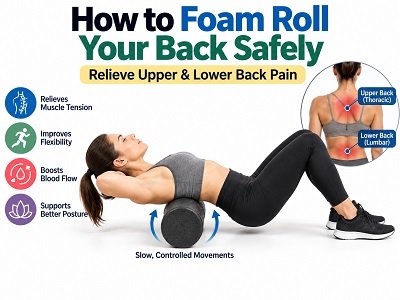
What Is Foam Rolling?
A foam roller is a cylindrical tool used for self-massage. You place some of your body on the roller and roll over it slowly. The pressure can aid to relax tight muscles and can temporarily alleviate muscle discomfort or stiffness. A lot of folks utilize it before or after they work out.
Foam rolling is not a cure-all for all kinds of back pain. If your pain is due to injury, nerve issue, or other medical condition, a foam roller may not be the answer. Foam rolling can help with back pain, but if you are dealing with persistent issues like chronic low back pain relief strategies, a multi-faceted care approach is essential. Foam rolling may help with transient muscle stiffness/tightness. It can also help you move freely for a short time.
However, it is vital not to think of foam rolling as a quick fix to back discomfort. If your back discomfort is recurring, chronic, or growing worse, it’s best to find out the cause rather than just foam rolling. For natural muscle soreness after exercise or long periods of sitting, moderate foam roller movements for the back might be helpful.
How to Safely Foam Roll Your Upper Back?
You usually find it easier to foam roll the upper back than the lower back. Lie on your back, legs bent, feet flat on the floor. Put the foam roller on your upper back, between your shoulder blades. Behind the head or crossed on the chest. Now flex your body back and forth and gently elevate your hips slightly. Allow the roller to go over the muscles of the upper back. Don’t roll back and forth hastily, but move slowly. Work the area for 30 to 60 seconds.
Important Safety Note: Don’t roll directly over your neck. If you struggle with upper neck tension, targeted exercises for neck pain are much safer than rolling directly over cervical vertebrae. Do not apply direct forceful pressure on the spine either. You want to work the muscles around the spine, not the bones themselves.
5 Safe Back Exercises with a Foam Roller
1. Roll Upper Back
That is the basic foam rolling motion. Place the roller under your upper back and slowly move your body back and forth. Steer your motions. If you find yourself in a spot, stop there for a few seconds instead of rolling over it aggressively.
Length: 30–60 seconds.
2. Thoracic Spine Extension
This movement involves light stretching and foam rolling. Place the roller over the top of your back. Place your feet on the floor and hold your head in your hands. Lean the upper back gently over the roller. Do not force your body to bend deeply. Return to start position and repeat slowly. This can feel excellent if your upper back is feeling stiff after sitting for many hours.
Try: 6–8 slow reps.
3. Side to Side Roll from Upper Back
Face up on the roller with it across the upper back. Instead of just going back and forth, move side to side a little bit. Make the motion moderate. This can get to slightly different parts of the upper-back muscles.
Try: 20 to 30 seconds per side.
4. Lat Pulls
Your lats are the big muscles on the sides of your upper back. Lie on your side and position the foam roller beneath the side of your upper body slightly below your armpit area. Move slowly up and down the muscle. Don’t roll directly into the armpit or shoulder joint.
Try: 20–30 seconds each side.
5. Stretch for Upper Back and Shoulders
Lie the foam roller along your back (long way). Lie on your back with the roller under your head and back. Feet on the floor, knees bent. Gradually reach your arms out to the side or overhead as far as is comfortable. This is more of a mobility workout, not a hard rolling action.
Give it a shot: 5–10 slow reps.
What About Foam Rolling Your Lower Back?
Here is where you have to be more careful. People tend to put the roller just under their lower back and roll up and down. This is not always a smart idea, though, as there is not as much support in the lower back as there is in the upper back. If you suffer from nerve compression, check options for slipped disk non-surgical care before trying direct compression.
Some people have worse discomfort when firm pressure is applied to the lower back. You can work on the surrounding muscles, such as the glutes and upper hips, instead of rolling the lower back directly.
Glute Foam Rolling: The Safer Way
Sit on the foam roller with knees bent and feet flat on the floor. Lean to one side and roll softly over the muscles of the buttocks. Move slowly and don’t place too much pressure on one uncomfortable region.
Try: 30–60 seconds per side.
Some people do have discomfort around the hips and lower back, and tight glute muscles can be a part of it, but the reason for back pain is different for every person.
How Long Should You Use a Foam Roller?
There’s no need to spend 20–30 minutes foam rolling. It takes a few minutes to try it. For most folks, your estimated total time:
- 30–60 sec on each muscle group.
- Use slow, controlled movements.
- If the region becomes excessively sensitive, take pauses.
- But if you feel sharp or unexpected discomfort, stop.
Foam rolling should feel like pressure or mild discomfort, not pain.
Should You Foam Roll Before or After Exercising?
You can use a foam roller before or after exercising. Doing a gentle foam roll before your workout—or alongside targeted desk exercises for lower back pain—and then some active warm-up moves may help you feel less stiff. Some people find it helpful for brief muscle stiffness or tightness after exercise. You don’t have to pick one time. The best time is what works into your routine and is helpful to you.
Common Mistakes with Foam Rolling
Foam rolling sounds like it should be easy, but many individuals put too much pressure or roll the wrong spots.
Don’t make those mistakes:
- Rolling Right on the Spine
- Rolls right over the neck
- As a beginner, using a really hard roller
- Too quick a roll
- Linger too long on one hurt
- Breath-holding
- Foam rolling on a recent injury
- Ignoring the numbness or tingling
- All back discomfort is assumed to be muscular pain
More pressure doesn’t always equal better performance. If there is pain in any movement, ease up on the pressure or quit.
Who Should Not Foam Roll?
Foam rolling isn’t for everyone. If you have a recent injury, a fractured bone, severe osteoporosis, blood clotting disorders, or other conditions that would make pressure or exercise risky, be cautious.
If you have significant back pain that you cannot explain, you should also see a doctor, rather than trying to treat it yourself. Also if you have pain radiating down your leg, weakness, numbness, or tingling, consult a healthcare expert before attempting aggressive foam rolling.
Back Pain: When to See a Doctor
Not all backaches require medical care, but there are warning indications you should not ignore. Seek medical care if your back pain:
- Becomes bad or abruptly gets worse
- Occurs after a catastrophic accident or fall
- Accompanied by weakness or numbness
- Strong symptoms traveling down your leg
- Includes loss of control of bowel or bladder
- Is accompanied by a fever
- Unexplained weight loss occurs
- Does not get better or gets worse
Sometimes these symptoms can be a sign of a problem that requires adequate medical evaluation.
Foam Rolling and Stretching
Foam rolling and stretching are not quite the same. It is pressure on the muscles; stretching lengthens the muscles and increases flexibility. You may use both. For example, you may spend a few minutes performing soft foam rolling, then finish with basic stretches for the back, hips, and legs.
Movement is also good; regular movement. Sitting eight hours a day, five minutes of foam rolling won’t totally negate the impacts of sitting the rest of the day. If you work long hours at a station, incorporating tailored desk job fitness habits alongside daily movements can keep your muscles active.
Do try to get up periodically, walk around, and change your sitting position.
5 Minute Foam Rolling Routine Table
| Exercise | Length / Reps |
|---|---|
| Upper back roll | 60 sec. |
| Upper back extension | 6–8 reps |
| Lat roll | 30 seconds each side |
| Glute roll | 30 sec each side |
| Gentle upper body stretch | 1 minute |
Move through the routine gently and breathe naturally. You should feel comfortable and not more painful than when you started.
Summing Up
Foam rolling the back is a great approach to help alleviate muscle tightness and stiffness, especially following exercise or long periods of sitting. But you have to be careful using it. The upper back is usually a better spot to foam roll directly. With the lower back, it’s usually best to work on the surrounding areas such as the glutes and hips, rather than applying significant pressure directly to the lower spine. The roller doesn’t have to hurt to operate, so don’t try to push through acute discomfort. It’s just a light pressure and a regulated motion.
Foam rolling can be one little piece of taking care of your back. Building overall core stability with targeted resistance band back exercises, maintaining good posture, and staying physically active are equally important. If your back discomfort is severe, persistent, or accompanied by numbness, weakness, or other warning symptoms, don’t just rely on a foam roller. Get the situation thoroughly checked out.
Frequently Asked Questions
Is foam rolling useful for lower back pain?
It can help with muscular tightness and temporary stiffness, but it’s not a solution for all types of back pain.
Can you foam roll your lower back?
Better be cautious with direct lower back rolling. Strong pressure can make symptoms worse for some people. Focusing on the glutes and hips might be safer.
Can I just roll right over my spine?
No, don’t apply direct pressure on the bones of your spine. Concentrate on the muscles around the spine.
How long do I foam roll my back?
Start with about 30–60 seconds on each spot. You don’t need to roll for a long time.
Can Foam Rolling Aid Bad Posture?
Foam rolling may help briefly with tightness and range of motion but will not cure your posture on its own. Strength exercises, mobility work, and healthier daily routines, too, are vital.
Can I foam roll every day?
Some people can perform gentle foam rolling on a regular basis, but you don’t have to do it every day. If this becomes painfully sore or more sore, back off or stop.
Does foam rolling hurt?
You can feel pressure or a little discomfort, particularly around tight muscles. If you get a sharp, scorching, or severe pain, this is not normal, and you should stop.