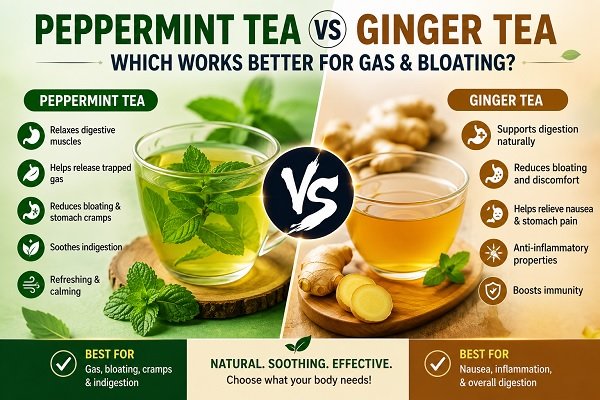
Peppermint and ginger teas are useful when treating gas, although they have different effects on the condition. The peppermint tea for gas is better at calming the muscles of the digestive tract, while the ginger tea has additional benefits like supporting digestion, alleviating nausea, and moving food quickly out of the stomach. To decide which one works better for you, consider the reason behind your problems with the digestive system.
Key Points
- Peppermint tea calms the muscles of the digestive system, which makes it easier to pass gas.
- Ginger tea supports the process of digestion and may help alleviate nausea and stomach pain.
- These herbs are widely used in herbal teas to ease bloating.
- For people with acid reflux, drinking peppermint tea may aggravate the condition.
- Bloating along with stomach pains or unexpected weight loss requires medical consultation.
Introduction
Gas is something almost all individuals experience from time to time. It usually occurs due to fast consumption of food or drinking some specific products. While in most cases, the problem gets better by itself, people often want to use natural methods for improving their state rather than using medicines. The two most popular home remedies are the use of peppermint tea and ginger tea. While both teas have been known for centuries, they act in different ways in our bodies.
Some people believe that peppermint tea gives more immediate results concerning getting rid of trapped gas. At the same time, others consider that ginger tea helps to overcome bloating more effectively. Knowing how each type of tea acts can help to decide which one to use depending on your condition. In this article, we will compare these two types of tea, describe their use and the occasions when the tea becomes helpful, speak about other remedies for stomach cramps, and identify when it is necessary to consult a physician.
What Causes Gas and Bloating?
Gas is a natural process during digestion. During the digestion process, bacteria in the intestines break down some food components and create gas. Bloating results from gas that accumulates in the stomach or intestines, giving you a feeling of tightness in your abdominal area.
Some of the common reasons for bloating include:
- Eating too fast
- Consuming too much air during eating or drinking
- Carbonated drinks
- Legumes, peas, and vegetables in the cabbage family
- High-fat meals that slow digestion
- Food intolerances like lactose intolerance
- Constipation
- Irritable bowel syndrome (IBS)
In most cases, bloating is nothing to worry about. However, persistent bloating accompanied by other symptoms needs to be medically evaluated.
How Does Peppermint Tea For Gas Work?
One of the most popular home remedies is peppermint tea for gas, due to its soothing properties for the digestive system. Peppermint tea contains an ingredient called menthol, which helps relax the smooth muscles of the digestive system. Relaxing these muscles helps the gas trapped inside them move more freely through the intestines.
For this reason, many people drink peppermint tea to relieve bloating, gas, and even stomach cramps caused by indigestion after eating. Some studies have shown that peppermint oil can relieve the symptoms of IBS patients. But peppermint tea contains significantly less peppermint oil than peppermint oil capsules.
Possible Advantages of Peppermint Tea
The consumption of peppermint tea can:
- Help with flatulence
- It can help alleviate bloating
- Help ease stomach cramps
- Help relax digestive muscles
- Refresh your mouth after meals
- Help digest food comfortably
It often makes people feel better after consuming a large amount of food and foods which tend to cause flatulence.
When Can Peppermint Tea Help the Most?
Peppermint tea may be useful when you have the following symptoms:
- Bloating after eating
- Flatulence
- Abdominal cramps
- Discomfort in digestion without feeling sick
For many individuals, drinking peppermint tea after meals helps them relax their digestive system. On the other hand, every person has a different digestive system; some people see results within 20-30 minutes, while for some people there is no result at all.
When Should You Be Careful with Peppermint Tea?
While peppermint tea is generally deemed safe for consumption by healthy individuals, it may not be right for all.
You will need to consult with your healthcare professional before taking it regularly if you have the following issues:
- You have GERD
- If you have severe heartburn
- You have gallbladder problems
- If you are pregnant and are not sure if you can drink herbal teas
- You take medications that might interact with the herb
Peppermint has the ability to relax the lower esophageal sphincter, which usually keeps stomach acid from going up. This makes it easier for some people to get heartburn from the consumption of peppermint tea. If you feel chest burning or your reflux gets worse when consuming peppermint tea, you can opt for ginger tea instead.
Is Peppermint Tea a Fast Gas Relief Tea?
Peppermint is considered to be one of the most efficient varieties of fast gas relief tea since it serves to relax the digestive system and let go of trapped gases more easily. But, still, it is necessary to be realistic about the matter and not expect miracles from herbal teas. It is the best remedy for minor and occasional digestive issues, and not for serious and chronic ones, which can and should be solved by doctors. And in case your symptoms of gas and bloating persist, or they are accompanied by pain, vomiting, weight loss, or bleeding, you have to visit a doctor.
Ginger Tea For Gas and Bloating: How Is It Effective?
Similar to peppermint, ginger has been utilized throughout history as a traditional treatment for digestive ailments. Unlike peppermint, which only serves to relax the digestive tract muscles, ginger contributes to the proper movement of food in the stomach and intestines.
Therefore, ginger tea may prove particularly effective if your bloating is due to a slow digestive process and feelings of excess fullness after meals.
In its composition, ginger includes naturally occurring gingerols and shogaols. Some evidence exists showing that such components promote digestion and prevent inflammation. Additionally, some studies have revealed that ginger facilitates an efficient emptying of the stomach. This property is why ginger tea is commonly used in cases of mild nausea, indigestion, gas, or bloating.
Benefits of Ginger Tea
Ginger tea can be helpful for:
- Reducing bloating post-meals
- Promoting healthy digestion
- Alleviating mild nausea
- Reducing stomach pain
- Improving the movement of food through the digestive system
- Alleviating mild stomach cramping
Ginger tea is also often taken by individuals when traveling, when they have nausea due to pregnancy (with medical approval), or after having an upset stomach.
When Should Ginger Tea Work?
If your symptoms are associated with:
- Overfull feeling after meals
- Slow digestion
- Mild nausea
- Post-meal bloating
- Mild stomach pain
Ginger tea might be a good option, especially since ginger tea is less likely to aggravate acid reflux than peppermint tea.
Peppermint Tea vs. Ginger Tea – Which One Is More Effective?
While both beverages may ease your digestive problems, which one is “better” for you really depends on the cause of your digestive problems. If you have gas-related pain, peppermint tea might help relieve your problems faster since this beverage helps relax your digestive system muscles, making it easier for gases to escape. In case your problem is caused by poor digestion or nausea, ginger tea might work better for you since it helps with gastric emptying. However, both remedies don’t work instantly, and their effectiveness may vary from person to person. In case of mild digestive problems, many people begin to feel relieved 20 to 45 minutes after drinking warm beverages.
Peppermint Tea vs. Ginger Tea Comparison
| Feature | Peppermint Tea | Ginger Tea |
|---|---|---|
| Best for | Trapped gas, bloating, mild stomach cramps | Slow digestion, nausea, bloating after meals |
| How it works | Relaxes digestive muscles | Supports stomach emptying and digestion |
| Main active compounds | Menthol | Gingerols and shogaols |
| May help with | Gas, bloating, IBS-related discomfort | Indigestion, nausea, mild stomach upset |
| May not be suitable for | People with frequent acid reflux (GERD) | People taking certain blood-thinning medicines should seek medical advice before regular use |
| Typical relief | Often within 20–30 minutes for mild gas | Often within 30–45 minutes for mild digestive discomfort |
Which Tea Would You Prefer to Take?
Peppermint or ginger tea; it all depends on your complaints, not how strong the tea is.
Peppermint tea is recommended if:
- Gas trapped in the body
- Slight bloating
- Pressure sensation in the abdominal area
- Cramping sensation in the stomach after eating
Ginger tea is recommended if:
- Excessive bloating after eating large amounts of food
- Slight feeling of nausea
- Indigestion
- Feeling that food is taking too much time to digest
For some, one tea suits them more than the other, whereas some change the tea according to their complaints.
Additional Herbal Teas for Bloating
Herbal teas like peppermint tea and ginger tea are quite popular for bloating relief, but there are other alternatives to choose from.
Here is the list of some additional herbal teas that can promote better digestion.
Chamomile Tea
The main benefit of chamomile is the relaxing effect on the body. It may help relax the digestive tract and relieve mild stomach pain.
Fennel Tea
Fennel has been traditionally used to relieve gas and aid digestion. This tea is especially beneficial after heavy meals.
Lemon Balm Tea
Lemon balm is an herb belonging to the mint family that may help relieve mild digestive problems and provide relaxation.
Turmeric Tea
Turmeric is a rich source of curcumin with anti-inflammatory properties. Even though the scientific data on its efficiency is limited, some people use it to promote digestive health.
However, these are just some popular choices for herbal teas for bloating.
Herbal Tea Safety for All?
Even though herbal tea is generally known to be safe for most adults who are healthy, some individuals should avoid taking this beverage.
It is advisable to consult your doctor about the regular consumption of herbal teas in case you:
- Are pregnant or lactating
- Have gall bladder problems
- Suffer from very serious acid reflux disease
- Are on prescription drugs, particularly blood-thinners
- Have digestive system diseases
- Are allergic to herbs or mint and ginger plants
Even natural remedies may still cause drug interactions or affect particular health problems. Always use them as an additional measure in medical treatment.
When Drinking Tea Alone May Not Help
Herbal tea will help alleviate problems with bloating occasionally, but they are not going to be able to treat any problems that may arise from persistent digestive problems. If you experience bloating regularly for several weeks, it is serious enough that you have severe bloating, along with other symptoms such as unexpected weight loss, bloody stools, persistent vomiting, fever, or severe pain in your abdomen. Your doctor will be able to diagnose whether your problems are due to food intolerance, IBS, inflammatory bowel disease, gallstones, ulcers, or another digestive problem.
Author

With six years of experience, I turn ideas into engaging and easy-to-read content. Whether it’s blogs, website copy, or emails, I write in a way that connects with people and delivers the right message. Clear, creative, and impactful—that’s my writing style.
View all posts