Modern Treatment Strategies: An Overview
While millions of people suffer from anxiety disorders, they all differ in symptoms and nature. Some have chronic worries, some have social phobias, panic episodes, insomnia, or an inability to concentrate. During the last few decades, psychologists have suggested different therapy strategies for such people. Today, treating anxiety is not only a matter of talking about the problem. With varied therapeutic strategies, patients explore their mental and behavioral responses to different stimuli and situations. The aim of such treatment is not to offer momentary respite, but to assist the individual in learning how to deal with his fears and conquer challenging situations in the future.
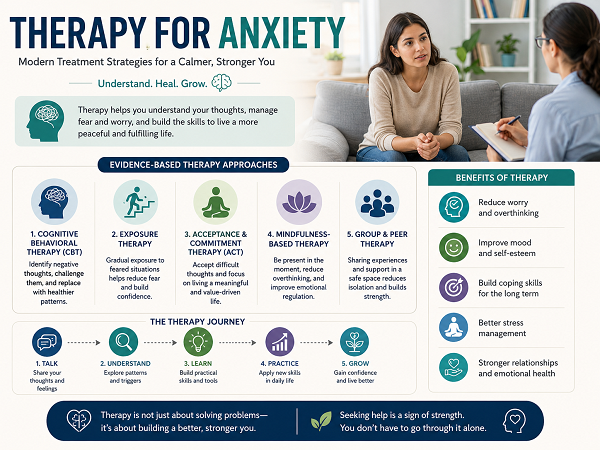
Therapy looks to be a talk of emotional problems. However, modern therapy is not only about talking. The therapists employ well-documented approaches, including reprogramming ideas, increasing coping abilities, and responding to stimuli in an appropriate manner.
The Role of Therapy in Managing Anxiety
Anxiety, when it becomes a regular part of life, can impact employment, relationships, decision-making, and day-to-day activities. People usually tend to avoid circumstances that make them uncomfortable. This may provide relief in the short-term, but may lead to increased worry in the long-term. Therapy helps to discover the patterns, beliefs, and reactions that keep worry alive. People learn to deal with challenges more confidently, not to avoid problems. It is one of the most effective long-term remedies out there today.
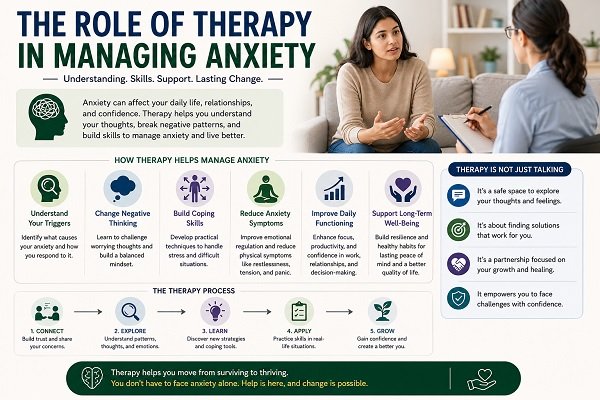
One of the great benefits of therapy is that it teaches skills that you can use for a lifetime. Therapy is not about quick cures. It is about generating permanent improvements, even after therapy has ended.
Understanding How Anxiety Is Made?
Understanding how anxiety develops helps you understand why therapy works. When a person is in a stressful situation, the brain automatically scans for probable hazards. This is a normal response that helps keep people attentive when they need to be. But anxiety becomes an issue when the brain starts treating normal events like they’re threatening.
For example, a person might begin to worry excessively about future events, social interactions, professional commitments, or personal relationships. These anxieties can become automatic over time.
Anxiety typically follows a basic cycle:
| Stage | What Happens |
|---|
| Trigger | Something causes worry or fear |
| Thought | Negative assumptions appear |
| Feeling | Anxiety increases |
| Reaction | Avoidance or stress response occurs |
| Result | Anxiety becomes stronger over time |
Therapy works to stop this cycle before it becomes a permanent pattern.
Cognitive Behavioral Therapy or CBT:
Cognitive Behavioral Therapy, or CBT as it is usually known, is one of the most frequent types of Therapy for Anxiety. CBT looks at the links between thoughts, feelings, and behaviors. The underlying premise is that people’s thoughts about situations affect how they feel and act. Many nervous ideas come to us instinctively. People can assume failure, take the worst-case scenario, or just dwell on the bad possibilities. These kinds of thinking might boost stress levels even when there is no real threat.
During CBT sessions, people are taught to:
- Identify unhelpful thoughts
- Challenge the negative assumptions
- Replace unrealistic thought patterns
- I react to circumstances with more calmness
- Develop better coping habits
CBT is popular because it gives people practical techniques to utilize in everyday situations.
Exposure Therapy: Facing Fear Gradually
Another way that works well is exposure treatment. People with anxiety generally avoid things that make them feel uncomfortable. Avoidance might feel useful in the moment, but it might really strengthen fear. Exposure therapy helps people confront the issues they tend to avoid. It is a professional, guided step-by-step approach. For example, someone who fears public speaking may begin by speaking in front of a small group, then gradually work up toward larger groups . It is not to force someone into stressful conditions. Instead, it helps kids to acquire confidence steadily and safely. Practice, practice, practice. The brain learns that the feared circumstance is not as deadly as it thought. As confidence rises, worry frequently begins to diminish.
Acceptance and Commitment Therapy (ACT)
Acceptance and Commitment Therapy, or ACT as it is known, has gained popularity in recent years. ACT teaches people how to respond differently to thoughts, rather than trying to change them. Everyone thinks negative ideas at some point. ACT helps people recognize that they don’t need to battle every nervous thought or give it all of their focus.
The therapy encourages people to do:
- “Accept uncomfortable feelings”
- Be mindful of the present moment
- Discovering Personal Values
- Do Something Despite Anxiety
Many people find this method useful as it decreases the fight against worry and redirects the focus to living a more balanced existence.

Mindfulness-Based Therapy
Mindfulness is now a part of many therapeutic regimens. People often spend a lot of time worrying about things that might happen in the future or things that have already happened. This is typically a symptom of anxiety. This continual mental activity might make stress feel like it’s too much to handle. Mindfulness is about focusing on what’s happening now, rather than becoming caught in constant anxiety.
Some common mindfulness practices are:
- Respiration exercises
- Guided relaxation
- Awareness of body exercises
- Meditation techniques
- Activities with Focused Attention
These techniques may help quiet the mind and improve emotional control in stressful situations.
Many additional therapy modalities include mindfulness skills for greater effect.
Peer support and group therapy
Not everyone is aware that many times, anxiety can be managed with group therapy, too.
Group sessions provide the opportunity to meet individuals with comparable issues. This offers an environment in which people may discuss their experiences, develop coping methods and support one another.
One of the main benefits of group therapy is knowing that you are not alone. Many people feel alone when they are anxious. Hearing that others have had similar situations can make you feel less alone.
Group therapy can also enable people to enhance their skills of communication and to develop confidence in social circumstances.
Digital Therapy and Support
Technology has transformed the delivery of mental health services.
Today, many therapists provide remote sessions via video conversations and secure web platforms. This approach makes therapy more available to persons with hectic schedules or limited access to local resources.
Online therapy can offer:
- Flexible appointment slots
- Easy access at home
- More convenience
- Less time travelling
- Continued support during busy times
Many people who previously avoided treatment due to scheduling issues can get professional support through online therapy programs.
Individualized Treatment Plans
One crucial thing to realize about anxiety is that it affects everyone differently. What may be right for one person may not be right for another. This is why therapists often make personalized plans according to individual needs. Several things can affect treatment decisions, including:
- Symptom Type of Anxiety
- Personal background
- Lifestyle daily.
- Stress levels ;
- Work atmosphere
- Family commitments
This individualized approach helps to make the therapy work for the issues of each individual.
Management of Anxiety in Developing Cities
A lot has changed in the work culture in the last few years, especially in cities like Gurgaon. Many professionals face added strain from long working hours, constant connectivity, and fast-paced lifestyles. The mental health services in Gurgaon are likewise evolving to address these shifting requirements. There are more clinics and therapy centers with flexible consultation options, including online consultations and planned treatment plans for working people nowadays.
Developing long-term coping skills
A good Anxiety Treatment plan is not only about feeling better today. It is also about acquiring talents that will be useful for a long time to come.
Therapists often teach clients methods to utilize on their own once therapy ends. These skills could be:
- Techniques for relieving stress
- Good daily habits
- More effective communication habits
- Problem-solving approaches
- Emotional mindfulness practices
Such abilities equip people to face future obstacles with more confidence.
Integrating Different Therapeutic Approaches
Most therapists practice more than one technique. They employ varied mixes of tactics depending on what is appropriate to the person. For example, one might utilize CBT strategies to improve cognitive habits and mindfulness techniques to develop emotional regulation. This strategy is more effective since it attacks anxiety from several perspectives. And adjustments can be implemented along the way, depending on the outcome.
The Future of Anxiety Treatment
Anxiety treatment is getting better all the time as people are discovering new facts about the impact of anxiety on mental health. There’s new technology that allows for treatment to be more accessible and individualized. Therapists are being helped by online platforms, technological monitoring tools and treatment programs. In addition, established types of therapy are still being improved. Specialists are finding innovative methods to combine traditional techniques with new technology to produce the greatest results. Therefore, there are many alternative options for those who want anxiety treatment.
Key Takeaways
- It influences the thoughts, feelings, actions and activities of daily living.
- Modern Anxiety Treatment is all about practical skills and long-term rewards.
- Cognitive Behavioral Therapy helps you to identify harmful thought patterns.
- Exposure Therapy helps reduce fear by gradually exposing people to the things that make them anxious.
- Acceptance and Commitment Therapy is about finding new ways to respond to thoughts that cause anxiety.
- Mindfulness Therapy helps in developing the skills of concentration.
- Group Therapy is assistance and education in groups.
- Internet Therapy offers online access to professional help.
- Treatments suited to the person’s needs tend to be more effective.
- Developing sustainable coping skills is one of the most important parts of recovery.
Conclusion
Anxiety may interfere with many areas of life, but there are solutions to the problem. Modern methods of treatment are directed to far more than the reduction of concern. People will better understand their reactions, practical abilities to deal with a variety of difficulties, and good coping techniques. Cognitive behavioral therapy, Exposure treatment, Acceptance and Commitment Therapy, Mindfulness practice, Group counseling, and even internet therapy can all be very beneficial and provide you with more opportunities to live a normal life. Usually, the most effective treatment regimen is an individual one. With some patience and determination, and with good self-care, you can learn to deal with the condition. Modern possibilities of Anxiety Treatment are always growing, so more people have a chance to find their personalized treatments. One of the most efficient techniques of gaining success in this area is Professional Therapy for Anxiety.