Hypertension is no longer considered an “old age” disease. By the year 2026, there will be many young adults aged 20s and 30s who are suffering from this condition due to unhealthy diet and lifestyle choices such as highly-processed foods, stress, inadequate rest, and most importantly, excessive sodium intake. Although individuals tend to believe that they are taking only a small amount of salt each day, the problem lies with the amount of sodium content in commercial products.
According to the World Health Organization (WHO) Sodium Reduction Report, it is estimated that the typical adult worldwide consumes around 4310 milligrams of sodium per day, surpassing the maximum level of 2000 milligrams recommended by the WHO. The same organization reported that about 1.89 million deaths annually are caused by elevated sodium intake and cardiovascular diseases.
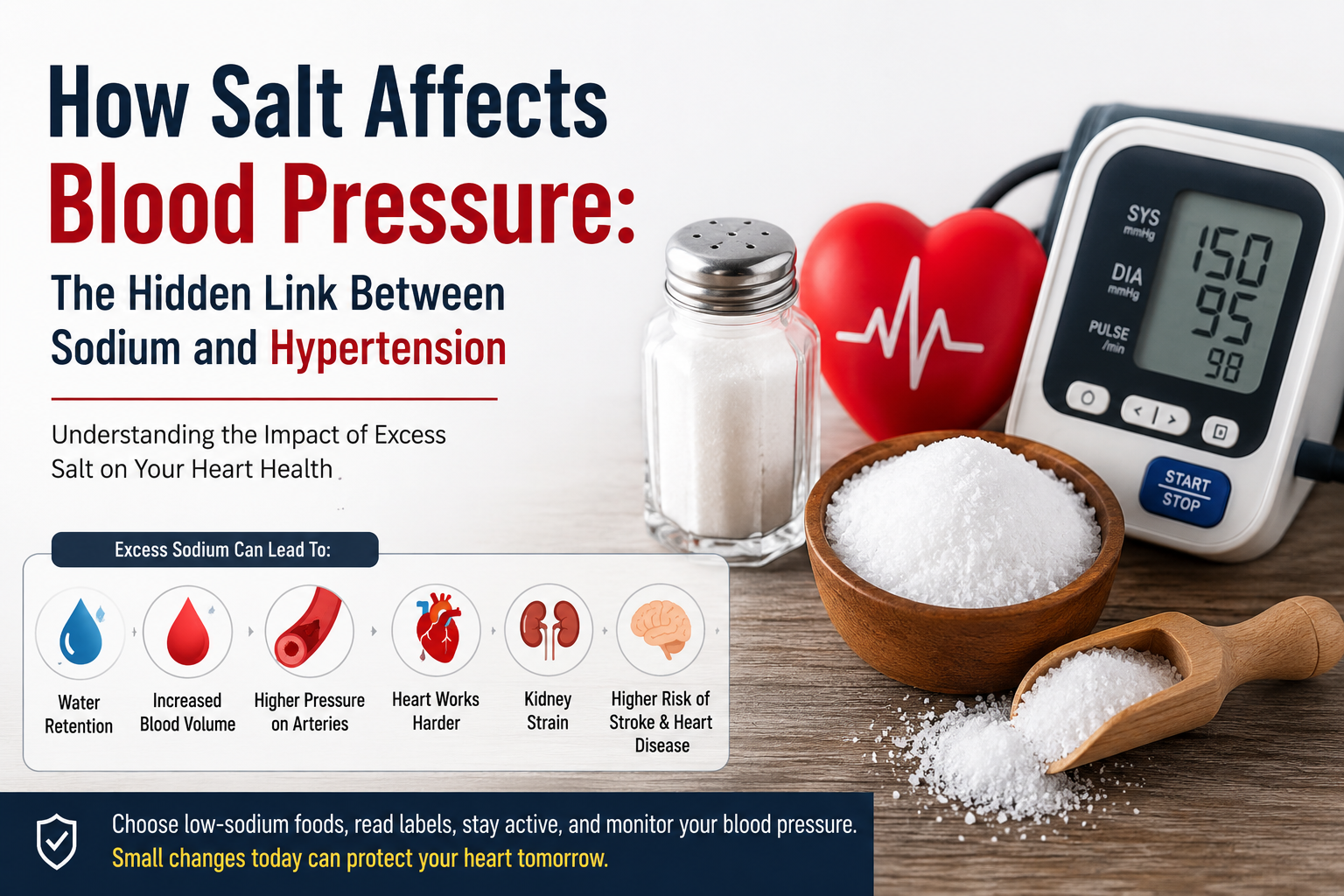
Once the mechanism of salt’s effect on blood pressure is explained, the principle of this phenomenon can be easily understood. Too much sodium causes the body to retain additional fluids, leading to increased volume of blood within blood vessels. The high volume creates pressure on arteries and can cause long-term damage to vessels, stress on the heart, and increase risk for stroke, kidney disease, and heart attack.
Today, the bigger concern is that there are individuals taking high amounts of sodium without knowing. There are foods labeled as healthy, but that have high sodium content. For instance, foods like instant oats, soups, salad dressing, and protein bars may have sodium content. The rising trend in the amount of sodium and hypertension cases is emerging as one of the major health challenges worldwide.
Studies indicate that the effects of sodium on people vary. Some are salt sensitive, implying their blood pressure increases rapidly upon taking salty foods. Genetics, renal function, levels of stress, obesity, insomnia, and low potassium foods influence how the body reacts to sodium.
What is Sodium and its Importance for the Body?
Sodium is an important mineral for our body. Sodium plays the role of controlling the fluid balance in our body. Also, it is important in muscle contraction and nerve transmission. Sodium is found naturally in milk, beetroot, spinach, celery, and eggs. However, the problem occurs due to excess sodium intake through food products such as packaged and processed foods.
Many individuals consider salt and sodium to be the same. However, they are not. Both are quite similar but not the same thing. Salt is a combination of sodium and chloride. 40% of salt in the form of sodium is contained in table salt.
Most of the population these days takes much more amount of sodium than needed by the body. Packaged noodles, instant chips, sauce, frozen food, and restaurant meals consist of huge quantities of sodium. Due to such a situation, high sodium content is considered one of the most important causes of hypertension these days.
Connection of Sodium and Hypertension
The connection between sodium and hypertension is now stronger than ever because modern diets are filled with processed foods that silently increase blood pressure. Understanding sodium intake is the first step toward better blood pressure control and long-term heart health.
The Impact of Salt Consumption on Blood Pressure Levels in the Human Body
It would be easy to comprehend the impact of salt consumption on blood pressure if one were to examine what takes place inside the body as a result of excessive salt intake. As the level of sodium increases, there will be retention of additional fluids in the body in order to maintain balance.
As a result, there is an increase in the amount of blood flowing in the blood vessels, and this puts increased pressure on the walls of the arteries.
Simple Process of How Sodium Raises Blood Pressure
| Step | What Happens |
|---|---|
| 1 | Excess sodium enters the bloodstream |
| 2 | The body starts retaining more water |
| 3 | Blood volume increases |
| 4 | Pressure inside the arteries rises |
| 5 | The heart pumps harder |
| 6 | Long-term hypertension risk increases |
Effects of Sodium Overload on the Body
Water Retention
Increased Blood Volume
Constriction of Blood Vessels
Kidney Pressure
Higher Risk of Heart Diseases
Fluid Balance Disruption
One study conducted by the American Heart Association revealed that decreased salt consumption will lead to enhanced blood vessel elasticity and blood pressure reduction. Furthermore, a study review from the BMJ journal found that decreasing sodium consumption leads to reduced systolic and diastolic blood pressures, particularly in patients suffering from hypertension. That is why modern medicine emphasizes hidden sodium reduction and promotes a low-sodium diet for improved prevention of hypertension.
Why Is Hypertension Increasing Due to Modern Diets?
In 2026, there will be an increased prevalence of hypertension due to modern diets that have totally shifted. In the past, most meals were freshly prepared at home. Nowadays, individuals depend on instant foods, food delivery services, packaged snacks, frozen foods, and processed sauces, which have a very high amount of sodium intake.
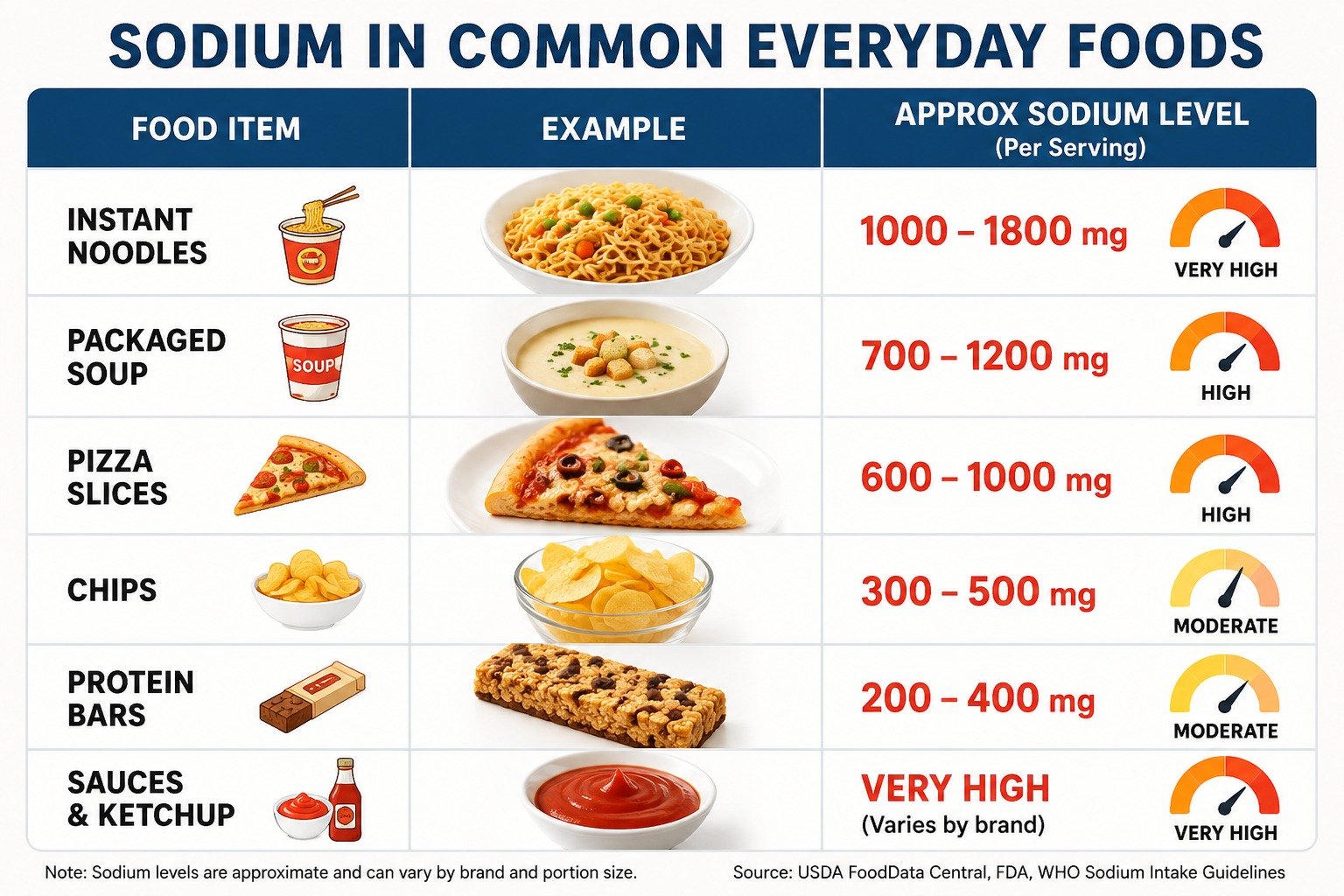
The major problem here is that individuals are often unaware of their actual sodium intake. A single meal of burgers, instant noodles, or cheese-loaded snacks may exceed half the total daily amount of sodium allowed.
Modern Lifestyle Practices Leading to High Blood Pressure
- Eating late-night meals
- Constantly using food delivery apps
- Packaged breakfast foods
- Instant noodles and ready-to-eat meals
- High-sodium gym snacks
- Frozen foods
- Working in the office for long periods
Based on data from the WHO Salt Reduction Data, most people around the world consume two times or more sodium compared to the suggested intake, largely due to processed foods. This change in the type of diet has become one of the major causes of sodium and hypertension cases among young adults. Even those who do not add any salt to their diets can end up consuming too much sodium from preprocessed foods.
The Hidden Danger of Sodium in Our Food Items That Increases Our Blood Pressure Without Our Knowledge
Everyone knows that we eat too much salt when we eat chips and fast food. But the actual problem lies in hidden sodium in foods today, which means we do not know the presence of sodium in our packaged food items as well as regular foods. Many people fail to manage their blood pressure even after reducing the amount of visible salt intake in their diet because of the presence of high amounts of sodium.
High Sodium Content in Foods That Most People Do Not Consider
Brown bread
Corn flakes
Instant oats
Protein shakes
Packaged soups
Pasta sauce
Cheese slices
Frozen food items
Ketchup and mayonnaise
Gravies from restaurants
As per Harvard Health Publishing, almost 70% of sodium consumption comes from processed foods and meals prepared at restaurants rather than through the use of salt during cooking. For this reason, it is very crucial to know high-sodium foods to avoid suffering from hypertension.
Indications That Your Body Is Overloaded with Salt
The presence of too much sodium is not always accompanied by noticeable symptoms, which explains why the condition is referred to as the “silent killer.” Individuals who keep taking excessive amounts of salt on a daily basis might not even be aware that their bodies are already giving off signals.
Initially, the symptoms could appear minor and unnoticeable. However, the continuous strain caused by an overload of sodium can eventually take its toll on the heart, kidneys, blood vessels, and energy level.
Indicators of Excessive Sodium Consumption
Repeated bloating
Puffy face when waking up
Persistent thirst
Swollen extremities
Headaches
Fatigue
Cramping
High blood pressure
Dehydration despite fluid intake
Sodium and High Blood Pressure: The Effects on the Heart and the Kidneys
The relationship between sodium and high blood pressure is very risky when sodium starts to affect both the heart and the kidneys. These organs always strive to regulate blood pressure and fluid balance in the body, but excessive sodium increases their workload every day.
If there is too much water in the body because of excessive intake of sodium, blood pressure will increase within the blood vessels. This leads to pumping of the heart more strongly and the formation of stiff blood vessels. Moreover, kidneys cannot eliminate excess sodium, which contributes to increased blood pressure.
Salt Sensitivity in Individuals
Different individuals have varied reactions to sodium content in their body systems. Some individuals can eat foods rich in sodium content and yet their blood pressure remains normal, while there are those whose blood pressure increases very fast. Such an individual condition is referred to as salt sensitivity.
Salt-sensitive individuals tend to retain much water upon intake of sodium, thereby causing a faster blood pressure rise within blood vessels. The factors that cause this are genetics, aging, poor renal functions, obesity, stress, and sleep deprivation.
Individuals who Are Likely to Be Salt Sensitive
People above 40 years of age
Individuals with kidney problems
Individuals with more weight
People suffering from diabetes
Stressful individuals
People with a family history of high blood pressure
Pink Salt, Sea Salt, and Rock Salt – The Facts
There is a common belief that pink salt, sea salt, and rock salt are healthier than ordinary table salt. Although these types of salts do contain traces of minerals, the amount of sodium found in them is not different from that in table salt.
Salt Comparison Table
| Type of Salt | Reality |
|---|---|
| Pink salt | Contains sodium like regular salt |
| Sea salt | Slightly less processed |
| Rock salt | Still high in sodium |
| Low-sodium salt | Better option in moderation |
Some Misconceptions about Salt
“Pink salt doesn’t increase BP.”
“Sea salt is 100 percent healthy.”
“Natural salt can be consumed without limits.”
“Rock salt is fine for hypertension.”
According to the Cleveland Clinic, Himalayan pink salt might have trace minerals, but their sodium content is sufficient to affect patients suffering from hypertension. Salt color change shouldn’t be the priority – the primary objective is to decrease overall salt consumption.
Top Foods for Managing High Blood Pressure
One effective approach to managing high blood pressure through natural means involves eating more foods with potassium and limiting food sources with excessive sodium content. This ensures that potassium will help remove excessive sodium via urination while relaxing blood vessels.
Top Foods for Hypertension Prevention
Bananas
Coconut water
Spinach
Beetroots
Yogurt
Oats
Avocado
Pumpkin seeds
Sweet potatoes
Citrus fruits
How to Lower Salt Content without Sacrificing Taste?
A lot of people believe lowering salt content equates to sacrificing taste, but this is not the case. The key is switching out salty flavorings for fresh herbs, spices, and natural flavors.
Simple Tips on How to Lower Salt Content
Squeeze some lemon instead of sprinkling more salt
Use garlic and spices to improve the taste
Eat fresh homemade snacks
Check labels on foods
Stay away from ready-made seasonings
Watch out for sauce and ketchup portions
Conclusion
It isn’t salt per se that poses a problem – rather, what we need to be concerned about is our high intake of hidden sodium, which occurs due to the unhealthy foods we eat every day. Instant foods, processed snacks, and popular social media diet crazes all contribute to the problem.
Knowing why salt affects blood pressure is especially important since hypertension tends to occur very gradually and stealthily. There is some good news, too; however, as proper blood pressure regulation isn’t really that complicated. By cutting down processed foods, eating potassium-enriched meals, exercising regularly, sleeping properly, and maintaining a healthy diet overall. You can protect yourself from hypertension effectively. Making even small changes every day may help prevent high blood pressure for life.