If you’ve been feeling “off” lately—low energy, random body pain, poor sleep—it might not be stress alone. It could be something deeper: inflammation.
According to research published by the Cleveland Clinic, long-term (chronic) inflammation is now linked to major health issues like diabetes, heart disease, and even autoimmune conditions.
In simple words, inflammation is your body’s natural defense system. If you get a cut or infection, your body reacts—that’s acute inflammation, and it’s normal.
But when this response doesn’t switch off, it becomes chronic inflammation—like a slow, silent fire inside your body.
And the problem? Most people don’t even realize it’s happening.
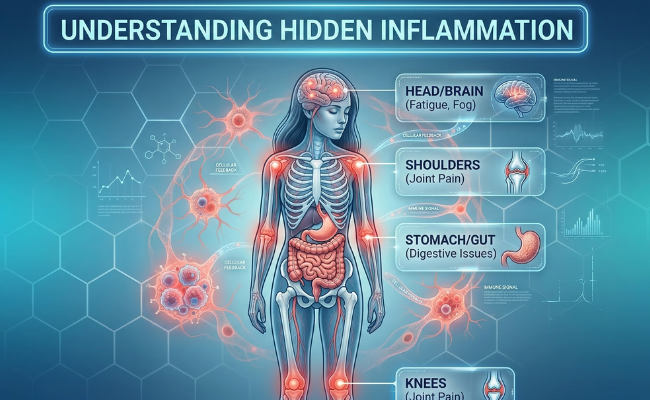
In this blog, we’ll break down 7 hidden signs your body has too much inflammation, plus one important new sign—sleep disruption—that most blogs still miss.
If you catch these signs early, you can prevent bigger health issues later.
What Causes Too Much Inflammation in 2026?
Today’s lifestyle is one of the biggest reasons why the body has too much inflammation.
Here are the most common triggers:
- Too much processed and packaged food
- High sugar intake
- Sitting for long hours (desk jobs, screens)
- Poor gut health
- Air pollution (especially in cities like Delhi-NCR)
- Chronic stress and lack of sleep
There’s also something called “leaky gut”, where your gut lining becomes weak and allows toxins to enter your bloodstream. This triggers your immune system again and again.
Over time, your body keeps producing chemicals called cytokines, which leads to constant low-level inflammation.
That’s when hidden signs start showing up.
Sign 1: Chronic Fatigue
Feeling tired even after 7–8 hours of sleep?
That’s not normal.
When your body is dealing with too much inflammation, your immune system stays active all the time. This drains your energy.
You may notice:
- Constant tiredness
- Brain fog
- Low focus
- No motivation
This is one of the most common signs your body has too much inflammation, but people often ignore it.
In 2026, many wearable devices track recovery and energy levels. If your recovery score is always low despite rest, it can be a red flag.
Sign 2: Joint Pain and Stiffness
If your joints feel stiff in the morning or you get random body aches, it’s not always because of age or workout.
Inflammation affects your joints directly.
You may feel:
- Knee pain
- Back stiffness
- Swelling in joints
- Pain after sitting for long
Conditions like arthritis are strongly linked to chronic inflammation.
These are hidden signs your body has too much inflammation, especially when pain keeps coming back without injury.
Sign 3: Digestive Issues
Your gut is directly connected to inflammation.
If your digestion is not good, your body is likely inflamed.
Watch out for:
- Bloating
- Gas
- Constipation
- Loose motion
- Acid reflux
Gut imbalance can trigger immune reactions, making inflammation worse.
After the pandemic, overuse of antibiotics has also affected gut health in many people.
So if your stomach is always uncomfortable, it could be a sign your body has too much inflammation.
Sign 4: Skin Problems
Your skin often shows what’s happening inside your body.
Inflammation can lead to:
- Acne
- Rashes
- Eczema
- Redness
- Itching
If your skin issues keep coming back even after using products, the root cause may not be external—it could be internal inflammation.
This is one of the most visible hidden signs your body has too much inflammation.
Sign 5: Frequent Infections
Do you catch colds easily?
Does your body take longer to recover?
That’s a sign your immune system is not working properly.
Chronic inflammation weakens your immunity instead of strengthening it.
You may notice:
- Frequent cold and cough
- Sinus issues
- Allergies
- Slow healing
This happens because your immune system is already overactive and gets exhausted.
So instead of protecting you, it becomes less effective.
Sign 6: Unexplained Weight Gain
If you’re gaining weight despite eating “normal,” inflammation could be the reason.
Especially fat around the belly area.
Inflammation affects hormones like insulin, making it harder for your body to burn fat.
You may notice:
- Stubborn belly fat
- Difficulty losing weight
- Cravings (especially sugar)
Studies show that visceral fat (fat around organs) increases inflammatory markers.
So if your waist size keeps increasing, it could be a sign your body has too much inflammation.
Sign 7: Mood Changes
Your brain is also affected by inflammation.
There is a strong connection between inflammation and mental health.
You may feel:
- Irritable
- Low mood
- Anxiety
- Lack of clarity
Inflammation affects brain chemicals, which can impact your mood.
These are often ignored, but they are real hidden signs your body has too much inflammation.
Sleep Disruptions from Inflammation
This is something most people don’t talk about.
But in 2026, more research is showing a strong link between inflammation and sleep.
If your sleep is disturbed even after following a good routine, inflammation could be the reason.
You may notice:
- Difficulty falling asleep
- Waking up multiple times
- Night sweats
- Feeling tired even after sleeping
Inflammation affects melatonin (sleep hormone) and your nervous system.
It can also reduce heart rate variability (HRV)—a key sign of recovery tracked by modern wearables.
So if your sleep score is low regularly, it’s not just stress—it could be your body signaling something deeper.
Simple things that help:
- Magnesium-rich foods
- Limiting screen time at night
- Proper sleep schedule
If sleep doesn’t improve, it’s worth checking inflammation levels.
How to Test and Confirm Body Has Too Much Inflammation
If you suspect your body has too much inflammation, don’t guess—test it.
Common tests include:
- CRP (C-reactive protein) blood test
- ESR (Erythrocyte Sedimentation Rate)
- Stool tests for gut inflammation
You can get these tests done through platforms like Practo or any local lab.
CRP is one of the most reliable markers for inflammation in the body.
2026 Action Plan to Reduce Inflammation
The good part?
Inflammation is reversible.
Here’s a simple plan:
1. Fix Your Diet
- Add turmeric, ginger
- Eat fruits and vegetables
- Include omega-3 (nuts, seeds)
- Reduce sugar and processed food
2. Move Your Body
- Walk daily
- Do light workouts
- Avoid long sitting hours
3. Improve Gut Health
- Eat curd, probiotics
- Avoid unnecessary antibiotics
4. Manage Stress
- Meditation
- Breathing exercises
- Limiting screen time
5. Sleep Better
- Fixed sleep timing
- No phone before bed
6. Supplements (if needed)
- Curcumin
- Omega-3
- Vitamin D
Always consult a doctor before starting supplements.
Sum up,
Your body always gives signals—you just need to notice them. These hidden signs your body has too much inflammation are easy to ignore, but they matter. The earlier you act, the easier it is to fix. Start small, stay consistent, and your body will respond.