In 2026, one of the biggest health concerns across India is not just what we eat, but how processed our food has become. From instant noodles to packaged snacks, ultra-processed foods are now a daily habit for many people, especially students and working professionals with busy routines. According to global research published in the British Medical Journal, higher consumption of ultra-processed foods is linked with increased risk of heart disease, diabetes, and even early death. These foods are designed to be tasty, cheap, and convenient—but they come at a hidden cost. The hidden health risks of ultra-processed foods are now being discussed widely by doctors and researchers in 2026. From weight gain to poor gut health and even brain fog, the effects go much deeper than we previously thought.
In India, where lifestyle diseases like diabetes and heart issues are rising fast, this becomes even more serious. Many people don’t realize that daily consumption of biscuits, chips, sugary drinks, and ready meals can gradually affect metabolism and energy levels.
The good news? You don’t need a perfect diet. Small changes can make a big difference. In this blog, we’ll break down the real risks in simple terms and show you practical ways to protect your health without making life complicated.
What Are Ultra Processed Foods?
Ultra-processed foods are those foods that are produced almost entirely in industrial processing plants, which use ingredients that are never normally found at home, such as artificial flavors, preservatives, colors, sweeteners, and emulsifiers.
One way to understand this is to look at a food classification system known as NOVA, which groups foods into four groups, and ultra-processed foods fall into the fourth group.
Examples of ultra-processed foods include:
- Chips and biscuits in packets
- Instant noodles
- Sugary breakfast cereals
- Soft drinks
- Frozen ready meals
These foods are processed to make them taste extremely good so that we can’t stop eating them. However, ultra-processed foods are usually low in fiber, vitamins, and minerals, but high in sugar, salt, and fat.
India has also seen ultra-processed foods such as instant snacks and packaged namkeen become a part of our daily lives. However, we don’t feel full after eating them, so we end up eating more, which ultimately leads to overeating.
Obesity and Weight Gain Epidemic
One of the biggest “hidden” health hazards of ultra-processed foods is weight gain.
A well-known study published in Nature Medicine found that individuals eating ultra-processed foods were consuming 500 more calories a day compared to individuals eating whole foods, regardless of whether both diets were nutrient-dense or not. This demonstrates that ultra-processed foods have a definite impact on appetite.
The reason for this is:
- They are digested quickly
- They will not keep you full
- They will trigger cravings
These foods have a definite impact on ghrelin and leptin hormones that regulate appetite and will keep you hungry in spite of having a full meal. India is witnessing a rise in obesity levels in recent times, especially in urban areas. People are spending more and more time sitting and eating more and more of these unhealthy snacks. This is causing a rise in fat gain, especially around the abdominal area. Rather than quitting everything at once, start by replacing one unhealthy food item in your diet with a healthier option. Replace chips with roasted makhana or fruit.
Heart Disease and Stroke Risk
Ultra-processed foods also silently affect our heart health. Ultra-processed foods are usually high in salt, sugar, and unhealthy fats. Consuming high amounts of salt increases our blood pressure. Similarly, unhealthy fats increase the level of “bad” cholesterol in our blood. This finally leads to the blockage of our arteries. According to research by the British Heart Foundation, “Eating large amounts of ultra-processed food is associated with an increased risk of heart disease and stroke.”
In our country, India, heart disease is already one of the top reasons for deaths. And the consumption of processed snacks, bakery products, and packaged food items increases this risk even further.
The major concern is not what we are consuming in processed foods but also what is replaced in our meals. When we consume processed food items, we are simultaneously reducing our intake of healthy food items such as fruits, nuts, and dals.
To prevent this heart disease, we can include the following in our daily meals:
- Nuts such as almonds and walnuts
- Fresh fruits
- Home-made meals
Even biscuits can be replaced with peanuts!
Diabetes and Metabolic Issues
Another big hidden health hazard of ultra-processed foods is their association with type 2 diabetes. These foods contain a great amount of refined sugar and maida, which can cause a rapid increase in blood glucose levels. This, in turn, can cause a rapid increase in insulin levels. This can lead to a phenomenon known as insulin resistance, which is a major factor for diabetes. Research indicates that people consuming more ultra-processed foods can increase their chances of getting type 2 diabetes. This is a major health hazard for India, as millions of people are already affected by diabetes. Ultra-processed foods can also lead to:
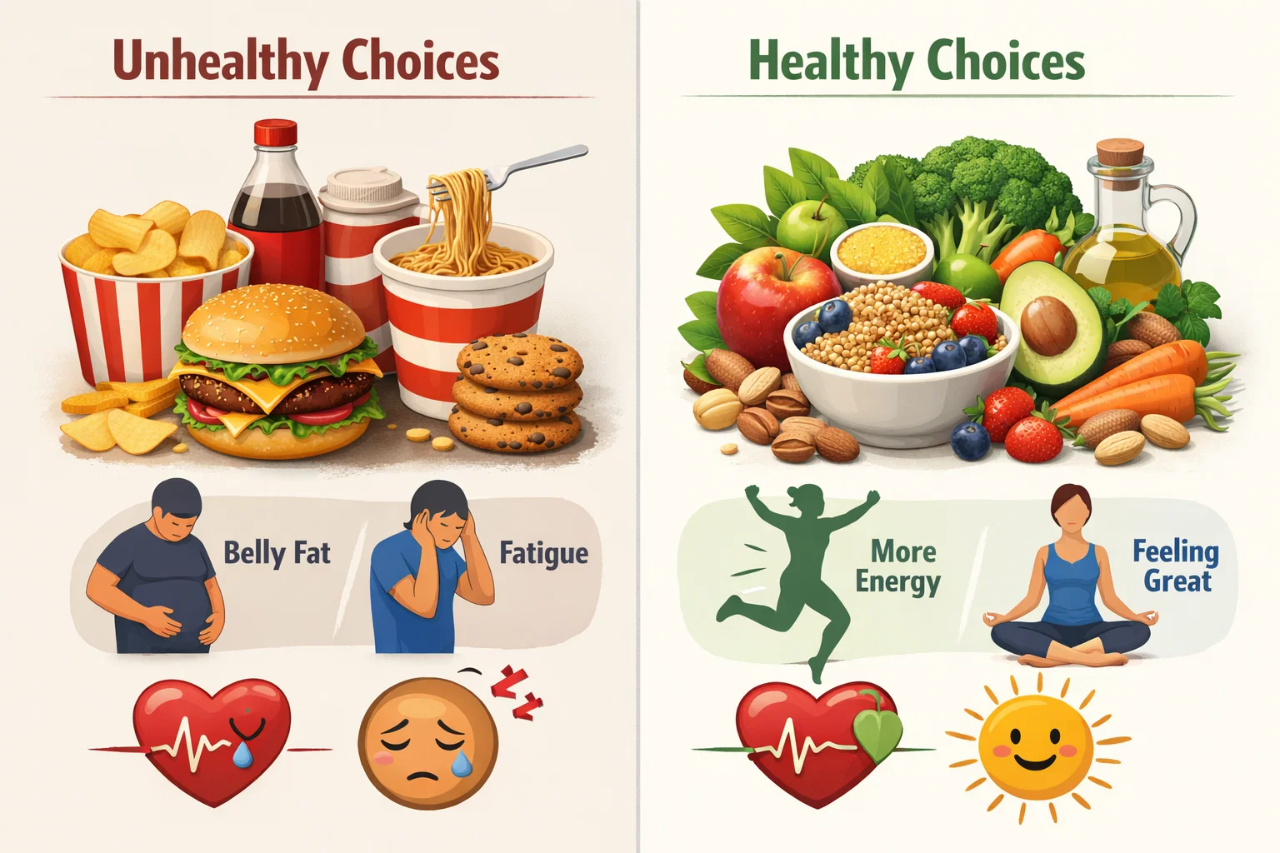
- • Belly Fat
- • Fatty Liver
- • Metabolic Syndrome
A simple solution is replacing maida with healthy grains such as:
- • Ragi
- • Bajra
- • Brown Rice
Mental Health and Cancer Concerns
The effects of ultra-processed foods do not stop at the body. They also have a significant impact on the mind. Recent research has found a link between the consumption of ultra-processed foods and an increased risk of depression and anxiety. This is caused by inflammation and an unhealthy gut. The link between the gut and the mind is strong. When the gut is not in the right condition, it affects the mind. This is reflected in the mood, concentration, and energy levels. Recent research published in the BMJ has found a link between the consumption of ultra-processed foods and the risk of cancer. This is particularly true in the case of colorectal cancer.
This is caused by:
- Additives in the food, which affect the health of the gut
- Low fiber content in the food
- The presence of a lot of sugar and fat in the food
In the case of Indians, the situation is even more critical. Stress and mental health issues are on the rise. The role of the diet is even more critical than what is perceived. A few changes in the diet, like the addition of curd and fruits, will go a long way.
Gut-Brain Axis Disruption – 2026 Focus
One of the most talked-about topics in 2026 is related to the gut-brain axis.
The gut-brain axis is a system that controls moods, focus, immunity, and sleep.
Ultra-processed foods can disrupt this axis as well. Ultra-processed foods contain a lot of ingredients such as emulsifiers and sweeteners, which can disrupt gut bacteria.
Studies published in journals such as The Lancet show that an unhealthy gut can lead to a range of issues such as:
Brain fog
Low energy
Poor concentration
Though there is limited information available on ultra-processed foods causing health issues such as Alzheimer’s, experts are aware that an unhealthy diet can impact brain health.
To put it simply:
Bad gut = Poor focus + low energy
For students and professionals, this is a major concern.
To maintain a healthy gut:
Curd/buttermilk to be taken daily
Fiber to be taken through vegetables, fruits, and millets
Ultra-processed foods to be reduced gradually
You don’t need to spend money on supplements; traditional foods in India help maintain a healthy gut axis.
Why Ultra-Processed Foods Are Hard to Quit?
Do you think you’re addicted to chips or cookies? Well, you’re not alone. Ultra-processed foods have one main goal: to make you want more. They have a mix of sugar, salt, and fat, which stimulates your brain. Your brain then releases dopamine, or your “feel-good” chemical.
Your brain then becomes accustomed to getting these foods every day.
This is why quitting them abruptly is so hard.
Here’s how you can quit ultra-processed foods:
Don’t quit them abruptly.
Find alternatives.
Keep healthy snacks around you.
First, you need to be aware of your problem. When you’re aware, you’re more likely to manage your cravings.
Actionable Swaps for Indian Diets
You don’t need a perfect diet. Just smarter swaps.
Here are simple changes you can start today:
Replace chips → roasted makhana or peanuts
Replace soft drinks → coconut water or lemon water
Replace white bread → multigrain roti or paratha
Replace packaged snacks → homemade poha or upma
Also:
Try cooking in batches (like khichdi or sabzi)
Shop more fresh items than packaged ones
Keep fruits easily available at home
Aim to reduce ultra-processed foods to less than 10% of your daily diet. Even this small step can improve your energy and health.
Sum up,
The health hazards of ultra-processed products were supported by scientific evidence in 2026. The effects of ultra-processed products on health, whether it is weight gain, heart health, mental health, or digestive health, are real and are often ignored. The aim is not to stop the consumption of ultra-processed products. The aim is to minimize the dependence on ultra-processed products. Small changes every day will lead to a healthier future. Making small changes today will lead to a healthier tomorrow.