High blood pressure, also called hypertension, is a health problem that affects millions of people around the world. Many people do not realise they have it because the signs are not always obvious. This is why doctors often call it a “silent killer.” Many people live with the silent symptoms of high blood pressure for years without knowing anything is wrong. High blood pressure happens when the force of blood pushing against the walls of your arteries stays too high for a long time. Over time, this pressure can damage the blood vessels and organs like the heart, brain, and kidneys. If it is not treated, it can lead to serious problems like a heart attack, stroke, or kidney disease. The biggest problem is that people often ignore the early signs of high blood pressure or think they are caused by stress, tiredness, or lack of sleep.
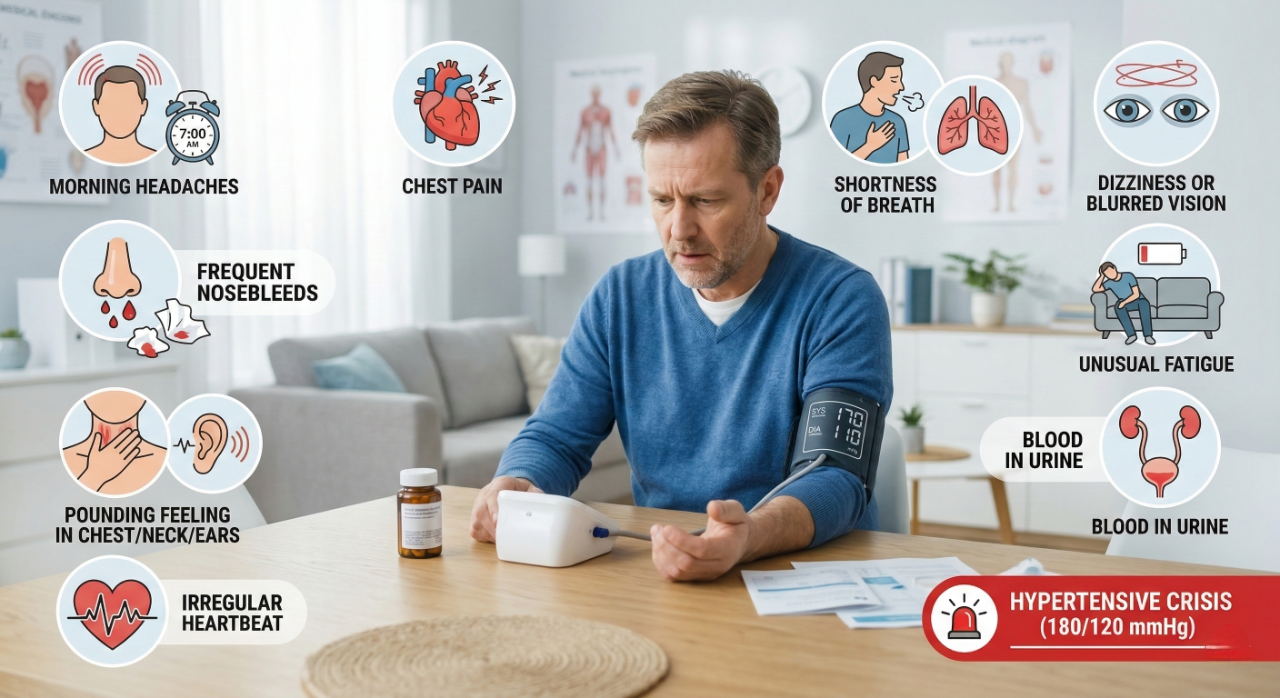
These hypertension warning signs may appear slowly and quietly. In many cases, people only realise something is wrong after complications begin. Another issue is that many people experience high blood pressure symptoms without headache, so they believe their blood pressure is normal. But in reality, there can be several symptoms of hypertension that people ignore, which slowly affect the body. This is why regular blood pressure checks are very important. In the next section, we will look at the early signs of high blood pressure and other symptoms that should never be ignored.
Top 10 Signs of High Blood Pressure You Should Never Ignore
High blood pressure can show up in different ways. Some symptoms are mild and easy to ignore. Many people mistake them for normal health issues. But these can actually be hypertension warning signs that your body is trying to give you.
Below are some common silent symptoms of high blood pressure that you should pay attention to.
1. Morning Headaches
Frequent headaches in the morning can be one of the early signs of high blood pressure. The increased pressure inside blood vessels can cause discomfort in the head.
2. Chest Pain
Chest pain or tightness can happen when the heart is under pressure due to high blood pressure. This is one of the hypertension warning signs that should never be ignored.
3. Shortness of Breath
Feeling breathless while walking or doing simple work may indicate that your heart is struggling to pump blood properly.
4. Dizziness or Blurred Vision
High blood pressure can affect blood flow to the brain and eyes. This may lead to dizziness or blurred vision. These are symptoms of hypertension people ignore thinking it is just tiredness.
5. Frequent Nosebleeds
Occasional nosebleeds are common, but repeated nosebleeds can sometimes be related to high blood pressure.
6. Unusual Fatigue
Feeling tired even after proper rest can also be one of the silent symptoms of high blood pressure. Reduced blood flow to the brain may cause weakness or confusion.
7. Pounding Feeling in Chest, Neck, or Ears
Some people feel a strong heartbeat or pressure in the chest, neck, or ears. This sensation can happen when blood pressure rises suddenly.
8. Blood in Urine
Blood in urine may be linked to kidney damage caused by long-term hypertension. This is a serious sign and should be checked by a doctor.
9. Irregular Heartbeat
Heart palpitations or uneven heartbeats can also appear in people with high blood pressure.
10. Hypertensive Crisis
When blood pressure goes above 180/120 mmHg, it is called a hypertensive crisis. Symptoms may include severe anxiety, breathing trouble, and chest pain. This is a medical emergency.
Many people experience high blood pressure symptoms without headache, so relying only on headaches as a warning sign can be dangerous.
Stage 1 vs Stage 2 Hypertension: What Do These Mean?
Doctors divide high blood pressure into stages to understand how serious it is.
Stage 1 Hypertension
Stage 1 hypertension happens when blood pressure is between 130–139 systolic or 80–89 diastolic. At this stage, symptoms may be mild or not visible at all. Many people experience the silent symptoms of high blood pressure during this stage.
Stage 2 Hypertension
Stage 2 hypertension is more serious. Blood pressure readings reach 140/90 mmHg or higher. The risk of heart disease, stroke, and kidney problems becomes much higher.
At this stage, the early signs of high blood pressure may start becoming more noticeable. These hypertension warning signs should be taken seriously and checked by a doctor.
Regular monitoring helps identify symptoms of hypertension that people ignore before they turn into serious health problems.
How to Measure Your Blood Pressure at Home
Checking blood pressure at home is simple and helps you track your health regularly.
1. Use a Reliable Device
Buy a good quality digital blood pressure monitor. These devices are easy to use and give quick readings.
2. Stay Relaxed Before Measuring
Sit quietly for a few minutes before taking a reading. Avoid caffeine, smoking, or exercise for at least 30 minutes.
3. Sit in the Correct Position
Sit with your back supported and feet flat on the floor. Your arm should be at heart level while measuring.
4. Take the Reading
Wrap the cuff around your upper arm and start the machine. The device will automatically measure your blood pressure.
5. Record the Numbers
Write down the readings with the time and date. If readings stay high regularly, consult a doctor.
Tracking readings helps identify high blood pressure symptoms without headache and other silent symptoms of high blood pressure that might otherwise go unnoticed.
Symptoms of High Blood Pressure in Women
High blood pressure can affect women slightly differently from men. Some symptoms are often misunderstood or ignored.
Pregnancy-related Hypertension
During pregnancy, some women develop a condition called preeclampsia. It causes high blood pressure and swelling in the body.
Hormonal Changes
Hormonal shifts during menopause can affect blood pressure levels. Women may notice anxiety, sleep issues, or mood changes.
Fatigue and Headaches
Many women experience constant tiredness or headaches. These can sometimes be early signs of high blood pressure.
Heart Palpitations
A racing or irregular heartbeat can also be one of the hypertension warning signs in women.
Chest Pressure
Instead of sharp chest pain, women may feel heaviness or pressure in the chest area.
Stress and emotional health also play a role. In many cases, these are symptoms of hypertension that people ignore because they seem related to daily stress.
When Should You See a Doctor?
It is important to know when medical help is needed.
Hypertensive Crisis
If blood pressure rises above 180/120 mmHg, it requires immediate medical attention.
Regular High Readings
If your home readings stay high for several days, consult a doctor.
New or Worsening Symptoms
If you notice dizziness, chest pain, breathing problems, or vision issues, do not ignore them.
These may be hypertension warning signs that your body needs medical attention.
People often ignore high blood pressure symptoms without headache, which can delay diagnosis. Paying attention to early signs of high blood pressure can prevent serious complications.
Sum up,
High blood pressure is a common but serious health condition. The biggest danger is that many people do not notice it until complications appear. Understanding the silent symptoms of high blood pressure and recognising hypertension warning signs can help detect the problem early. Many people overlook the symptoms of hypertension people ignore, thinking they are small health issues. Even if you do not experience headaches, you may still have high blood pressure symptoms without headache. That is why regular blood pressure checks are very important. Early detection and proper care can protect your heart, brain, and overall health.
Related Article: Hypertension vs Hypotension: Which Is More Dangerous?