After you turn 30, your body gradually begins to lose muscle. Research indicates that muscle tissue declines by 3 to 8 percent each decade after 30 due to a natural condition called sarcopenia. Many people believe that this is a normal condition and cannot be altered. However, this is not the case. The bright side is that resistance training can help you develop muscle mass after 30 and even reverse this condition by 1 to 2 percent each year.
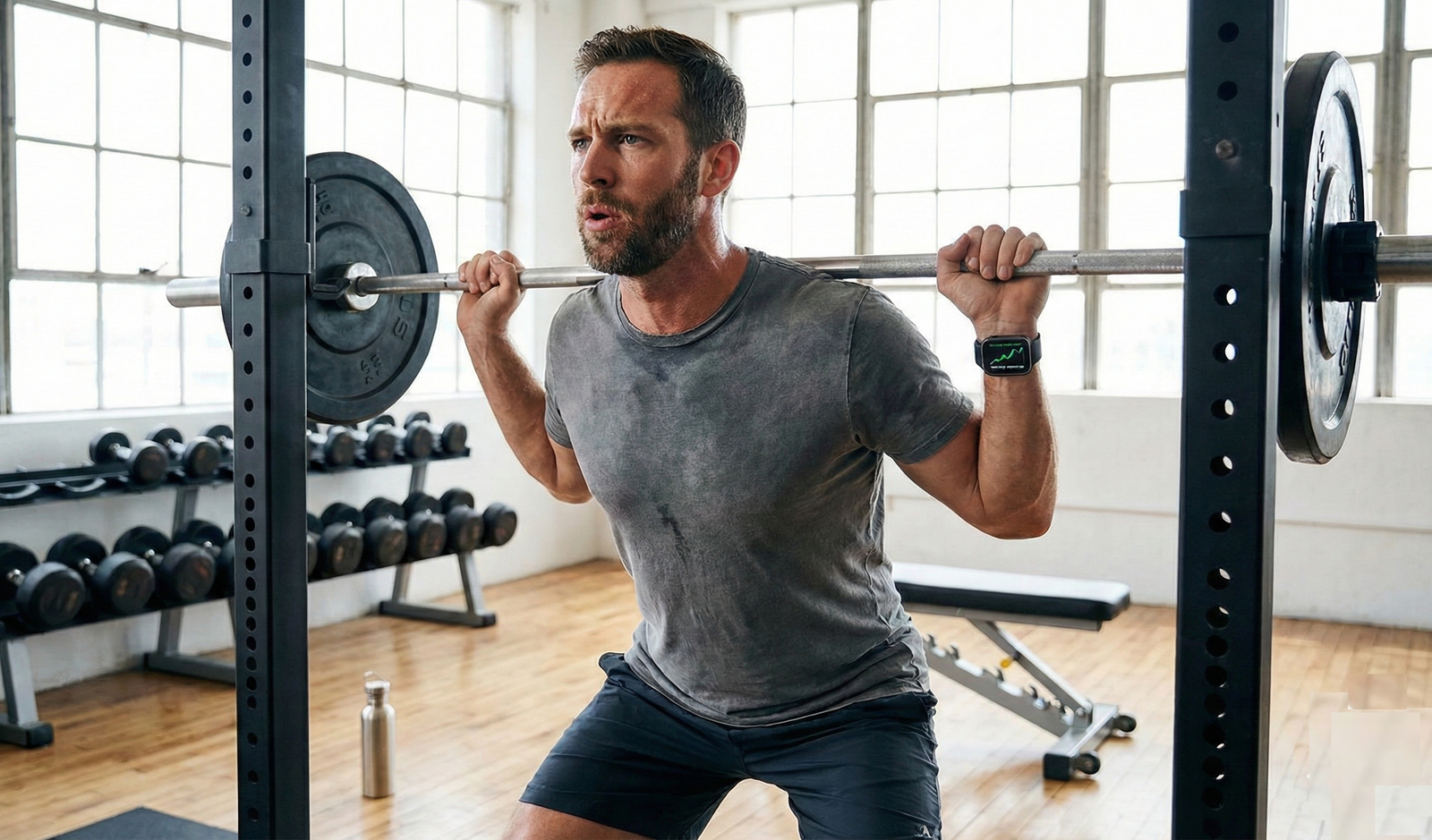
If you are in your 30s or 40s, you likely have a job, family, social commitments, and contend with traffic jams. Life in fast-growing cities such as Gurugram is fast-paced and stressful. With office deadlines, home chores, and lack of sleep, health is the last thing on your mind. You might feel that you have lost strength, that your waistline is expanding with fat, or that you are exhausted even after doing minor chores. This is where muscle development after 30 can be beneficial, not only for your appearance but also for your energy, strength, and overall health.
The best thing is that weight training after 30 years of age does not require drastic diets or spending hours at the gym. In this guide, we will discuss everything from beginner techniques to expert techniques, including the use of intelligent 2026 AI technology to monitor progress. With the right strategy, it is possible to achieve 5 to 10 kg of lean muscle mass in 6 to 12 months.
Muscle Building Basics After 30
After you turn 30, your body undergoes a gradual change. Your testosterone levels decrease by 1% each year. This is a crucial hormone that affects strength, energy, and muscle recovery. However, this does not mean that you will not be able to build muscle mass after turning 30. Your body still reacts very well to training.
When you do weight training, your muscles undergo stress. This triggers something in your body called the mTOR pathway. In layman’s terms, this pathway tells your muscles to grow. This is called hypertrophy. This occurs when you gradually challenge your muscles by increasing the weight, reps, or intensity. This is why overload is necessary for muscle growth after 30. If you just lift the same light weight for the rest of your life, your body will have no reason to grow.
Another important element is protein. After the age of 30, the production of protein slows down. This means that your body is not producing muscle mass at the same rate as it did when you were in your 20s. However, it is still responsive if you provide it with sufficient protein. Most professionals recommend a daily intake of 1.6 to 2.2 grams of protein per kilogram of body weight.
There are also some important hormones that help in muscle development and anti-aging. IGF-1 is involved in muscle repair and development. Myokines are substances that are released by muscles during exercise. They help in the reduction of fat, improvement of the immune system, and overall health. Therefore, weight training is not only for aesthetic purposes. It also helps in overall health.
Here is a simple starter routine for the first 4 weeks:
| Week 1-4 Focus | Exercise | Sets/Reps |
|---|---|---|
| Full Body | Squat | 3 x 10-12 |
| Full Body | Push-up | 3 x 12 |
| Full Body | Row | 3 x 12 |
Start simple. Stay consistent. Your body will respond.
Busting Myths on Age and Muscle
Many people think that after you turn 30, muscle building is almost done. This is not true. Of course, you may not be able to build muscle as quickly as you did in your early 20s. Recovery takes a little longer. Hormones are not as high. But you can still get about 70 to 80% of the muscle gain that you can naturally get with the right plan. Many people have successfully built muscle after 30 and even in their 40s and 50s.
Myth 1: “It’s too late.”
This is the biggest lie that people tell themselves. Research has shown that even people over 50 can gain about 2 kg of muscle mass in just 12 weeks with the right training and diet. The human body is capable of responding to resistance training at almost any age. Muscle building after 30 is slower, yes. Impossible? No way.
Myth 2: “You need steroids.”
Absolutely false. You don’t need shortcuts. Natural progressive overload is effective. That’s a fancy way of saying that you can simply gradually increase the weight, number of reps, or intensity of your workouts. When you train properly in your 30s, consume adequate protein, and get plenty of rest, your body will respond by growing muscle. Steroids are dangerous and not worth the risk.
Myth 3: “Injury is inevitable.”
Injuries are almost always caused by improper technique, ego lifting, or failing to warm up. Ninety percent of gym injuries can be avoided by using proper technique, warming up, and progressing properly. It’s not about age. It’s about stupidity.
Training Strategies: From Beginner to Pro
If you want to develop muscle mass after the age of 30, the first and foremost rule is simple: progressive overload. This means that you gradually increase the stress on your muscles with time. You can achieve this by adding more weight, doing more reps, adding more sets, or increasing control. Your muscles will grow only when they are challenged. If your workout routine is too easy every week, then your muscle growth after 30 will be hampered.
Beginner Level (3 days a week)
If you are a beginner in weight training after 30, then you should keep things simple. You should train three days a week. Compound exercises should be your priority. These exercises work multiple muscles at the same time and are also time-saving.
Key exercises:
- Squat
- Deadlift
- Bench press
- Pull-up or assisted pull-up
You should perform 3 sets of 8-12 reps for each exercise. Proper rest intervals should be maintained between sets. Your first priority should be to master proper technique. You should not be in a hurry to lift heavy weights in the first month.
Intermediate Level (4 days a week)
After 3-4 months, when your body has adapted, switch to a split routine. Train four days a week in push, pull, and legs pattern.
- Push: Chest, shoulders, triceps
- Pull: Back, biceps
- Legs: Quads, hamstrings, glutes
Increase the volume to 4 sets per exercise. You can add more exercises per muscle group. This phase will help you increase muscle growth after 30 since you will be doing total work per week.
Advanced Level
After training for a year or more, you can periodize your training. This involves breaking your training into phases.
For instance:
- 4 weeks of hypertrophy training (8-12 reps)
- 4 weeks of strength training (4-6 reps, heavier weights)
- 4 weeks of mixed training
This will keep your body guessing and prevent plateaus.
Here is a simple 12-week structure:
| Phase | Frequency | Key Lifts | Progression |
|---|---|---|---|
| 1–4 | 3x/week | Squat, Bench, Row | Add 5% weight |
| 5–8 | 4x/week | Add Deadlift, Overhead Press | Add reps |
| 9–12 | 5x/week | Add accessories (curls, calves) | Deload in week 12 |
A deload week means reducing weight and intensity so your body can recover.
Injury-Proof Your Training
Warm up before every training session. Spend 5-10 minutes on light cardio and mobility exercises. Incorporating 10 minutes of yoga every day will increase flexibility and reduce joint problems. Effective recovery will enable you to gain muscle mass safely at 30. Consistency is more important than intensity. Always remain patient and keep moving ahead.
Nutrition for Hypertrophy
If you are looking to develop muscle mass after 30, training alone will not work. Nutrition also has a very important role to play. Your body requires the right kind of fuel to develop muscle mass. Without proper nutrition, muscle development after 30 will be slow, no matter how much training you do.
First, let us talk about protein. Protein is essential. After 30, your body does not require as much protein as it used to. So you require a little more. Your daily intake of protein should be about 1.6 to 2.2 grams per kilogram of body weight. For example, if you weigh 70 kg, your daily intake of protein should be about 110 to 150 grams. Lean protein sources are paneer, eggs, chicken, fish, whey protein, tofu, and dal. Make sure you have protein throughout the day and not all at once.
Next come calories. If you are looking to develop muscle mass after 30, you need to consume a little more than what your body requires. This is called a calorie surplus. You need to consume an additional 250 to 500 calories per day. Do not eat too much junk food.
Your macronutrients should also be balanced. A simple ratio that works well:
- 40% carbs (rice, roti, oats, fruits)
- 30% protein
- 30% healthy fats (nuts, seeds, ghee in moderation, olive oil)
Carbs are not the enemy. They provide energy for strength training after 30. Without carbs, your strength training will be weak. Meal frequency also helps. Try to eat 20 to 40 grams of protein every 3 to 4 hours. This keeps muscle repair on track throughout the day. Supplements can be helpful, but are not magic. Creatine is one of the most studied supplements. Taking 5 grams a day can help you gain 2 kg of extra muscle mass in 6 months when done along with training. Vitamin D is also essential, especially for Indians, as many Indians have low levels. Always consult a doctor before taking any supplements.
Recovery and Lifestyle Optimization
Recovery is where the actual muscle building takes place. You don’t build muscle in the gym. You build it in your recovery. If you are serious about building muscle past 30, then sleep becomes a critical factor. You need to sleep for 7 to 9 hours a night. Deep sleep raises the levels of growth hormone. Some research suggests that it can raise growth hormone levels by as much as 200%. This hormone is responsible for muscle repair and fat burning.
Stress, on the other hand, raises cortisol levels. Excess cortisol is responsible for muscle breakdown and inhibits muscle building past 30. If you are always stressed out because of work, traffic, or family obligations, then your muscle-building progress will be affected.
Active recovery is also beneficial. You do not have to spend the whole day lying in bed. Walking 8,000 to 10,000 steps per day is beneficial. It increases blood flow and prevents stiffness. It keeps your body active without overtraining. This is beneficial for strength training after 30 because it helps your muscles recover faster.
You can also monitor recovery with the help of modern technology. Many fitness applications today monitor HRV (heart rate variability). HRV provides an idea of how well your body is recovering. If your HRV is low, you need to rest more.
Minerals such as zinc and magnesium are also beneficial for hormonal balance. They help with testosterone, sleep, and muscle recovery. A balanced diet is enough for this, but supplements are also beneficial for some people after consulting a doctor. Train hard. Train smart.
Advanced Techniques
After training for a while and wanting faster results, you can turn to more advanced techniques for muscle building after 30. One of these is drop sets. After completing your regular set, lower the weight and do it again without resting. This will further stress your muscles.
RPE 8-9 training is another intelligent approach. RPE stands for Repetition and Perception of Exertion. This is a measure of how hard a set of exercises is. At 8 or 9, you train until you feel you can only complete 1-2 more reps. This will further stimulate muscle growth after 30 without overtraining.
Blood flow restriction training involves using light weights with bands wrapped tightly around the muscle. This is effective for stimulating growth even with light weights.
Some individuals may refer to peptides or SARMs. Legalities in 2026 may differ, and it is still not safe. Natural training will always be the first priority.
If you trained in your 20s, muscle memory is an advantage. Your body will regain lost mass faster than when you started from scratch.
2026 Exclusive: AI-Assisted Muscle Building
In 2026, technology is revolutionizing the way individuals engage with muscle building past the age of 30. AI wearables such as WHOOP 5.0 monitor sleep, recovery, and muscle strain in real-time. Some of the initial fitness beta versions, inspired by Neuralink, are also testing body feedback tools. AR glasses can even assist you in fixing your workout technique during exercise.
Genetics-based apps assisted by tools such as 23andMe data promise to provide improved protein timing suggestions. Although still in the nascent stage, this development may help enhance muscle building past the age of 30.
VR fitness sessions with Meta Quest 6 provide immersive gym experiences. There are also some reports of improved workout regularity with virtual fitness trainers.
In India, intelligent apps such as HealthifyMe AI v4 modify diet plans according to weather, travel, and recovery. Technology may not be a substitute for hard work, but it can definitely aid it.
Conclusion & Action Plan
Muscle building after 30 is completely achievable. Your age is not the issue. The issue is a lack of planning. Concentrate on three easy tips. Train with progressive overload. Consume a small calorie surplus with sufficient protein. Sleep well and control stress. Do not wait until Monday or next month. Begin today with three training sessions a week. Monitor your weight, strength, and protein consumption. Small steps each week will accumulate. In 6 to 12 months, your body will transform dramatically.
Stick to the routine. Refrain from gimmicks. Let muscle building after 30 occur gradually.
Print out a basic tracking sheet for workouts and diet, and begin monitoring your progress from day one.
FAQ
Can women gain muscle after 30?
Yes, definitely. Women can gain muscle after 30. Estrogen is actually a muscle-sparing hormone and helps in maintaining fat-free mass. Weight training after 30 is safe and effective for women.
How quickly can I expect results?
With proper training and diet, you can expect results in 3 to 6 months. Strength gains are much quicker.
What is the cost in India?
A basic gym membership may cost you around ₹2,000 per month. Whey protein may cost around ₹3,000 per month, depending on the brand. You don’t need to spend much on equipment to gain muscle after 30.