Combating diabetes and achieving weight loss simultaneously is not so much about dieting as selecting foods that help maintain normal blood sugar levels, thus promoting unintentional caloric reduction. The science proves that fiber-rich, protein-filled, and low-glycemic index diets boost insulin sensitivity and facilitate fat burning. A well-planned but realistic Indian dietary model is preferable to stringent programs.
5 Key Points for Managing Diabetes and Weight Loss
- There is a strong connection between blood sugar management and weight loss
- Dietary fiber and proteins play a greater role than total carbohydrate elimination
- Indian traditional food is highly efficient under proper implementation
- The amount of food is just as critical as its nature
- Meal combinations affect glucose concentration more than individual foods
Why Diabetes and Weight Loss Are Connected?
Diabetes, in actual clinical practice, is seldom encountered alone. Rather, it accompanies an increase in weight, particularly abdominal fat deposition. This is due to insulin resistance, which means that the body is resistant to insulin.
With insulin resistance,
- Blood sugar remains high
- Fat deposition becomes excessive
- Hunger hormones are erratic
What most people fail to understand is that even modest weight reduction can yield substantial benefits. Several metabolic studies over prolonged periods have shown that a weight loss of about 5–7% leads to better insulin sensitivity.
That is why treatment focused on sugar management alone often fails to produce satisfactory results.
How Food Actually Affects Blood Sugar (Beyond Basics)?
Glycemic Index – Relevant but Insufficient
The use of glycemic index is usually exaggerated because it shows the rate at which particular foods increase blood glucose levels, whereas it does not take into account our actual eating habits.
For instance:
– Consumption of rice alone leads to rapid spikes.
– Consumption of rice along with other foods such as dal, vegetables, and ghee leads to slower spikes.
The above case is referred to as glycemic load.
Fiber: The Most Undervalued Factor
The benefits of fiber go beyond digestive function.
It: Delays glucose uptake
Boosts gut microbiota
Promotes satiety
Historically, fiber-rich foods in Indian cuisine included:
Unrefined grains
Legumes
Seasonal produce
Today’s diet depends heavily on refined flours and packaged products, reducing fiber consumption and adversely impacting metabolism.
Protein: Where Most Indian Diets Fall Short
Consistently noted over the years is the fact that Indian meals tend to have low protein intake.
Common food combinations include:
Roti + sabzi
Rice + curry
which can be satiating but are metabolically unbalanced.
Incorporating proteins such as:
Dal
Paneer
Egg whites
Yogurt
will help:
Satisfy appetite
Stabilize blood sugar levels
Lose body fat
Best Foods for Diabetes & Weight Loss (Indian Context)
1. Millets and Whole Grains
Whole grains, such as bajra, jowar, and ragi, are once again recommended, and rightly so.
This is because:
Their glycemic effect is less compared to processed cereals.
They release energy steadily.
They contain micronutrients in abundance.
But they are not considered free foods.
2. Pulses and Legumes
Dal, chana, rajma, and moong are some of the most practical and economical food sources available to Indian families.
They contain:
Proteins
Fibers
Complex carbohydrates
This makes them suitable for managing both diabetes and obesity.
3. Non-Starchy Vegetables
These vegetables, such as lauki, tinda, karela, spinach, and cabbage, are sometimes overlooked in importance.
They:
Increase bulk but not caloric intake
Enhance the feeling of fullness
Lower the total glycemic index of the meal
The simplest approach to enhance nutrition in the diet is simply to add more vegetables to your meals.
4. Healthy Fats (Used Carefully)
Vegetables such as lauki, tinda, karela, spinach, and cabbage tend to be undervalued.
These vegetables:
Help bulk up meals without increasing calorie content
Increase feelings of fullness
Decrease the total glycemic load of meals
An easy way to enhance the diet is by adding more vegetables without significantly altering other aspects of the meal.
5. Fruits: Understanding Instead of Avoiding
Restriction of fruits should not be overdone in patients with diabetes.
The secret lies in:
Selecting low-glycemic fruits (apples, guavas, berries)
Keeping portions under control
Not consuming fruit juices
This is owing to the way whole fruits and fruit juices act within our body.
What Needs to Be Limited (Realistically)?
Rather than imposing restrictions, the sensible way to go about things is to reduce consumption.
Limit:
Refined flour products (maida)
High-sugar drinks
Fried food items
Packaged food items
The effect of these food items is that they result in quick glucose rushes and then drops, increasing hunger pangs and fat deposits.
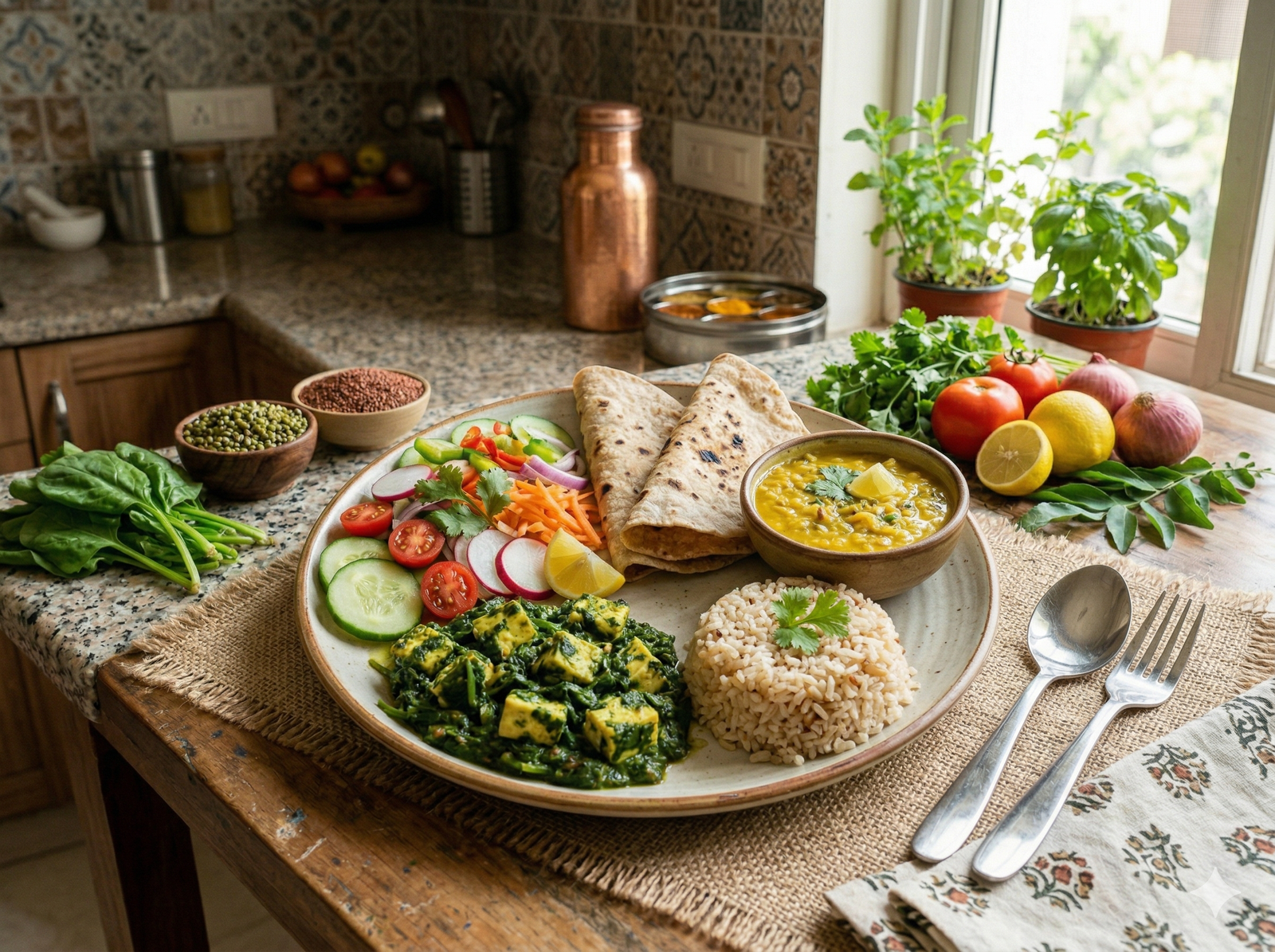
The Plate Method That Works in Indian Households
Complex diets don’t work due to their difficulty in implementation.
Simple diets do:
One-half plate: vegetables
One-quarter plate: proteins
One-quarter plate: whole grains
This way:
Portions are controlled.
Nutrients are balanced.
Sugar spikes are prevented.
Furthermore, it suits well within the regular Indian diet without any significant alteration.
The Overlooked Factor: Food Combinations
One major drawback in most diets is the lack of consideration for food combinations.
Practical Examples
Roti + Dal = balanced carbohydrates and proteins
Fruit + Nuts = lower impact on blood sugar levels
Rice + Vegetables = lowered glycemic impact
What Should you Avoid
Eating fruit right after meals
Consumption of sugary tea several times during the day
High-carbohydrate meals with no protein
In practical terms, the composition of meals becomes more important than the foods.
A Practical Day of Eating (Realistic, Not Perfect)
Morning
Vegetable omelette or paneer bhurji with 1 roti
Mid Morning
Coconut water or fruits
Lunch
Roti + dal + sabzi + salad
Evening
Makhana or some nuts
Dinner
Light sabzi with some protein
Such a pattern facilitates consistency in the long run, which is more significant than dieting for short periods.
Lifestyle Factors That Cannot Be Ignored
Even the most optimal diet cannot achieve its full potential when practiced in isolation.
Scientific evidence and clinical observations demonstrate that:
Post-meal walking promotes proper glucose regulation
Insufficient rest leads to higher insulin resistance
Stress elevates blood sugar concentration
It is quite easy to implement effective changes, such as post-meal walking for 10–15 minutes.
Common Mistakes Seen Repeatedly
Even in this day and age, people commit the same errors:
Eating “diabetic” products
Eating too much healthy food
Skipping meals and eating too much later
Neglecting protein consumption
It is not about maintaining a perfect diet but rather forming an overall balanced pattern.
FAQs
Can rice be included in a diabetic diet?
Yes, but in controlled portions and preferably combined with protein and vegetables.
Are millets always better than wheat?
They can be helpful due to higher fiber, but variety and portion control are more important.
Should fruits be avoided?
No. Whole fruits in moderation are generally safe and beneficial.
Sum up,
From a practical and clinical perspective, managing diabetes and weight loss in India is not about removing foods—it is about using them more intelligently. Traditional Indian diets already include many beneficial foods. With better portion control, improved meal combinations, and consistent habits, it is possible to achieve stable blood sugar and sustainable weight loss without extreme restrictions.