Birth control pills are one of the most popular contraceptive methods on a global scale owing to their effectiveness and convenience. These pills work through the release of birth control hormones-usually a combination of synthetic estrogen and progestin-into the body to prevent ovulation and hence make the internal environment not conducive to pregnancy. However, because these birth control hormones interact so deeply with the natural hormonal ecosystem of your body, many ask how they affect skin.
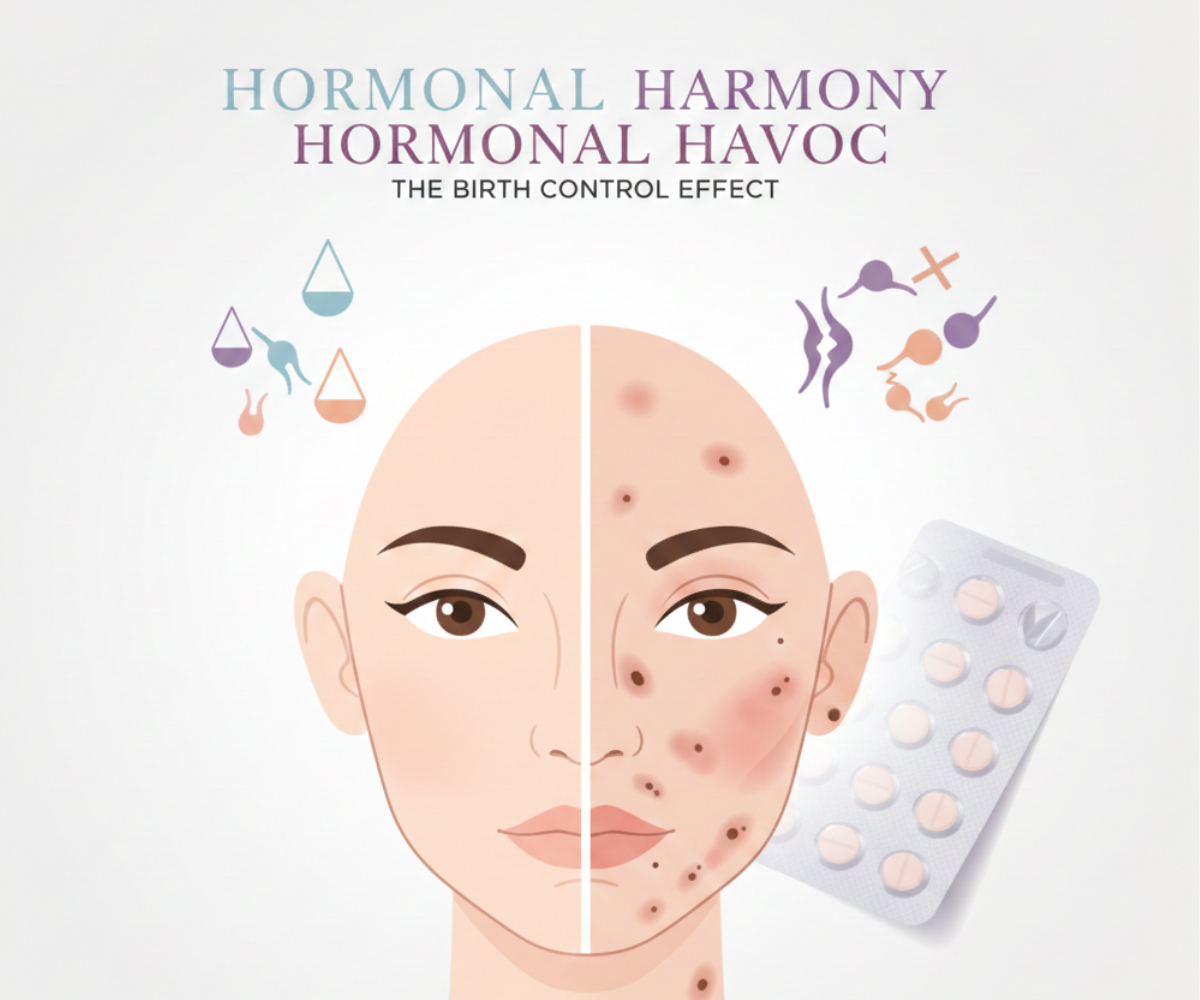
This question gets louder when one starts to notice birth control skin changes like acne, pigmentation, or sensitivity just weeks into taking the pill. Sometimes, such birth control skin changes give the impression of typical symptoms of a hormonal imbalance, making users feel like something is wrong or misaligned. Actually, pretty much anyone experiences acne caused by pills at the outset, simply due to the adjustment phase in which hormones are stabilizing. Understanding the real science behind these changes will help you differentiate myths from normal reactions and the signs that might necessitate expert guidance.
This blog explores in detail what research really says about birth control hormones, how they influence skin, and why some see clearer skin while others deal with breakouts or pigmentation. It explains why birth control skin changes happen, how to identify symptoms of hormonal imbalance, and when it is necessary for acne from the pills to be treated or discussed with a doctor. You will leave with a clearer, realistic view of how pills interact with skin-and how to manage the process with ease.
Types of Birth Control Pills and Their Skin Influence
Birth control pills are broadly categorized into two divisions: combined pills and progestin-only pills. Combined pills contain both estrogen and progestin, while progestin-only pills, sometimes called mini-pills, contain one hormone alone. These formulations determine how the birth control hormones will act inside your body and to what extent you could experience birth control skin changes you could experience. Since the hormonal effects are directly related to sebum production, collagen balance, and pigmentation, any fluctuation can result in symptoms of hormonal imbalance that, at times, first show on the skin. These may include acne due to pills, dryness, or sudden oiliness, depending on how your body reacts.
Combined pills usually clear up the skin due to estrogen, which reduces free androgens, responsible for producing excess oil that can cause acne. As a rule, when birth control hormones include estrogen, skin stabilizes, with fewer breakouts, and has a smoother texture. However, if the pill is made of progestin only-especially the type that exerts an androgen-like activity-your skin may reveal noticeable birth control skin changes simply because the body doesn’t have the balancing action of estrogen. This could also trigger symptoms of hormonal imbalance, which could make some users more prone to acne brought about by birth control pills, especially in the first weeks.
Understanding Progestins and Their Impact on Skin
Not all progestins are the same, and some of them act much like male hormones, raising oil and paving the way for pimples. Others have anti-androgen properties, which help to clear the skin. Because of this variation, two individuals who use the same type of birth control hormones can see very different changes in their birth control skin. People whose skin is more sensitive to the shifts in hormones will also see stronger symptoms of hormonal imbalance, at least in the first cycle. Acne from the pill is most frequent in those people and may arise quite suddenly, even if they have never had acne before.
The important thing to remember is that your body takes roughly two to three months to get into a rhythm with your new pill. Birth control hormones can fluctuate slightly within this period before evening out, leading to temporary birth control skin changes. These fluctuations mirror symptoms of a hormonal imbalance-such as mood swings or breakouts-users commonly blame on the pill. In reality, many cases of acne due to pills resolve themselves once the body adapts and hormone levels balance out.
Hormonal Effects on Skin: The Science Explained
The skin is influenced directly by hormones, and especially by androgens, which affect oil production. Combined pills elevate the levels of SHBG, or Sex Hormone-Binding Globulin, a protein that binds excess androgens and prevents them from overstimulating the oil glands. When birth control hormones raise the levels of SHBG, users often experience fewer breakouts and a smoother texture, with reduced oiliness. These changes represent the more positive side of birth control skin changes supported by research. But if the SHBG levels do not increase enough, or in cases where the progestin acts androgenically, the opposite can happen, yielding symptoms typical for hormonal imbalance, including oil bursts and clogged pores. It is at this point that acne due to pills becomes noticeable.
Estrogen and progesterone also have effects on skin pigmentation. In cases where birth control hormones affect the activities of melanin, users may develop freckles, melasma, or uneven tanning. Pigmentation-related birth control skin changes are most likely in people who have a genetic tendency toward pigment issues or those who spend quite a lot of time in sunlight. Since pigmentation is part of hormonal imbalance symptoms, too, identifying its early signs is very helpful to avoid long-term discoloration. With inadequate sun protection, even mild acne caused by pills may leave stronger marks.
Common Skin Reactions to Birth Control Pills
Skin reactions to birth control pills vary widely, depending on the type, the individual’s genetics, and how sensitive their oil glands are to hormonal changes. Many users report positive birth control skin changes such as fewer pimples, controlled oil, and smoother skin, after some months of continuous use. This is because birth control hormones stabilize androgen levels and reduce overall inflammatory responses. Still, other users notice negative changes to their skin from birth control, especially in the initial period, brought about by symptoms of temporary hormonal imbalance. Breakouts during this period, which fall into the category of pill acne, may last for weeks before improving.
Other reactions include dryness, flakiness, or sensitivity. These are also temporary effects because birth control hormones temporarily affect the skin barrier, which can make users believe the pill isn’t right for them. Most of these changes in the skin from birth control are temporary adjustment reactions rather than symptoms of a true hormonal imbalance. Hyperpigmentation is another reaction that can appear gradually and is often influenced by sunlight. When oil levels shift dramatically, some people experience acne from the pills, along with dark marks, making the adjustment period feel more frustrating.
Personalized Birth Control: Why Skin Reactions Differ
No two people react identically to birth control hormones, because everyone’s hormonal baseline is different. Some people naturally have higher androgens, some have more reactive oil glands, and others have skin prone to pigmentation. These internal factors shape the type and intensity of birth control skin changes they experience. Genetics also play a major role in that certain genes predispose people to symptoms of hormonal imbalance, like excessive oil or sensitivity. For this reason, acne due to pills is most frequent in people whose genetics naturally tend toward acne-prone skin.
Doctors often use hormone tests, dermatology assessments, and medical history in order to determine what type of pill is best for a particular person. Such methods help match birth control hormones with the internal composition of the user, lessening the possibility of undesired birth control changes in the skin and avoiding strong symptoms of hormonal imbalance. Personalized contraceptive choices have significantly lowered acne cases due to pills, especially among those with known sensitivity to hormonal fluctuations.
Long-Term Skin Effects of Oral Contraceptives
The long-term use of birth control hormones can subtly affect collagen levels, pigmentation, and oil behavior. Some people experience consistently clear, smooth skin for years as their birth control hormones keep androgens balanced and inflammatory acne at bay. These long-term positive skin changes associated with birth control support the quality of the skin as it ages. In other people, however, the gradual build-up of the hormonal effects shows up as mild symptoms of a hormonal imbalance: dryness, enlarged pores, or occasional breakouts. These changes can often appear like pill acne, but sometimes may be the result of long-term changes in the skin barrier.
The pigmentation tends to build slowly over time if proper sun protection isn’t used. In long-term cases, users may notice deepening melasma or persistent tanning patterns. These long-term birth control skin changes often overlap with the visual hormonal imbalance symptoms; thus, one should track their skin over time. Proper skincare and sun protection significantly reduce the risk of acne due to pills and dark spots as long-term side effects.
Interactions Between Birth Control Pills and Skincare
Birth control hormones interact uniquely with skincare products, especially during the adjustment phase. Things like retinoids and chemical exfoliants can feel harsher because birth control hormones temporarily heighten sensitivity in the skin. These early changes on the skin from birth control are normal and oftentimes would eventually settle as the skin barrier acclimatizes. However, these reactions can worsen the signs of hormonal imbalance when ignored, thereby making acne from pills appear more serious than it actually is.
Sunscreen becomes even more important because hormonal changes can heighten photosensitivity. Without SPF, users are more likely to notice pigmentation-based birth control skin changes that look much like the long-term symptoms of hormonal imbalance. Moisturizers will also have to be adjusted since oily skin types may suddenly become dry, and vice versa. Choosing the right products helps minimize acne due to pills and keeps skin stable during changes.
Lifestyle Factors That Influence Skin While on Birth Control
Diet, stress, and sleep all play major roles in how birth control hormones affect the skin. The consumption of a diet high in sugar and dairy products increases inflammation and can amplify birth control skin changes, such as breakouts or oil production. These reactions look just like symptoms of hormonal imbalance, and users generally blame them on acne from the pills when, in fact, food triggers may be to blame. A proper diet reduces this risk and helps stabilize skin during hormonal changes.
Stress heightens this hormone, cortisol, which aggravates acne and delays healing. Therefore, it makes all birth control changes in the skin more noticeable and causes additional symptoms of hormonal imbalance, such as redness and oil bursts. This makes users believe that they have acne because of the pills, but stress is the underlying factor. Sleep is another important component, since during the night, the skin regenerates. Poor sleep weakens the skin barrier and turns minor birth control changes in skin into full acne flare-ups with stronger symptoms of hormonal imbalance.
Real User Experiences: What Actually Happens
User experiences vary from person to person. Some herald clearer skin and term birth control hormones a miracle for acne control. The birth control skin changes they experience are mostly positive: reduced oil, fewer breakouts, and smoother texture. Others have to live with symptoms of hormonal imbalance, which include sudden oiliness or pigmentation. Many such users have to cope with acne caused by pills during the first few months before things settle.
Most users end up with successful results after switching to a pill that best suits their skin. Often, changing birth control hormones to a low-androgenic formula significantly improves birth control skin changes and lessens the symptoms of hormonal imbalance. This reduces the frequency and intensity of acne due to pills, a fact that proves small changes can make a difference.
Expert Dermatologist Recommendations
Dermatologists advise keeping skincare simple for the first months. Since birth control hormones affect the skin barrier, using active, harsh products can make birth control skin changes worse, promoting the symptoms of hormonal imbalance. The gentle routine will help to manage acne due to pills and prevent irritation.
Experts also recommend medical guidance in case the reactions become severe. If birth control hormones cause extreme birth control skin changes, like cystic acne or dark patches, it may indicate strong symptoms of hormonal imbalance that require a pill switch. Acne continuing from pills beyond four months often denotes that the current one doesn’t suit.
Alternatives to Birth Control Pills for Skin Benefits
Not everyone likes hormonal methods. Copper IUDs, anti-inflammatory diets, probiotics, and topical acne treatments can improve your skin without affecting birth control hormones. The options above completely avoid birth control skin changes and also lessen the chance of symptoms due to hormonal imbalance and acne caused by birth control pills. Other forms of hormonal therapy, such as spironolactone, target the androgens themselves. These options work well for those people whose birth control hormones aren’t compatible with their skin. By avoiding strong birth control skin changes, many users find relief from symptoms of hormonal imbalance and significantly reduce acne due to the pills.
Sum up,
Birth control pills interact with the skin in complicated ways, as they introduce birth control hormones into one’s system, influencing oil glands, pigmentation, and sensitivity. Some users experience positive birth control changes in skin, while others deal with symptoms of temporary or persistent hormonal imbalance that may include acne due to birth control pills. Being aware of these responses supports a user in managing the process more effectively, selecting an appropriate pill, and establishing a skin care routine that will support the transition. Always see a healthcare provider to determine the pill you take that works in harmony with your skin’s needs. Personalized choices result in fewer unwanted birth control skin changes, minimize hormonal imbalance symptoms, and help avoid stubborn acne brought on by birth control pills. Each person’s skin is going to be different, and learning how your body responds is the first step toward healthier, more predictable skin.