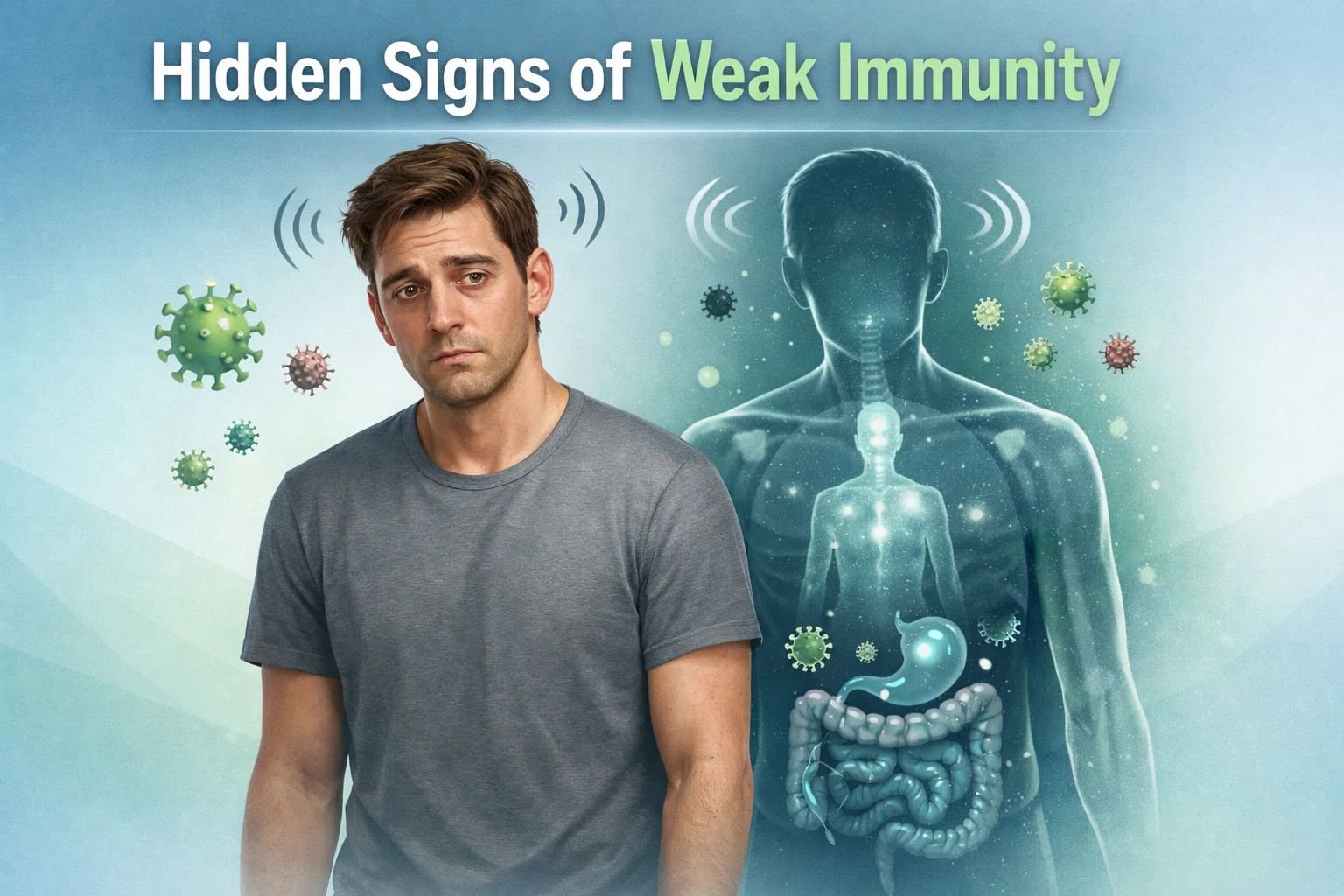
Though you might be feeling fine every day, there could be some subtle indicators of low immunity, such as fatigue, gastrointestinal problems, slow wound healing, and recurrent minor infections. They are often overlooked as they do not seem severe, but their presence indicates that something is wrong with your immune system.
Key Takeaways
Low immunity does not necessarily mean getting sick all the time
Your body gives off subtle clues through digestion, skin, and energy
Stress and lack of proper sleep are silent killers of immunity
Early warning symptoms can become dangerous if neglected
Proactive measures can correct immunity-related issues
What Exactly Do We Understand by ‘Weak Immunity’ in 2026?
Immunity is the mechanism your body employs to fight off infections, viruses, and bacteria. However, being immunocompromised in 2026 does not necessarily imply that you are frequently ill.
Rather, you might experience any of the following signs:
- A sluggish reaction to stimuli
- Slow recovery from illness
- Chronic fatigue
Your immune system comprises white blood cells, antibodies, and organs that collaborate to combat infections. An impairment in your body’s immune system implies that it is more susceptible to disease. Thus, despite your lack of serious illnesses, your health may not be ideal.
Why You Might Feel Good Even If Your Immune System Is Not Well?
It happens very often nowadays. Your body is very clever. It manages to get used to minor discomforts and makes them feel “natural.”
For instance:
- Being always tired is your new norm.
- Digestive disorders feel natural.
- Stress is your everyday reality.
Internally, however, your body is continuously stressed and inflamed. Studies confirm that an immunological imbalance can be present without any obvious signs and negatively impact energy levels, digestion, and neurological health. This explains why many individuals tend to exclaim, “Everything is alright!” but still experience low energy.
Top 10 Hidden Symptoms Of Weak Immune System
1. Always Feeling Tired For No Apparent Reason
Always feeling tired, even after having adequate sleep, is an indicator of an unhealthy immune system.
Several studies reveal that exhaustion is a typical symptom of an impaired immune system.
2. Illness Due To Minor Diseases
A common cold
Infection in the throat
A low-grade fever
It is natural to fall ill now and then. However, if it occurs frequently, it indicates that your immune defense mechanism may be weak.
3. Delayed Healing Process
If you experience difficulties in healing minor injuries, it signifies that your immune system cells cannot repair your body tissues.
4. Gut Health Problems (Often Overlooked)
Bloating
Flatulence
Diarrhea or constipation
The gastrointestinal tract is critical for maintaining a healthy immune system. Most health care professionals believe that digestive issues lead to compromised immunity.
5. Chronic Skin Conditions
Acne
Eczema
Dryness of the skin
Your skin serves as your protective shield from external factors. A poor immune system will negatively impact your skin appearance.
6. Chronic Stress & Mood Fluctuations
Stress has a direct impact on your immune system.
Studies suggest that stress and lack of sleep lower vital immune cells in your body.
7. Persistent Allergic Reactions or Sensitivities
When you easily react to:
Dust
Weather conditions
Foods
Then it may indicate that your immune system is hypersensitive or unbalanced.
8. Clouded Mind & Difficulty Concentrating
Difficulty focusing and concentration
Feeling foggy or clouded
Recent studies reveal the link between immune dysregulation and brain function and cognitive problems.
9. Chronic Muscle Pains or Headaches
Chronic inflammation in your body causes:
Joint pains
Muscle pains
Headaches
These usually result from an abnormal immune response.
10. Low Quality of Sleep
Despite getting enough sleep (7–8 hours), you wake up feeling tired; your immune system may be unable to recover adequately.
Link Between Gut and Immune System (Key Points)
About 70% of your immune system is connected to your gut.
It implies:
- Poor nutrition = weak immune system
- An imbalanced gut = more illnesses
Also, an imbalance of the gut microbiome may influence immunity, inflammation, and metabolism. Thus, if you have digestive issues, chances are you’ll experience immunological ones, too.