What Is GERD?
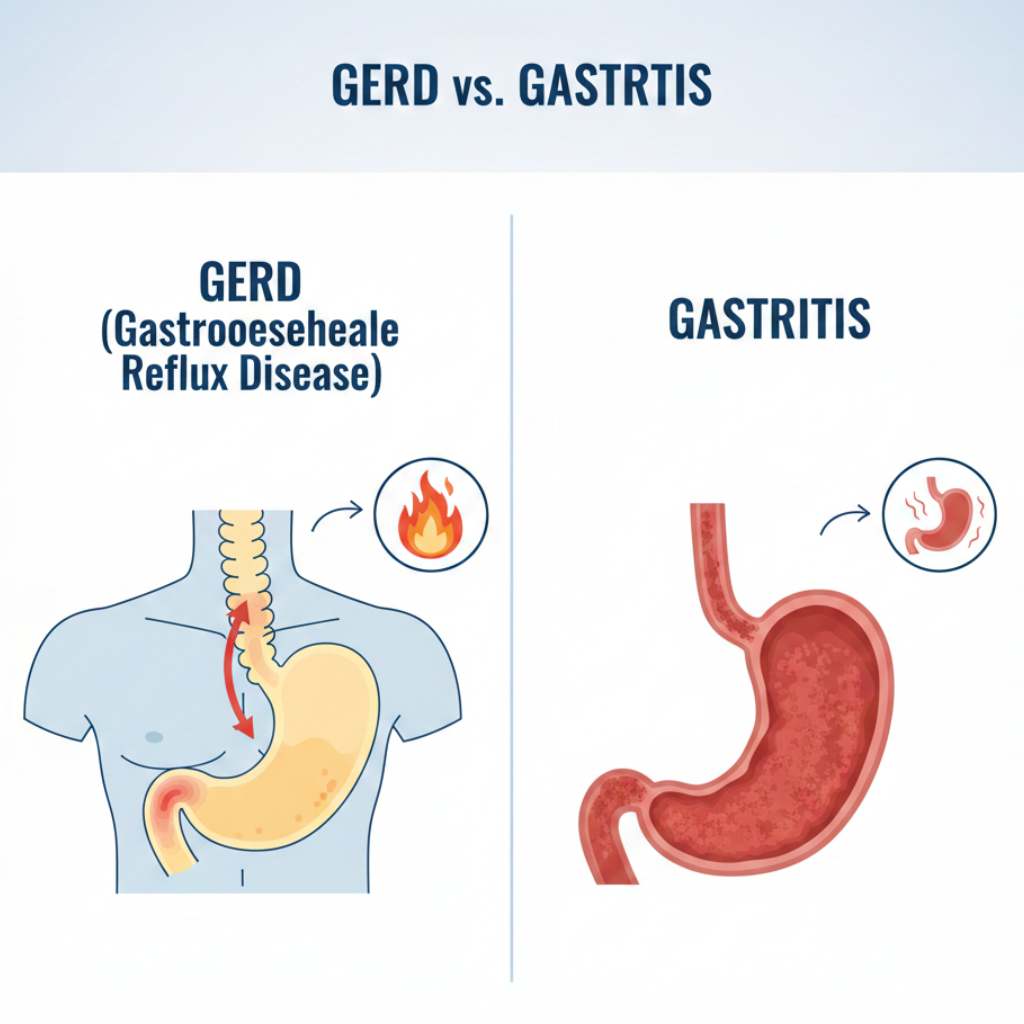
GERD is just a long name for a simple problem — your stomach acid keeps coming up into your food pipe. Normally, a small valve between your stomach and the food pipe opens to let food in and then closes quickly. But in GERD, this valve becomes weak. So acid moves up again and again. That’s why you feel burning in the chest, sour taste, burping, or irritation in your throat.
Many people in India call this “acidity,” but when it happens too often, it becomes GERD.
You may notice it more after eating spicy food, lying down right after meals, having late-night dinners, too much tea/coffee, or overeating.
A research study in The American Journal of Gastroenterology states that nearly 20% of adults experience GERD symptoms every week. It’s very common and mostly linked to lifestyle.
The best part? You can control it.
Simple changes like eating early, avoiding heavy, oily meals, walking after food, and sleeping with your head slightly raised work really well. And if symptoms persist, a doctor can help with proper treatment.
Why the Esophagus Suffers?
Your esophagus (food pipe) is like a soft tube. It carries food to your stomach. It’s not made to handle strong acid.
Your stomach, on the other hand, has a thick wall that protects it from acid. So when acid escapes upward, the esophagus starts burning and hurting.
This happens when the valve between the esophagus and stomach doesn’t close properly. When it stays open, even a little acid can irritate the food pipe. That’s why you feel chest burning, sour taste, cough, or throat irritation.
A study in Gut found that the esophagus has very little protective mucus. That’s why it gets damaged easily, even with a small amount of acid.
In simple words:
The stomach can handle acid. The esophagus can’t.
So whenever acid flows the wrong way, the esophagus gets hit first.
Good eating habits, early dinners, and avoiding lying down after meals reduce this irritation a lot.
Gastritis: What It Really Is?
Gastritis means your stomach lining — the soft layer that protects your stomach — gets inflamed or irritated. This lining keeps your stomach safe from strong digestive acids. But when it becomes weak, acids start touching the stomach walls directly.
Then you feel burning, nausea, bloating, stomach heaviness, or pain after eating.
The biggest reason behind this is a bacterium called H. pylori. It stays in the stomach quietly for years and slowly damages the lining. Other reasons include too much spicy food, alcohol, smoking, stress, skipping meals, and painkillers like ibuprofen.
A study in The Lancet says more than half the world has H. pylori — that’s how common gastritis is.
The good part? It’s treatable.
With medicines and good habits like timely meals, light foods, and stress control, the stomach heals quickly.
Acute vs Chronic Gastritis
Acute gastritis comes suddenly. You may feel sharp pain, burning, nausea, or vomiting within hours. It usually happens after oily/spicy food, alcohol, stress, or taking painkillers. The good news: it gets better fast once you rest your stomach and avoid triggers.
Chronic gastritis comes slowly and stays longer.
It develops over months or years. The main reason is an untreated H. pylori infection. Smoking, alcohol, and long-term painkiller use also contribute. Symptoms are mild but constant — bloating, heaviness, dull pain, or slow digestion.
A Gut study says chronic gastritis causes long-term inflammation that weakens the stomach lining if ignored.
In simple words:
- Acute = sudden, short
- Chronic = slow, lasts long
Both improve with proper care and treatment.
H. pylori and Other Villains
The biggest cause of long-term gastritis is a bacterium called H. pylori. It enters through food, water, or close contact. Most people don’t know they have it because it works silently. Slowly, it eats away the stomach’s protective layer.
A study in The Lancet says more than 50% of the world carries H. pylori.
But it’s treatable with antibiotics + acid-lowering medicines.
Other causes include:
- Painkillers (ibuprofen/aspirin)
- Alcohol
- Smoking
- Stress
- Spicy food
- Autoimmune issues
GERD Red Flags
You may have GERD if:
- Food or sour water comes up your throat
- Burning gets worse at night
- Chest burning happens after meals
- You cough or feel hoarse
- Symptoms repeat many times a week
Gastritis Clues
You may have gastritis if:
- You feel bloated even after small meals
- Nausea comes in waves
- Upper stomach hurts
- You feel full too early
- Appetite drops
GERD vs Gastritis
| Feature | GERD | Gastritis |
| Pain spot | Chest/Throat | Upper stomach |
| Worst trigger | Lying down | Empty stomach |
| Regurgitation | Very common | Rare |
| Bloating | Mild | Very common |
| Nausea | Sometimes | Frequent |
Shared Causes vs Unique Causes
Both GERD and gastritis happen due to everyday habits like spicy food, oily snacks, late meals, skipping meals, and stress.
But each has a unique cause too.
GERD happens because acid moves upward due to a weak valve.
Gastritis happens because the stomach lining becomes inflamed or damaged.
Knowing your exact trigger helps you treat the condition properly.
India Triggers
Indians naturally face acidity because of late dinners (9–11 PM), heavy foods like paneer/curries/biryani, spicy snacks, chai overload (4–6 cups), and skipping meals on busy days.
Street food, weekend overeating, and fast eating also make things worse.
These habits irritate both the stomach and the food pipe.
How do Doctors Tell the Difference?
Doctors ask where it hurts, when it hurts, and what worsens it.
- If it burns more when lying down → GERD
- If it hurts more on an empty stomach → Gastritis
They also check tea habits, stress, sleep timing, and meals.
Endoscopy & Tests
If symptoms continue, doctors may check for H. pylori or do an endoscopy.
Endoscopy lets them look directly at the food pipe and stomach lining to see inflammation, ulcers, or acid damage.
This helps them choose the right treatment.
Red Flags – Don’t Ignore
Get medical help if you have:
- Blood in vomit
- Black stool
- Difficulty swallowing
- Severe chest pain
- Sudden weight loss
- Repeated vomiting
These symptoms are not normal acidity.
What are the Treatment Options?
Medicines help, but habits heal.
Doctors may give acid reducers, protective medicines, or antibiotics if needed.
You must eat smaller meals, avoid oily food, eat early, walk after meals, and sleep on a high pillow.
Stress control also helps a lot.
GERD Medicines
PPIs (omeprazole/pantoprazole) reduce acid.
Antacids give quick relief but don’t last long.
H2 blockers give medium relief.
Surgery is the last option if the valve is very weak or the hiatal hernia is severe.
Gastritis Medicines
If H. pylori is present → antibiotics.
Doctors may also give protectants like sucralfate and acid reducers.
Light meals and less spicy food help heal the stomach faster.
How to Stop Medicines Safely?
Don’t stop acid medicines suddenly.
Reduce them slowly.
Eat smaller meals, early dinners, stay hydrated, and avoid tea/coffee on an empty stomach.
Your stomach improves naturally with good habits.
Indian Diet That Heals
Light dal, rice, soft roti, steamed veggies, khichdi, and soups help the stomach recover.
Avoid fried food, heavy tadka, pickles, and spicy chutneys.
Have coconut water, buttermilk, or plain water to stay soothed.
GERD-Safe Meals
Oats khichdi, upma, idli, vegetable soup, moong dal cheela, and light sabzi + roti are great.
Avoid tomatoes, onions, fried food, and spicy curries at night.
Stick to early dinners.
Gastritis-Soothing Foods
Moong dal, rice, bananas, boiled potatoes, coconut water, and rice kanji calm the stomach lining.
Avoid sour, spicy, and fried foods.
Eat small meals to avoid stomach irritation.