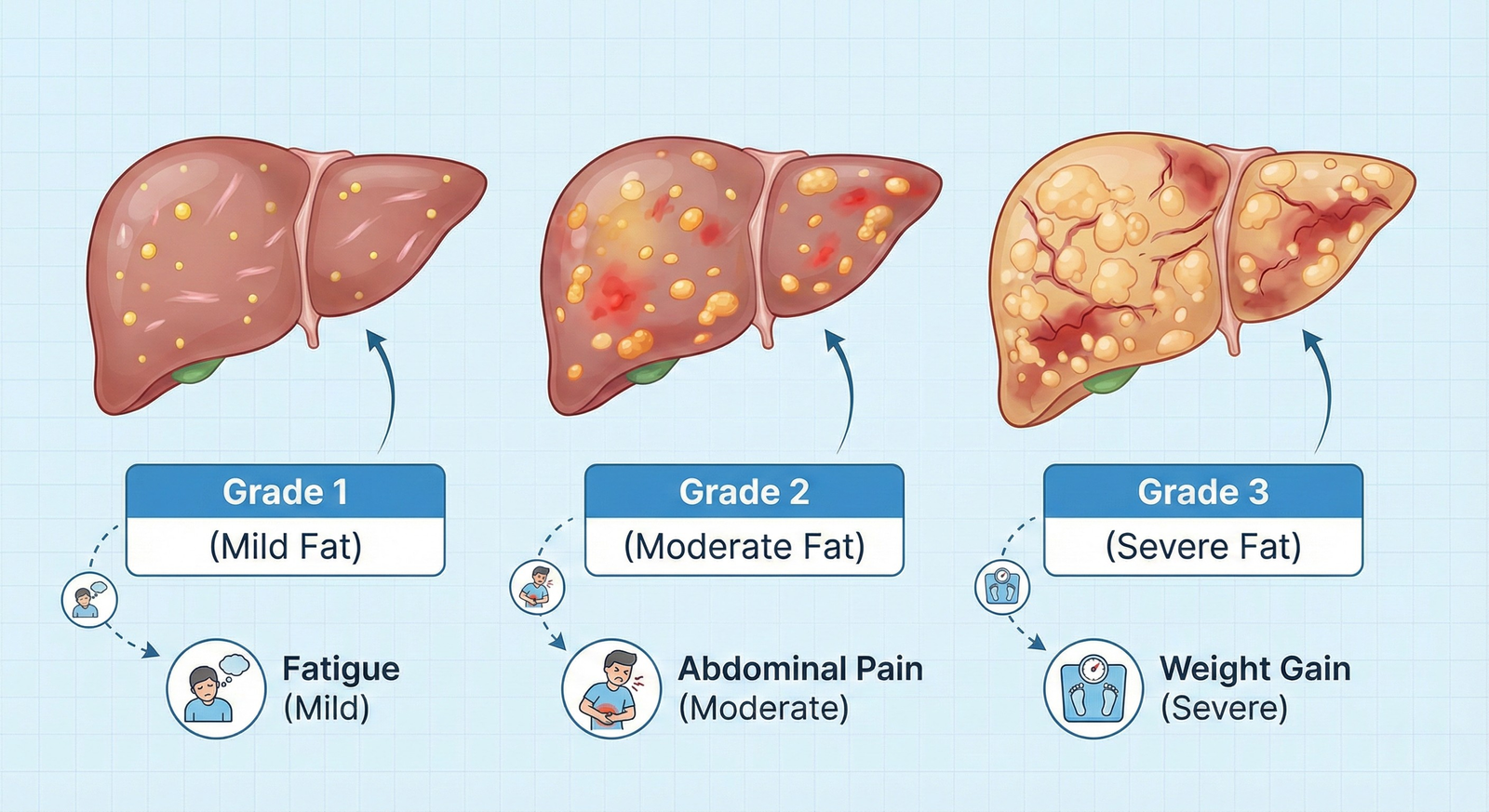
Fatty Liver Disease” is very common in India these days, and it is also foreseen that by 2026, 38% of the Indian population will be affected by “MASLD (Metabolic dysfunction-associated steatotic liver disease)”. This disease can usually be measured depending on how much fat it contains. If the severity of the disease is mild, 5 to 33% of the liver’s content will be fatty. This can cause weakness and mild pain in the abdomen. If the disease is moderate, fatigue, mild pain, and a few kilograms of weight gain can be noticed. If the disease reaches its severe stage, 67 to 100% of the liver can be fatty, causing weakness, pain in the abdomen, and can also generate serious troubles for the liver.”
However, the good news is that MASLD can be made nearly reversible with the right treatment regimen. Alongside the adoption of healthy lifestyle habits such as exercise, eating healthy, and managing weight, new treatment options are also effective at eliminating fat from the liver. For instance, patients who underwent dietary and exercise routines, along with new treatment options, showed a nearly 30% reduction in liver fat within the first six months.
What Are Fatty Liver Grades?
Fatty Liver, or MASLD, is categorized into three grades depending on the levels of fat accumulation in the liver. It is essential to grasp the meaning of the grades to enable the doctor to identify the severity of the condition and the appropriate treatment to employ. The grades indicate the severity of the effect on the liver and the body.
Grade 1 (5-33% fat): This is the earliest stage of someone suffering from a fatty liver. People with Grade 1 do not necessarily notice any symptoms at all. However, they may experience mild weakness or mild pain in their upper right abdomen. For Grade 1, it is very easy to treat and recover from in just 3 to 6 months with simple modifications to one’s lifestyle through walking, light exercise, reduction in the consumption of high sugar and fried foods, and eating foods rich in nutrients to bring their liver functioning back to normal.
Grade 2 (Fat content: 34% to 66%): In grade 2, there is moderate fat infiltration in the liver, and it may begin to trigger some symptoms in the body, including weakness, swelling, and mild pain. There is also an increased propensity for liver inflammation, which can cause damage to liver cells. However, it is still possible to reverse it, though it will call for some strict measures of controlling lifestyle and even some medication. Monitoring of the condition by doctors is essential to prevent it from becoming worse.
Grade 3 (>66% fat): This is an advanced stage of a fatty liver. In Grade 3, it can be assessed that the liver is almost in a fibrous condition. This indicates an early stage of scarring within the liver if it is left untreated. Individuals may suffer from exhaustion in the body, along with weakness in the liver region. It would take a very long time of at least 1-2 years, to reverse this condition.
Common Symptoms & Causes
Fatty liver disease also progresses without being noticed by the individual, and this is why a lot of patients do not know they are affected until it manifests in an examination. One of its primary manifestations includes a constant feeling of being tired. Individuals feel tired in spite of getting adequate rest because of an inefficient liver. The second primary symptom of this ailment involves an ache in the right upper quadrant of the abdomen because it is in this area where the liver resides.
Obesity, type 2 diabetes, and insulin resistance are some of the leading reasons for having a fatty liver condition. Indeed, it has been proven that close to 90% of people with type-2 diabetes suffer from a condition of fatty liver, irrespective of whether they are users of alcohol or not. When the body has excess fat around the stomach, it leads to the liver receiving high fatty acids, thus stored as fat.
The two more recently recognized causes, which have been gaining much attention in the 2026 health update, are the gut microbiome and imbalance of omega fatty acids. First, there is the gut microbiome. A gut that is unhealthy gut lets toxins into your blood. This inflames the liver and makes it store fat. Also, in those who have a fatty liver, good gut bacteria are less and harmful bacteria are more. Second is the imbalance of omega fatty acids. Modern diets contain very high levels of omega-6 fats (refined oils and other modern foods) and low levels of omega-3 fats (nuts, seeds, and fish). This promotes inflammation and further worsens liver fat storage.
The good news is that early identification of symptoms and comprehension of the causes will help in the early arrest of fatty liver. Correction in diet, improvement in gut health, balancing fats, management of weight, and blood sugar will definitely bring about a considerable improvement in the health of the liver over time.
Testing in 2026
The diagnosis of fatty liver disease has become easier and more precise in 2026. Initially, most patients are evaluated for their condition through an abdominal scan using ultrasound. This is because fatty liver can be quantified through an ultrasound scan. Ultrasound scans are painless, cheap, and accessible in India. A scan indicates how fatty the liver may be, but it neither measures liver stiffness nor scarring.
For more information, however, doctors now always prescribe a Fibroscan test. A Fibroscan is an outpatient procedure that indicates both the fat and the elasticity or hardness of the liver, which can be an early indication of fibrosis before it becomes severe. A Fibroscan takes merely a few minutes, is painless, and provides immediate feedback. The test is useful for patients with Grade 2 or 3 fatty liver, diabetes, obesity, or metabolic syndrome.
It could become a major development in 2026 that AI-powered mobile applications will support home tracking of LFT. These applications can be used to upload blood test reports, track the levels of liver enzymes ALT and AST over time, and get alerts based on trends. Some of these apps are linked with wearable devices to keep a record of weight, activity levels, and levels of blood sugar, helping doctors track how well lifestyle changes are affecting liver health. Such apps do not replace medical advice but facilitate early diagnosis, periodic monitoring, and follow-up of better treatment options.
In short, the diagnosis of fatty liver in 2026 covers a wide range: from traditional imaging to modern scanning and smart digital tools. Early testing and regular monitoring enable one to find out about fatty liver development much earlier and take timely measures for its reversal before serious complications may arise.
2026 Treatments for Fatty Liver
Fatty liver treatment has improved a lot in the year 2026. In the past, the treatment just included diet and exercise, but now a new drug is proving to be very effective, mainly for people with moderate to severe fatty liver.
One of the most widely talked-about treatments is GLP-1 drugs, including semaglutide. These drugs were initially used to treat diabetes and weight loss, but research suggests that they are also extremely effective at treating fatty liver. Clinical studies have revealed that semaglutide is capable of lowering liver fat by nearly 50% in a number of patients when used in combination with lifestyle adjustments. These drugs function by increasing insulin sensitivity, suppressing appetite, and lowering inflammation within the liver. These drugs are typically used in patients with obesity, diabetes, or Grade 2-3 fatty liver.
Natural supplements also have scientific support apart from modern medicines. Milk thistle is just one example of such a supplement. It contains silymarin, which has been researched as helping to protect liver cells and reduce inflammation. Milk thistle has not shown the ability to cure fatty liver on its own, but it was studied as improving liver enzyme levels when used in combination with diet control and exercise.
Yet doctors still emphasize that medications are most effective only if lifestyle changes are followed. Regular walking, strength training, weight loss of as little as 5-10%, and cutting sugar and refined foods increase the results of treatment manifold. In 2026, treatment is no more about one solution; it’s about combining medicine, food habits, and daily movement to heal the liver safely.
Indian Reversal Diets for Fatty Liver
The Indian diet is very effective in combating fatty liver disease when planned in a proper manner. Indian foods like millets, dals, veggies, and spices are very effective in curing liver problems.
Adding millets like ragi, jowar, and bajra, as well as water shots with ginger, curd, and various other ingredients, helps lower the level of sugar present in the blood, along with reducing the deposition of fat in the liver. These millets have high fiber levels, making you feel fuller for longer, thus aiding in weight loss. The other healthy drink is shots of turmeric.
| Day | Breakfast | Lunch | Dinner |
|---|---|---|---|
| Mon | Ragi dosa | Dal + veg + roti | Vegetable khichdi |
| Tue | Oats upma | Millet rice + sabzi | Light curd bowl |
| Wed | Boiled eggs/paneer | Rajma + salad | Veg soup |
| Thu | Sprouts chaat | Bajra roti + sabzi | Stir-fry veggies |
| Fri | Idli (less rice) | Curd + veg | Moong dal |
| Sat | Poha (less oil) | Salad bowl | Paneer bhurji |
| Sun | Fruit + nuts | Home food | Light dinner |
Consistency matters more than perfection. Avoid sugary drinks, fried snacks, and late-night eating for better results.
Gender and Pediatric Risks
A fatty liver does not impact all patients equally. Studies prove that women progress faster, especially after menopause. When women undergo menopause, the levels of hormones decrease. This comprises lesser liver protection, thereby increasing the chances of inflammation and fibrosis even at low body weight. Children are also being adversely affected. It has been found that close to 70% of children suffering from obesity experience fatty liver. The reasons behind this are increased screen time, unhealthy foods, and a sedentary lifestyle. This condition is less recognized by parents since children don’t present any symptoms. Early lifestyle modification in women and children is important. Eating healthy, taking regular exercise, and following screening schedules can prevent chronic damage to the liver.
FAQs
Can grade 3 fatty liver be reversed?
Yes. Grade 3 fatty liver is reversible, especially when the fibrosis is still at an early stage. It demands diet control, weight reduction, medications, and long-term adherence.
Is Fatty Liver Disease Caused by Alcohol Alone?
I don’t think that’s true. Most of the prevalent cases today are related to metabolism and not
If liver function tests come back normal, am I safe?
If not always. Many patients with fatty liver have normal blood test results, which is why scans are necessary. Do dietary supplements alone help in curing a fatty liver? None. It can be aided with supplements, but also requires a diet.
Sum up,
Fatty liver disease is common today, but the good news is that it is not permanent if caught early. With the right diagnosis, simple lifestyle changes, and updated treatments available in 2026, many people can reverse liver fat safely. Eating better, staying active, managing weight and sugar levels, and following your doctor’s advice can make a big difference. New medicines, Indian diet options, and regular tracking have made recovery easier than before. The key is to act early and stay consistent. A healthy liver means better energy, better digestion, and a healthier life overall.
Related Article: Does Fatty Liver Cause Fatigue and Brain Fog?