Your 20s are a critical stage for your body. This is when your bones develop strength, your muscles achieve peak strength, your hormones stabilize, and your brain finishes its final stage of development. What happens during this stage determines how your body will react in the future. Most health mistakes that people make in their 20s do not result in pain or symptoms immediately. This is why most people overlook them. However, changes are occurring in the body. These changes impact digestion, metabolism, immunity, hormones, and mental health. By the time symptoms appear, damage has accumulated.
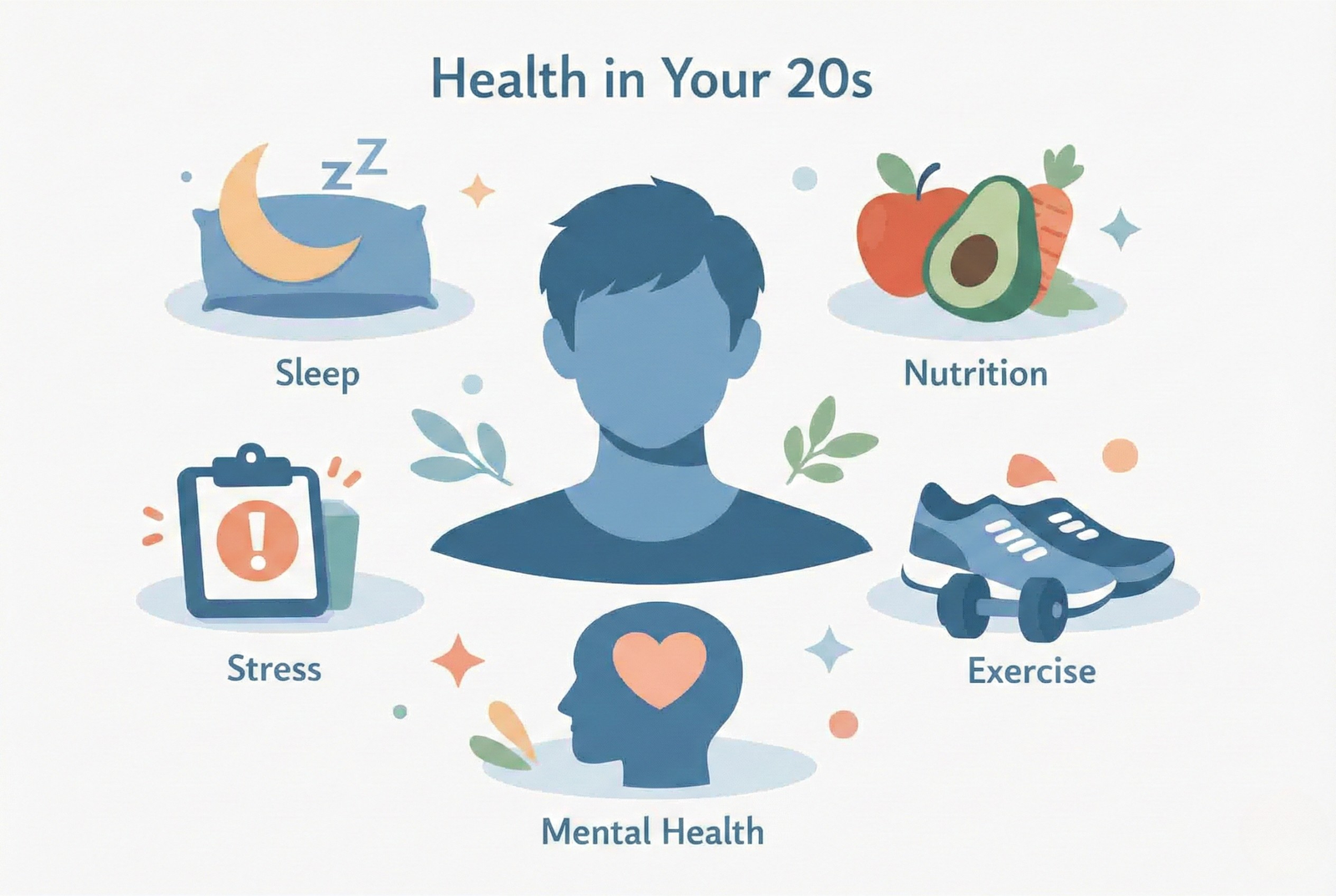
Learning about health mistakes that young adults make can help minimize risks to health and enhance the quality of life.
Thinking “I Feel Fine” Means “I Am Healthy”
One of the largest lifestyle errors of the 20s is thinking that if you feel normal, it means your body is healthy. In your 20s, your body is very good at compensating. Your organs are working overtime to mask imbalance. This means issues are silent. Your blood sugar can creep up. Also your cholesterol can rise. Your inflammation can remain low but steady. None of this hurts. Your body is just compensating. This is not healing. This is managing pressure. Eventually, your body will no longer be able to compensate. Your health needs to be assessed from the inside out, not just by how you feel every day.
Poor Sleep Routine and Late Nights
Sleep issues are among the unhealthy habits that you may have in your 20s. Most people sleep late, wake up early, or even change their sleeping patterns every day. The body has a fixed clock. The clock regulates hormones, digestion, and repair. Staying up late affects deep sleep. Using electronic devices delays the sleep stimulus. Irregular sleep patterns increase stress hormones. This impacts concentration, weight management, and mood regulation. Staying up late on weekends does not completely correct the problem. The body requires sleeping patterns, not just extended sleep. Sleep disorders in your 20s can lead to anxiety, obesity, and poor immunity.
Eating Enough Food but Missing Nutrition
Many young adults consume enough food but not enough nutrition. This is a hidden health mistake in your 20s. Fast food, processed meals, and many food choices do not contain key nutrients. The body requires vitamins and minerals for everyday maintenance. Missing nutrients include iron, vitamin D, magnesium, zinc, and vitamin B12. These nutrients help maintain blood health, nerve function, muscle power, and the immune system. A lack of nutrition does not always have noticeable symptoms. It manifests as fatigue, lack of concentration, weak hair, low moods, or constant illnesses. Symptoms are usually attributed to stress rather than nutrition.
Skipping Strength Training and Movement Balance
- Many people believe exercise is only for weight loss or physical appearance. This mentality causes poor exercise habits.
- Muscle strength peaks in one’s 20s. After that, muscle loss starts slowly. Muscle tissue regulates blood sugar, joints, and bones.
- Missing out on strength training causes posture muscle weakness. This leads to back problems, knee problems, and neck problems in the future.
- Doing only one type of exercise causes imbalance. The body requires diverse exercise.
- Exercise benefits the brain, digestive system, and hormones. Exercise is a necessity, not a choice.
Sitting Too Much and Moving Too Little
Prolonged sitting time is a significant lifestyle error in the 20s. Sitting leads to decreased blood flow and muscle activity. When muscles are not active, the ability to regulate blood sugar levels decreases. Fat accumulation increases. Digestion slows down. Sitting in the wrong position leads to pressure on the spine. This, in turn, causes damage to the spinal discs and nerves. Even if one is physically active every day, issues can arise if one sits for a long time without taking breaks. Taking short movement breaks can be helpful.
Treating Stress as Normal
Stress is considered normal in the 20s. Long hours at work, using the phone, and having too much on one’s mind become normal. Stress keeps the body in a state of alertness. The stress hormones remain high. This impacts sleep, digestion, the immune system, and mood. The body eventually forgets how to relax. Energy levels decrease. Anxiety levels rise. Concentration declines. Stress also impacts eating and gut health. One of the biggest health errors young adults make is ignoring stress.
Ignoring Gut Health
The issue of gut health is usually overlooked until there is pain in the stomach. This is another silent issue. Poor diet, low fiber, and regular use of antibiotics affect gut health. The gut influences the immune system and moods. When gut health is poor, there is inflammation and poor nutrient uptake. The symptoms include bloating, changes in bowel movements, skin problems, fatigue, and a foggy brain. Gut health issues can be present without stomach pain.
Using Caffeine to Replace Rest
Caffeine use is very common. It is often used to manage tiredness instead of fixing sleep and stress. High caffeine intake overstimulates the nervous system. It increases heart rate and anxiety. Late caffeine intake affects sleep quality. Poor sleep increases fatigue the next day. This creates a cycle. Energy drinks add sugar and extra stimulants. These cause crashes later. True energy comes from rest, nutrition, and recovery.
Skipping Health Tests and Checkups
- Many people put off health screenings in their 20s. They wait until they have symptoms.
- Blood sugar, cholesterol, vitamins, and thyroid levels can creep up unnoticed. It is easy to reverse early changes by making lifestyle changes.
- When problems are discovered late, they require long-term management.
- Preventive care helps people understand what their bodies are doing early on.
Ignoring Hormone Signals
Hormones regulate energy, mood, weight, and sleep. Irregular periods, rapid weight gain or loss, and perpetual fatigue are red flags. Hormones respond to sleep, food, stress, and exercise. Poor lifestyle choices interfere with messages. Hormonal imbalance does not mean pain. It manifests through changes in patterns. Taking care of hormones from the start prevents problems in the long run.
Poor Water Intake
- Many people do not drink enough water. Mild dehydration impacts concentration and digestion.
- Water aids in the transport of nutrients and the elimination of waste. Insufficient water intake is hard on the kidneys.
- Sugary beverages and caffeine contribute to water loss.
- Drinking water regularly benefits metabolism and the skin.
Ignoring Mental Health
- Mental health problems tend to begin in the 20s. People tend to ignore the symptoms.
- Anxiety, lack of motivation, and feeling emotionally drained can impact physical health.
- Mental stress impacts hormones and the immune system.
- Early intervention for mental health problems helps with stability.
Poor Posture and Screen Overuse
- The long hours on the screen cause strain on the neck and shoulders. Bad posture puts additional strain on the spine.
- The forward head posture leads to headaches and nerve pain.
- Eye strain causes problems with sleep and concentration.
- Good posture practices ensure mobility in the future.
Thinking Health Can Wait Until Later
Putting off thoughts of health until another time is one of the most common health errors in your 20s. In your 20s, your body can conceal damage well, which means that unhealthy behaviors in your 20s will not produce immediate effects. Poor sleep, poor nutrition, stress, and inactivity can damage hormones, digestion, and metabolism over time. It is common for people to put off correcting their lifestyle choices until later in life, but problems compound with the passing of time. In your 20s, it is easier to make changes to your lifestyle choices now rather than later.
Key Takeaways
- Health blunders in your 20s may have no symptoms until later
- Poor sleep timing impacts hormone and metabolism function
- Nutritional deficiencies exist even when you eat regularly
- Muscle strength developed now safeguards future health
- Excessive sitting disrupts blood sugar regulation
- Stress impacts digestion, immune function, and mood
- Gut health relates to both body and mind
- Caffeine masks fatigue but impedes recovery
- Preventive screenings identify issues early
- Mental health support is not optional
Sum up,
Your 20s are the silent years that determine the health you will enjoy for the rest of your life. Unhealthy practices in your 20s are not a big deal because your body adapts quickly. Small health errors in your 20s have a big impact on your hormones, digestion, immune system, and mental health. Your sleep, diet, exercise, stress, and regular health check-ups can save you from bigger health issues down the line. The health errors young adults make are usually unintentional, not irresponsible. The best part about being in your 20s is that small health corrections happen quickly.
Also Read: Health Checkups Men and Women Should Not Skip by Age