When people discuss being shy, introverted, or socially anxious, they often use these terms interchangeably in everyday conversations. But are these words the same thing? The question of social anxiety versus introversion has become even more pertinent in the year 2026 than it was before, particularly with the increasing number of discussions about mental health and awareness. It is important to distinguish between being an introvert and someone who is socially anxious. One is a personality type. The other is a mental health issue. Let’s examine this further.
Understanding Introversion
The idea of introversion was introduced by Carl Jung, a Swiss psychiatrist, in the early 20th century. Jung described an introvert as a person who prefers to recharge alone and through reflection, rather than through social interaction. Introversion is a personality type, not a mental disorder. It is also a spectrum. Many people consider themselves introverts but are still able to thrive in social situations.
Important Traits of Introverts
- Prefer to have deep conversations rather than engage in small talk
- Tired easily after extended social interactions
- Enjoy spending time alone
- Think before speaking
- Are comfortable with silence
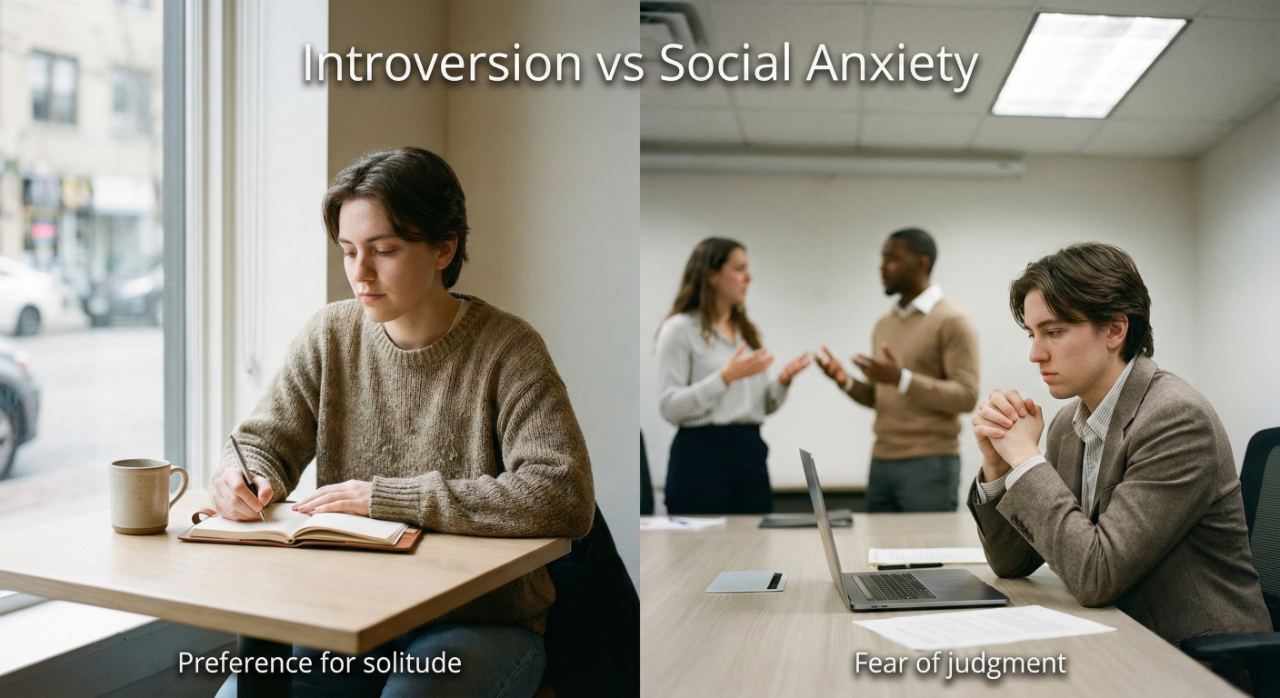
An introvert may decide not to go to a party, not because they are afraid, but because they would rather be alone reading a book or working on a project. They can still enjoy social gatherings, just not as much. Introversion is a recognized term in contemporary models of personality, such as the Myers-Briggs Type Indicator and the Big Five personality traits, where it is considered the reverse of extraversion.
What is Social Anxiety?
Social anxiety, also known as Social Anxiety Disorder (SAD), is a diagnosable mental health issue. It is included in the “Diagnostic and Statistical Manual of Mental Disorders” by the American Psychiatric Association. Social anxiety is the fear of being judged, embarrassed, or humiliated in a social setting. It is more than just being shy or introverted. Social anxiety is a fear-based response to social interactions.
Symptoms of Social Anxiety Disorder
The following are some symptoms of social anxiety disorder:
- Fear of public speaking
- Avoiding social events because of fear of judgment
- Physical reactions like sweating, shaking, or nausea in social situations
- Racing heartbeat when interacting with strangers
- Overthinking conversations after they happen
- Fear of being observed while eating or doing tasks
A person with social anxiety disorder may want to go to a party but be unable to because of fear.
Social Anxiety vs Introversion: The Core Difference
When discussing social anxiety vs introversion, the biggest difference lies in motivation and emotional experience.
| Aspect | Introversion | Social Anxiety |
|---|---|---|
| Nature | Personality trait | Mental health disorder |
| Motivation | Preference for solitude | Fear of judgment |
| Emotional Response | Calm, neutral | Distress, panic |
| Social Ability | Can socialize, but in limited doses | Avoids socializing due to fear |
| Impact on Life | Usually manageable | Can impair daily functioning |
Introverted and Socially Anxious: Can Both Exist Together?
Yes, absolutely. Some people are naturally introverted, and they may also have social anxiety. Being introverted does not shield a person from having anxiety disorders. Extroverts can also have social anxiety. Consider an introverted student who likes to work in small groups but also has a tremendous fear of presentations in class. In this situation, the student may be suffering from both introversion and social anxiety.
Brain and Biological Differences
Neuroscience research indicates different levels of brain activity for introversion and social anxiety. Introversion is associated with dopamine sensitivity and internal processing networks, while social anxiety is associated with the amygdala, the fear center of the brain. Research conducted at Harvard University and Stanford University has examined the role of hyperactive fear responses in anxiety disorders, as opposed to the role of temperament in introversion.
Physical Symptoms: A Major Distinction
Introversion does not result in physical discomfort. Social anxiety does.
Physical Symptoms of Social Anxiety Disorder
- Blushing
- Excessive sweating
- Shaking hands
- Dry mouth
- Shortness of breath
- Gastrointestinal discomfort
If these symptoms are being caused by social interactions, it could be one of the signs of social anxiety disorder and not just introversion.
Effect on Career and Relationships
Introverts in the Workplace
Introverts can be very effective in careers that involve concentration, creativity, and intense thinking. They can be good at writing, research, design, programming, or analysis. They can avoid too many meetings but shine in solo work.
Social Anxiety in the Workplace
Social anxiety can be a major hindrance to career advancement. The fear of public speaking, networking, or speaking out in a meeting can be a major barrier to career advancement. In relationships, introverts have strong connections with their best friends. Social anxiety can be a barrier to forming or sustaining a relationship because of the fear of rejection.
Misconceptions About Social Anxiety vs Introversion
Myth 1: All Introverts Are Socially Anxious
False. Many introverts are confident and socially skilled.
Myth 2: Social Anxiety Is Just Shyness
False. Shyness is mild discomfort. Social anxiety disorder involves intense fear and impairment.
Myth 3: Introverts Hate People
False. Introverts often value deep relationships. They simply need time alone to recharge.
Understanding these myths helps clarify the difference between introversion and social anxiety more accurately.
When Should You Seek Help?
If social discomfort is mild and manageable, it may simply be introversion. But consider seeking professional help if:
- Fear interferes with work or education
- You avoid important life opportunities
- Physical symptoms are frequent and intense
- Anxiety persists for six months or more
Mental health professionals rely on diagnostic criteria described in the Diagnostic and Statistical Manual of Mental Disorders to diagnose social anxiety disorder.
Treatment approaches include:
- Cognitive Behavioral Therapy (CBT)
- Exposure therapy
- Medication (in moderate to severe cases)
- Mindfulness-based interventions
- Early intervention can greatly improve quality of life.
How to Support Yourself
If You’re an Introvert:
- Plan social engagements carefully
- Make time for alone
- Attend smaller gatherings
- Set boundaries
If You Have Social Anxiety:
- Engage in gradual exposure
- Work on negative thoughts
- Seek professional help
- Use breathing to control physical responses
Knowing the distinction between social anxiety and being an introvert enables the proper strategy to be taken.
The Role of Social Media in Confusion
Social media trends tend to promote being an introvert while also promoting anxiety. Memes such as “I hate people” or “I cancel plans because I’m an introvert” can create confusion. While awareness is empowering, the mistake of social anxiety being the same as being an introvert could lead to delayed proper treatment.
Final Thoughts
The debate between social anxiety and introversion is more than just words—it’s about understanding, empathy, and accurate mental health information. Introversion is a normal personality type. It’s a matter of energy type. Social anxiety is a mental illness. It’s a matter of fear. If you’re trying to figure out whether your experiences are more introverted or anxious, ask yourself this one thing:
Do you avoid social situations because you like being alone—or because you’re afraid of what others will think of you?
The answer to this question will help you distinguish between an introvert and someone with social anxiety. Identifying the symptoms of social anxiety disorder can be the first step to recovery, growth, and confidence. On the other hand, accepting your introversion can be the key to creating a life that suits your energy and talents. Knowing yourself is not about classification—it’s about living.