A single meal blood sugar spike can hit your body like a mini heart attack. Research proves that it creates injurious stress inside the body, which might last for over 24 hours. This damage may be way more hazardous than your long-term sugar report HbA1c. That is why blood sugar spikes are dangerous, even if they happen only once in a while.
That means that blood sugar spikes are when your sugar goes above 140 mg/dL after you eat. Your sugar is not always high, it’s a spike. The ups and downs of sugar are worse, as they injure the blood vessels, weaken the walls of the arteries, and may suddenly rupture the plaques of the heart. This silent damage is called sugar variability, and it harms the heart and brain more than steady high sugar.
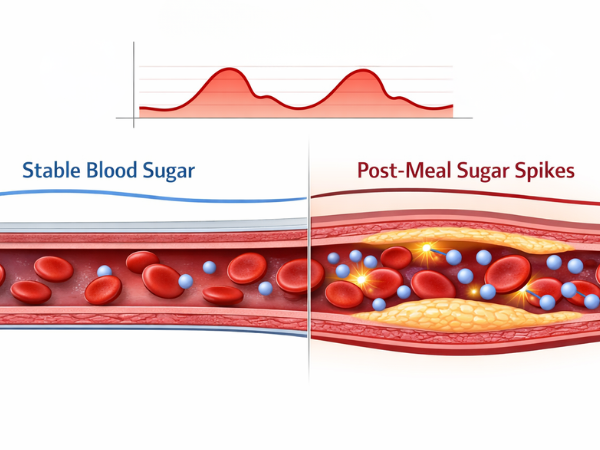
Until 2026, AI sugar alerts, gut bacteria tracking, and even heatwaves will change the way we see post-meal blood sugar spikes. The truth is, spikes hurt even non-diabetic persons. Learning how to avoid blood sugar spikes is the real key to staying out of danger.
Science of Spike Damage
Blood sugar spikes can quietly harm your body, even if your overall sugar looks fine. A sudden post-meal blood sugar spike stresses your cells like a mini shock. Even after your sugar goes back to normal, the damage continues. That is why blood sugar spikes are dangerous for your heart, blood vessels, and brain.
1. Oxidative stress (cell damage)
When sugar rises fast, it creates harmful particles called free radicals. Your body’s natural cleanup can’t keep up, so the stress lasts for hours. This shows why knowing how to prevent blood sugar spikes matters more than just controlling average sugar levels.
2. Inflammation (swelling inside the body)
Sharp sugar spikes activate immune cells that irritate blood vessels. The body “remembers” these spikes and reacts again and again. Unhealthy gut bacteria can make these sugar swings worse, making post meal blood sugar spikes even more harmful.
3. Blood vessel and heart harm
Sugar spikes reduce nitric oxide, which helps blood vessels relax. Without it, arteries become stiff. Sugar also sticks to proteins, forming deposits that can make plaques in arteries unstable. Evening blood sugar spikes are even worse because the body handles sugar poorly at night.
4. Sugar ups and downs (variability)
Frequent swings in sugar are more dangerous than steady high sugar. People with big sugar swings have a higher risk of heart problems and memory issues.
Research & India angle
Animal studies show temporary spikes speed up artery plaque buildup by 40%. In India, ICMR reports rising prediabetes in young adults, so learning how to prevent blood sugar spikes is important even for people without diabetes.
2026 Tech: AI-CGM Revolution
Technology is making it more accessible than ever before to battle blood sugar spikes and post-meal blood sugar spikes. Advanced technology now alerts you before your sugar spikes occur, and you take immediate action. There are gadgets such as the Dexcom G7+, Libre Rio that use sophisticated computer algorithms that forecast sugar spikes. There are even new, non-invasive biosensors (such as Rockley, which is currently being researched) that would make it possible for the 500 million people with Prediabetes to monitor sugar levels without having to prick their fingers.
“Personalized food scores” is yet another innovation. With the help of applications like ZOE and Levels, you will get the knowledge of your body’s response to foods. For instance, your ‘idli and sambar’ breakfast combination triggers a 32 percent “surge” in your body, whereas the same mixture of foods will hardly have any effect on others.
In India, CGM is being linked to a prediabetes test and an Aadhaar card. Now it is easy to manage it on a timely basis. Simple advice, like coordinating your CGM and timing for the evening meal, can reduce peaks by 28%, and this indicates how harmful peaks of blood sugar are and how simple changes can be helpful.
With your sugar levels monitored in real-time, you will understand the responses of foods and, therefore, control the meals you consume. With technology, the art of preventing blood sugar spikes is becoming second nature.
Microbiome Mastery
Your gut’s influence on blood sugar levels exceeds what most people think. Researchers are now referring to the “gut-spike axis.” This speaks to the direct connection between your gut and the blood sugar spikes that occur post-meal. Certain strains of bacteria can work to manage blood sugar spikes, but others can trigger them. This explains why blood sugar spikes are so harmful—your gut can either save you or destroy you.
First, there is Akkermansia muciniphila, a superstar strain. Research in 2025 has found that this strain increases the inhibition of sugar formation in the liver as well as beneficial SCFAs, proving effective in dropping sugar oscillations by 20%. Some easy daily practices can be employed to promote beneficial bacterial growth. Taking kefir, kimchi, or a glass of methi water (an everyday Indian diet) is a natural berberine substitute. It helps regulate sugar highs before an attack. This can be a very easy approach to stop sugar highs in the body.
There are now advanced AI systems capable of giving you a customized probiotic prescription. VIOME, an app that identifies the strains in your gut, has been proven effective in decreasing the inflammation caused by sugar spikes by 22%.
One trick I use is called the “prebiotic sequence”: begin your meal with fiber, then protein, and finish with carbs. This helps create a flattened peak of nearly 30%, and managing blood sugars after meals becomes much simpler.
Taking care of your gut allows you to control your sugar cravings and lower the stress your blood vessels endure, and finally, it puts you in control of controlling your blood sugar spikes, even if you have diabetes.
Lifestyle in 2026 India
Living in Gurugram means having its own set of sugar issues. With the scorching summers, busy life, and long working hours, the chances of blood sugar spikes and post-meal spikes are higher. Even for those with normal health, blood sugar spikes are quietly stressing your heart, blood vessels, and metabolism. This makes blood sugar spikes so dangerous.
1. Heatwaves: Hot days result in 15% more swings in sugar. Pre-hydration with water and electrolytes, along with shorter walks of 10k steps indoors or in an air-conditioned environment, can help manage spikes in blood sugar post-meals.
2. Managing fatigue from modern weight-loss drugs
Some people use drugs like Ozempic, which can cause tiredness. Natural alternatives like berberine, along with supplements like NMN, help calm harmful stress in the body. Pairing this with intermittent fasting (14:10 window) can reduce spikes and make it easier to manage sugar.
3. Urban life habits
Simple lifestyle tweaks can make a big difference. Gamifying your steps with apps like Fitbit, practicing yoga, or doing pranayama lowers stress and prevents cortisol from making sugar shoot up. Breakfast tends to be the safest time for sugar, while dinner before 7 PM helps reduce spikes.
Your angle: steps + diet
If you’re already doing 15k steps daily, combine that with an anti-inflammatory diet—think fiber-rich vegetables, healthy fats, and moderate protein. This works together to flatten blood sugar spikes naturally.
By adjusting to the heat, timing meals wisely, moving regularly, and eating smart, you can finally control how to prevent blood sugar spikes in today’s fast, hot, urban India—even without medication.
Actionable Prevention Toolkit
Here’s an easy, practical way to fight blood sugar spikes and post-meal blood sugar spikes. Small daily actions can make a big difference, and anyone can do them.
Right after meals
- Take a quick 10-minute walk, especially after eating carbs.
- Try a simple vinegar hack: 1 tablespoon of vinegar in water before or after meals can help lower spikes.
Daily habits
- If your sugar is high or you are at risk, medicines like SGLT2 inhibitors or GLP-1s can help. But natural options like fenugreek (methi) water are effective too.
- Eating fiber-rich, anti-inflammatory foods keeps sugar swings smaller and easier to manage.
Track your sugar
- Use a continuous glucose monitor (CGM) to see your sugar patterns. Aim for sugar swings (CoV) under 25% to keep post-meal blood sugar spikes under control.
Quick tips for common spikes
| Situation | What to do |
|---|---|
| Spike at 180 mg/dL | Eat a protein snack and go for a short walk |
| Late-night spike | Drink water and have a light snack; avoid heavy carbs |
| Skipped breakfast | Start with fiber + protein to prevent morning spikes |
With these small steps—walking, smart eating, and tracking—you can reduce spikes naturally. Even if you’re not diabetic, learning how to prevent blood sugar spikes helps protect your heart, blood vessels, and overall health.
Sum up,
Blood sugar spikes and post-meal blood sugar spikes are more than just a reading—they are stealth bombs lurking in your blood vessels, silently increasing your risk for heart disease. That is how serious a condition blood sugar spikes can be, even if you feel healthy enough to go to the gym. By 2026, you can take control with innovative technology such as AI-enhanced CGMs, a stomach-centric diet, and a genius-free, heat-proof lifestyle tip.