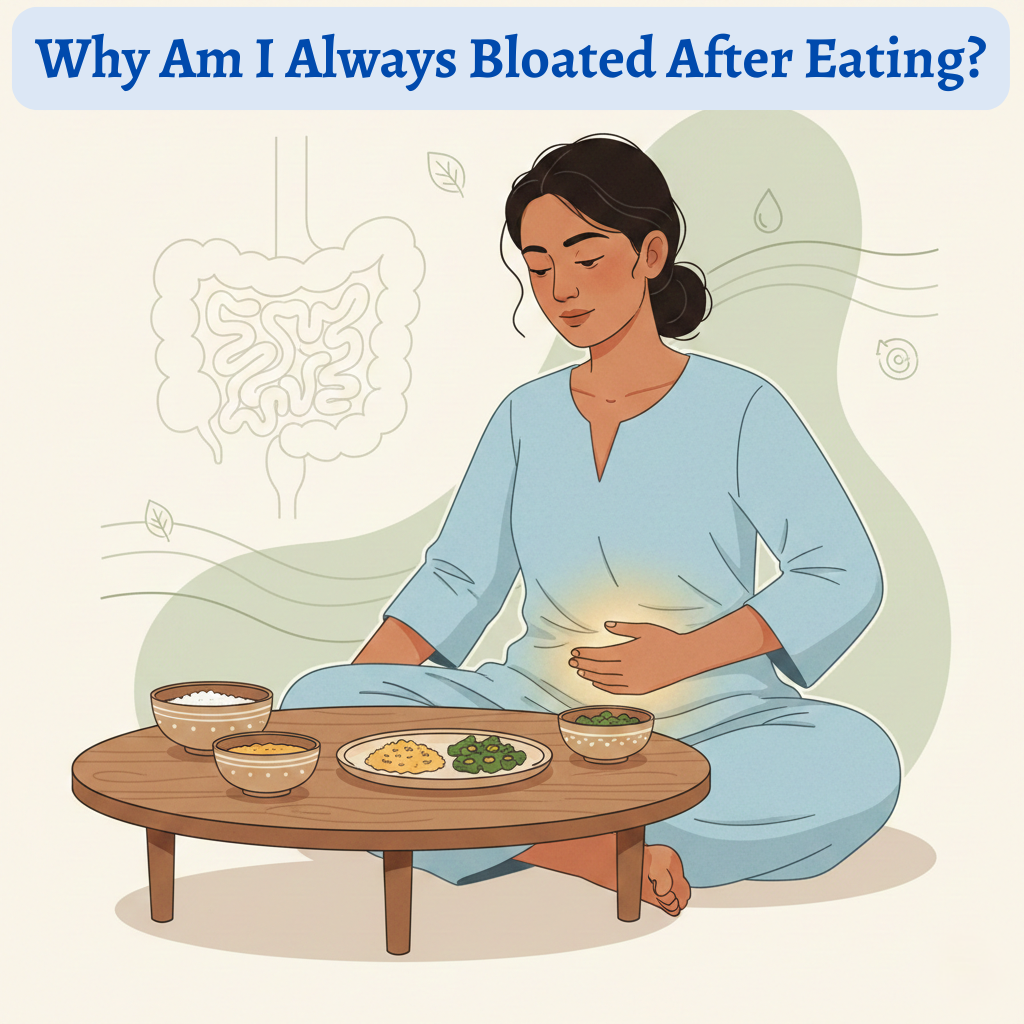
It is quite normal to feel bloated after eating. Usually, it manifests as a sign that your stomach has felt heavy or tight after every meal, which means digestion is not going well. Sometimes this can be due to a type of food, eating meals too fast, stress, or small intestine problems. According to nutrition research in 2025, about 30% of the population faces stomach bloating post-meals due to eating habits and gut imbalance. The following guide will talk about the real and most often ignored causes of bloating, simple remedies for bloating, and how one can reduce bloating in everyday life through easy, India-friendly tips for fixing the gut for long-term relief.
What Bloating Feels Like-And Why It’s Not Normal Daily
Bloating is more than just “gas.” It’s a feeling of tightness, pressure, or heaviness in your stomach. Many people also notice visible swelling, gurgling noises, or discomfort following meals. Sometimes it even makes your clothes feel tighter. This is what most people mean when they say that they feel bloated after eating or that their stomach is bloated following meals.
Of course, it is normal to feel this way sometimes, after a huge meal or very salty food. But it isn’t normal to have this feeling every day or after each meal. The thing is, daily bloating usually points to food sensitivities, slow digestion, gut inflammation, or ways of eating that are not working for your body. These are also some of the most common constant causes of bloating that are ignored.
For the readers of 2026 using apps like MyFitnessPal or HealthifyMe, tracking really helps. You have to give your bloating a rating from 1 to 10 after every meal and make a note about what you had. After a few days, you start to see a pattern-food, timing, or habit that especially triggers the swelling.
It really helps you in understanding your body better and further provides the right remedies for bloating and ways to reduce bloating, solutions that truly help one.
10 Real Reasons You Have That Bloated Feeling After A Meal
Generally, feeling bloated after eating every day is considered a hint that something in your routine or diet is bothering your digestion. Common reasons include daily habits of eating too fast, taking extremely large portions of food, and eating dinner late, which slows down digestion and traps air. Food triggers are another major cause wherein several high-FODMAP foods like onions, garlic, rajma, dairy, spicy gravies, and even sugar alcohols in chewing gum can cause stomach bloating after eating a meal.
Sometimes, the gut bacteria go out of whack due to antibiotics and a poor diet. Conditions like SIBO or dysbiosis lead to constant swelling and gas. Then there is that big villain, stress: when cortisol goes up, the gut goes down, and this is pretty common in high-pressure lifestyles at work here in India.
Certain medicines, like metformin for diabetes, iron supplements, and painkillers-disrupt gut flora. In the meantime, hormonal changes due to PCOS, periods, or thyroid problems increase water retention and bloating. Other general Indian habits include ingesting unsoaked legumes, having soda with meals, and skipping breakfast only to overeat later on, which also contribute to continuous bloating causes.
Even posture matters; slouching or wearing tight clothes over meals traps gas inside. Chronic conditions such as IBS, Celiac disease, and GERD should be screened for early. Faulty meal timings also mess with the body clock and make bloating worse.
These insights will help you find some real remedies for bloating and understand how to reduce bloating effectively.
Red-Flag Symptoms: See a Doctor Now
The food or habits most often account for feeling bloated after eating, but some symptoms are not normal and should never be ignored: unexplained weight loss, blood in your stool, vomiting, anemia, fever, sharp night-time pain, or new bloating after age 45. These signs may point not to gas or indigestion, but to infections, ulcers, or even early cancers. Keep a short 7-day symptom diary before you visit your doctor. Write down what you ate, at what time you ate it, how severe your stomach bloating after meals felt-rating on a scale from 1 to 10-and also specify any other symptoms. This will help your doctor decide on the right tests for you-probably an H. pylori breath test, ultrasound, stool test, or endoscopy.
Here’s a simple guide to understand what is usually harmless and what needs urgent attention:
| Symptom | Likely Benign | Red Flag (Urgent) |
|---|---|---|
| Mild fullness after dal-rice | Overeating / FODMAP foods | + Unexplained weight loss |
| Gas after chole | Legumes causing gas | + Blood in stool |
| Evening bloating | High salt or late meals | Night pain waking you up |
| Period bloating | Hormonal changes | New persistent bloating after age 50 |
If any red-flag signs appear, do not rely on home-bloating remedies—get medical help.
Fast Relief: 10-Minute Fixes for Immediate Comfort
Where there is bloating after meals, one does not necessarily need a long treatment plan. Quick actions can also calm the stomach within minutes. Begin with light movements. A slow 5-minute walk or a simple knee-to-chest pose helps trapped gas to move out. Avoid heavy exercises immediately after meals, since this can make stomach bloating after meals worse.
Heat also works wonders. Apply a warm towel or a heating pad to your stomach for 10 minutes. It relaxes tight muscles and reduces pressure. Many people find relief from simple herbal drinks, as well. Ginger tea, peppermint tea, or even just warm jeera water-just boil cumin seeds-are some of the best remedies against bloating, especially when the swelling comes on suddenly.
Your position matters: Lying on your left side helps your stomach and intestines release gas more easily. If the discomfort feels like gas bubbles, an over-the-counter simethicone tablet may help. If the bloating comes with acidity, a mild antacid can give quick relief—just ask a pharmacist before using it.
Per GI guidelines, such quick fixes work for 70-80% of functional bloating cases. In that case, they are outstanding short-term tools while you work on long-term how to reduce bloating.
Long-Term Fixes: Diet and Lifestyle Overhaul
You want to cut out this bloated feeling, once and for all, rather than quick hacks. One of the most time-tested ways is by following the Low-FODMAP diet. It works in three steps. First, you remove high-FODMAP foods such as garlic, wheat, apples, rajma, and cauliflower for 2–6 weeks. Next, reintroduce those foods one at a time and find out what causes stomach bloating after meals. Finally, create your personalized list of safe foods. The task has been made simpler by a host of apps that do the job, such as the Monash FODMAP app.
Daily habits are important to follow. Eat slowly; try to have your meal completed in at least 20 minutes. Take smaller portions 4–5 times instead of having two heavy meals. Drink water between meals and not while you are having food to avoid extra air in the stomach. Probiotics would include things like curd, homemade buttermilk, or probiotic supplements, which will help in balancing the gut bacteria and minimize the chronic causes of bloating over time.
Tracking helps too. Use a simple template:
Date | Meal | Bloat Score (1–10) | Suspected Triggers
For Indian diets, make small changes: soak rajma or chole overnight, replace garlic with asafoetida (hing), reduce soft drinks with meals, and choose lighter evening dinners.
Over time, these habits become powerful bloating remedies and teach you truly how to reduce bloating naturally and permanently.
2026 Tools for Gut Tracking and Prevention
New tools in 2026 will make tracking your gut a whole lot easier to avoid bloating after meals. Apps such as Zoe and those Indian gut microbiome apps are now using AI to study your food logs and show what meals are triggering stomach bloating after a meal; they also suggest personalized foods based on your gut response.
Wearables are another powerful tool. Your smartwatch can track steps, sleep, and HRV-heart rate variability. Lower HRV usually means high stress, one of the hidden constant bloating. Aim for at least 10,000 steps a day, especially light walking after meals.
At-home testing has also become simple. Lactose breath tests may tell you if dairy causes bloating. Stool microbiome tests available on platforms like 1mg or Practo will show you whether bad bacteria, yeast, or an imbalance is behind your symptoms. These results can guide long-term remedies for bloating.
A simple weekly habit helps, too: try a “gut reset day.” Eat light meals like khichdi, drink warm water, rest your digestion, and go for relaxed walks. It keeps your gut calm and teaches you how to reduce bloating naturally over time.
FAQs for Quick Scans
Q: Why do I feel so bloated every dinner?
A: This is so common. Nighttime meals typically consist of more carbohydrates, salt, and heavier portions, which can cause stomach bloating after meals. Divide your dinner into two lighter portions or eat earlier. Light walking after dinner also helps if you often feel bloated after eating at night.
Q: Is it safe to follow the Low-FODMAP diet for a long time?
A: No, Low-FODMAP is for the short reset phase only. It can actually affect your gut bacteria if used continuously for months. The best is to do the 3-step plan and then rely on a dietitian’s counsel or some apps like Monash. It is not a forever diet.
Q: How common is bloating in pregnancy or PCOS?
A: Yes, hormones can slow digestion and cause water retention. However, if the bloating becomes constant or painful, check your thyroid, as thyroid imbalance is one of the hidden constant bloating.