What Is Hormonal Acne?
Hormonal acne happens when your body makes more hormones-mainly androgens-which tell your skin to produce extra oil. When too much oil is made, it mixes with dead skin and blocks your pores. This leads to breakouts. Hormonal acne usually flares up during times when your hormones change, like the days before your period, during your period, pregnancy, stress, or health conditions like PCOS. Many people notice that their skin worsens just before their period and improves after it ends. This repeating pattern is a very common sign of hormonal acne.
Hormonal acne mostly appears on the lower part of the face. You will see breakouts on the chin, jawline, lower cheeks, and sometimes the neck. These bumps are usually deep, red, painful, and swollen. They often stay under the skin for days and hurt when touched. You may also get whiteheads, blackheads, papules, and big, painful nodules.
What makes hormonal acne different from fungal acne is the type and location of the bumps. Hormonal acne bumps are fewer in number but bigger, deeper, and painful. They do not itch. Also, regular face washes or home remedies usually do not help much. Since it is caused by hormones, proper hormonal acne treatment is usually needed to control it and avoid repeated breakouts.
What Is Fungal Acne?
Fungal acne-also called Malassezia folliculitis or pityrosporum folliculitis-is not real acne. It happens when a type of yeast that naturally lives on your skin grows too much and infects your hair follicles. This yeast is called Malassezia. Normally, it stays in balance, but heat, sweat, oily products, or a weak skin barrier can help it grow more than normal. This is why fungal acne often becomes worse in hot, humid weather or when you sweat a lot.
Fungal acne looks completely different from hormonal acne. Instead of a few large painful bumps, fungal acne shows many small bumps that all look the same size. They may look like tiny whiteheads or red spots. They often appear in clusters, and the biggest sign is that they itch. Itchiness is a strong clue that the bumps are fungal acne and not hormonal acne.
Fungal acne usually appears on areas that stay warm and sweaty-like the forehead, hairline, chest, back, and shoulders. Another major difference is treatment. Fungal acne needs antifungal creams or antifungal shampoos. Normal acne creams like benzoyl peroxide and salicylic acid do not help and sometimes even make fungal acne worse.
If your bumps are small, itchy, and not improving with normal acne products, it is likely fungal acne and needs antifungal treatment.
Key Differences in Appearance
When you closely observe the bumps, the difference between hormonal acne and fungal acne becomes very clear.
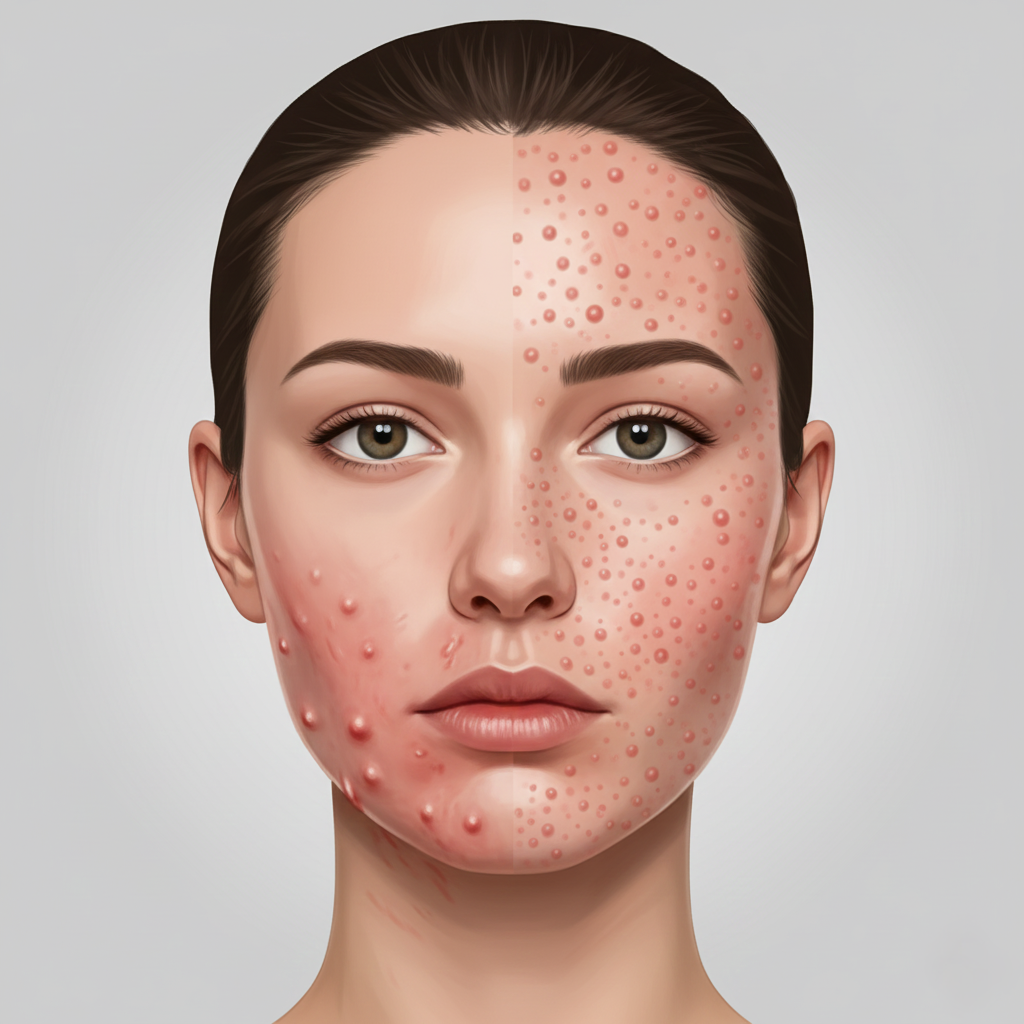
Hormonal acne shows up as a few deep, swollen, painful bumps. They may turn into cysts or nodules that stay under the skin for many days or even weeks. These bumps usually appear on the chin, jawline, lower cheeks, and neck-areas strongly affected by hormones.
Fungal acne looks completely different. It shows up as many small bumps of the same size. These bumps are usually grouped and can make the skin feel rough and bumpy. They often itch, which hormonal acne does not. Fungal acne appears on the forehead, hairline, chest, back, and shoulders.
So, the main differences are the size, number, location, and itchiness.
Hormonal acne = big + painful + deep
Fungal acne = small + itchy + many
Knowing this difference helps you choose the right treatment.
How Do They Feel and Itch?
How the bumps feel on your skin is another important sign.
Hormonal acne bumps feel deep, sore, and painful. When you touch them, they hurt or feel tender. Hormonal acne stays under the skin and causes a lot of inflammation. Even though it hurts, it rarely itches.
Fungal acne feels completely different. These bumps are often itchy, tingly, or may even give a slight burning sensation. The itching becomes worse when you sweat, exercise, or wear tight clothes. This itching happens because yeast irritates the skin surface.
Another difference is the reaction to heat. Hormonal acne does not change much with heat, but fungal acne becomes worse in warm, humid weather. If your bumps itch a lot-especially after sweating-it is most likely fungal acne.
In simple words:
Hormonal acne = painful, but not itchy
Fungal acne = itchy but not painful
Common Locations on Face and Body
Where the breakouts appear on your body helps identify the type of acne.
Hormonal acne mostly shows up on the lower face-chin, jawline, and lower cheeks. Sometimes it also appears on the neck. These areas react strongly to hormone changes. Many people also notice that hormonal acne keeps appearing in the same spots every month.
Fungal acne appears on completely different areas. It mostly shows up where sweat and oil collect-forehead, hairline, temples, chest, back, and shoulders. These spots stay warm and moist, which makes yeast grow faster. People who exercise a lot, sweat more, or live in hot places tend to get fungal acne more easily.
Hormonal acne usually stays in one area, while fungal acne spreads in patches. If you see clusters of small, itchy bumps on the forehead, chest, or back, fungal acne treatment is the right choice.
Triggers and When Breakouts Happen
Both acne types have different triggers.
Hormonal acne follows a pattern. It usually gets worse:
- before your period
- during your period
- during stress
- during pregnancy
- with PCOS
- during hormone changes
The bumps develop slowly over days.
Fungal acne does not follow this pattern. Its flare-ups happen when yeast grows too much. This happens when:
- You sweat a lot
- The weather is hot and humid
- You use heavy or oily skincare
- You wear tight clothes that trap sweat
- You do not shower after workouts
Fungal acne also appears very quickly-within 1–2 days.
Hormonal acne develops more slowly.
Understanding these patterns helps you choose the correct treatment.
Why Misdiagnosis Makes Acne Worse?
Using the wrong treatment can make both types worse.
Hormonal acne does not get better with harsh scrubs or basic face washes. These products irritate the skin and cause more oil production, which leads to more breakouts.
Fungal acne gets even worse when treated with regular acne creams like benzoyl peroxide or salicylic acid. These products do not kill yeast and can damage the skin barrier, which helps yeast grow more. This causes more itching and more bumps.
Misdiagnosis wastes time, money, and can cause long-term marks or scars. Knowing whether you have hormonal acne or fungal acne helps you avoid months of wrong treatment.
How to Diagnose Hormonal Acne?
A dermatologist usually checks:
- where your acne appears
- whether the bumps are deep and painful
- How your periods and stress levels affect your skin
- whether you have PCOS or other hormone issues
If needed, blood tests may be done to check hormone levels like testosterone or DHEA-S. If the acne worsens before periods, it strongly indicates hormonal acne.
Hormonal acne does not look like fungal acne. It forms painful cysts, not small, itchy bumps.
Once diagnosed, the doctor may suggest proper medicines, skincare, and lifestyle changes.
How to Diagnose Fungal Acne?
Diagnosing fungal acne is different.
Doctors check:
- if bumps are small and all the same size
- if the bumps itch
- if they appear on the forehead, chest, back, or shoulders
- if they appear in clusters
- if they do not improve with regular acne treatment
To confirm it, a small skin scraping (KOH test) may be done to check for yeast. Sometimes, doctors simply try antifungal treatment first. If the bumps improve quickly, the diagnosis is confirmed.
Fungal acne never forms deep cysts. It is mostly itchy and clustered.
Hormonal Acne Treatment Options
Hormonal acne treatment focuses on reducing oil and balancing hormones.
Common treatments include:
- topical retinoids
- azelaic acid
- benzoyl peroxide (mild strength)
- niacinamide
For stronger cases, doctors may prescribe:
- birth control pills
- anti-androgen medicines like spironolactone
- oral antibiotics (for a short period)
Lifestyle changes also help-like reducing sugar, sleeping well, and managing stress.
Fungal acne treatments do not work for hormonal acne. Only proper hormonal acne treatment gives long-term results.
Fungal Acne Treatment Plan
Fungal acne treatment targets yeast, not oil.
Main treatments include:
- antifungal creams (ketoconazole, ciclopirox)
- antifungal shampoos (ketoconazole, selenium sulfide, zinc pyrithione) used as body/face wash
- oral antifungal medicines (fluconazole or itraconazole) for severe cases
Prevention steps:
- avoid thick, heavy skincare
- avoid coconut oil, shea butter, and oily sunscreens
- wear loose, breathable clothes
- shower after sweating
- Keep skin dry
Regular acne products do not kill yeast and may irritate fungal acne, so they must be avoided.
Skincare Routine for Hormonal Acne
A simple routine includes:
- Gentle cleanser
Twice a day. No harsh scrubs. - Light moisturizer
Non-comedogenic. - Treatment serum
Retinoids, azelaic acid, or niacinamide work well. - Spot treatment
Mild benzoyl peroxide if needed. - Sunscreen (gel-based)
Very important. Avoid heavy sunscreens that clog pores.
Fungal acne products should not be used for hormonal acne.
Skincare Routine for Fungal Acne
Routine should aim to reduce yeast:
- Gentle cleanser
No heavy oils, no butters. - Antifungal wash (2–3 times a week)
Shampoo with ketoconazole, selenium sulfide, or zinc pyrithione. - Light, water-based moisturizer
- Gel-based sunscreen
Avoid heavy creams. - Hygiene steps
Shower after workouts, avoid tight clothes, and dry the skin well.
Regular acne products do not work for fungal acne.
When to See a Dermatologist
See a dermatologist if:
- You cannot tell the difference between hormonal and fungal acne
- Your acne is not improving after weeks of treatment
- Your skin is getting worse
- You have deep, painful bumps
- You have itchy clusters that keep coming back
- Your acne leaves scars or marks
A dermatologist can diagnose correctly and guide you with the right treatment so you do not waste time or money.
Summary: Key Takeaways
Understanding the difference between hormonal and fungal acne helps you treat your skin the right way.
Hormonal acne:
- deep, painful bumps
- appears on the chin, jawline, and lower face
- worsens before periods or during stress
- needs hormone-balancing treatment
Fungal acne:
- small, same-sized, itchy bumps
- appears on the forehead, chest, and back
- caused by yeast, not hormones
- needs antifungal treatment
Using the wrong products can make both types worse. If your acne does not improve, a dermatologist can help you find the correct treatment plan.