In today’s fast life, many people eat healthy but still feel weak, tired, or bloated. This can happen when your body is not actually using the nutrients from your food. These are early signs your body is not absorbing nutrients properly, and most people ignore them, thinking it’s just stress or a bad routine. A real medical study published by the Cleveland Clinic explains how nutrient absorption problems can lead to fatigue, digestive issues, and vitamin deficiencies if not treated. In India, this problem is becoming common due to stress, outside food, irregular eating, and too much tea/coffee. This leads to poor nutrient absorption, even if your diet looks fine. In this blog, we’ll break down the real nutrient malabsorption symptoms, causes, and simple ways to fix them in your daily life.
Common Signs Your Body Is Not Absorbing Nutrients Properly
The body gives small signals when something is wrong. You just need to notice them.
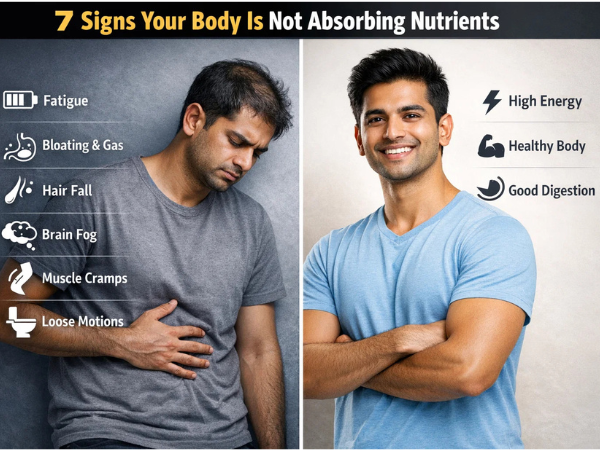
1. Constant Fatigue
Feeling tired all the time, even after proper sleep, is one of the most common signs your body is not absorbing nutrients properly. This usually happens when your body is not absorbing iron, vitamin B12, or magnesium properly.
This is very common in people who eat less protein or follow vegetarian diets without proper planning.
2. Bloating and Gas After Eating
If you feel heavy, bloated, or gassy after normal meals like dal, roti, or rice, it could be a digestive issue.
This happens when food is not broken down properly, leading to poor nutrient absorption. It is often linked to low stomach acid, IBS, or weak digestion.
3. Hair Fall and Weak Nails
Hair thinning, hair fall, or brittle nails are clear nutrient malabsorption symptoms.
Your hair needs protein, iron, and zinc. If your body is not absorbing these nutrients, your hair and nails are the first to show damage.
4. Loose Motions or Greasy Stool
If you often have loose stools or notice oily, foul-smelling stool, it may be a condition called malabsorption syndrome.
This means your body is not absorbing fats properly. Important vitamins like A, D, E, and K are lost in this process.
5. Muscle Cramps and Weakness
Frequent cramps, especially at night, can be due to low magnesium, calcium, or potassium.
This is a sign of poor nutrient absorption, not just low intake.
6. Brain Fog and Mood Changes
If you feel low, forgetful, or mentally slow, it may be linked to a vitamin B deficiency.
These are often ignored but are strong signs your body is not absorbing nutrients properly, especially in people with high stress.
7. Sudden Weight Loss or Swelling
Losing weight without trying, or swelling in the legs and face, can point towards malabsorption syndrome.
This happens when your body is not getting enough protein or nutrients, even after eating enough food.
Causes in 2026 Lifestyle
There are many reasons why poor nutrient absorption is increasing today.
1. Stress and Fast Lifestyle
High stress affects digestion directly. It reduces enzyme production and slows down gut movement. This leads to incomplete digestion and nutrient malabsorption symptoms.
2. Digestive Disorders
Conditions like IBS, Crohn’s disease, and celiac disease damage the intestinal lining.
This lining (called villi) helps absorb nutrients. When it is damaged, malabsorption syndrome develops.
3. Low Stomach Acid
Many people take antacids regularly. Over time, this reduces stomach acid.
Without enough acid, your body cannot absorb vitamin B12, iron, and calcium properly. This leads to signs your body is not absorbing nutrients properly.
4. Too Much Tea, Coffee, and Alcohol
Excess caffeine reduces iron absorption. Alcohol damages the gut lining.
Both contribute to poor nutrient absorption, especially in urban lifestyles.
5. Antibiotics and Medicines
Frequent use of antibiotics kills good gut bacteria. These bacteria help in digestion and absorption.
Without them, nutrient malabsorption symptoms become more common.
6. Lactose Intolerance
Around 60–70% Indians have some level of lactose intolerance.
Milk products may cause gas and bloating, leading to malabsorption syndrome over time.
Diagnosis Methods
If symptoms don’t go away, proper testing is important.
Doctors may suggest:
- Blood tests – to check iron, B12, vitamin D
- Stool tests – to check fat content (for fat malabsorption)
- Breath tests – for lactose intolerance or gut bacteria imbalance
- Endoscopy or biopsy – to check damage in intestine lining
These tests help confirm signs your body is not absorbing nutrients properly and identify the exact cause.
Nutrient Absorption and Hormonal Health in 2026
This is something many people don’t realise. Your hormones and gut health are deeply connected. When there is poor nutrient absorption, your hormones also get affected.
Thyroid Issues
Lack of iodine, selenium, and zinc affects thyroid function.
This can lead to weight gain, hair fall, and fatigue — all linked to nutrient malabsorption symptoms.
PCOS and Insulin Resistance
Magnesium and vitamin D deficiency can worsen insulin resistance.
This is why many women with PCOS also show signs your body is not absorbing nutrients properly.
Mood and Hormones
Vitamin B deficiency affects mood, sleep, and energy.
Low absorption can lead to anxiety, mood swings, and low focus.
Vitamin D Problem in Urban Life
Due to an indoor lifestyle, many people already have low vitamin D.
If absorption is also poor, it worsens immunity and stress levels, similar to malabsorption syndrome effects.
What Helps
- Spend 15–20 mins in sunlight
- Add nuts, seeds, and whole foods
- Manage stress with yoga or breathing
- Track cycles and symptoms if needed
Fixing gut health often improves hormonal balance naturally.
Prevention and Fixes
Good news — you can improve poor nutrient absorption with simple daily habits.
1. Improve Gut Health
Add natural probiotics like:
- Curd
- Buttermilk
- Fermented foods (idli, dosa)
These improve digestion and reduce nutrient malabsorption symptoms.
2. Eat Balanced Meals
Include:
- Protein (eggs, dal, paneer)
- Healthy fats (ghee, nuts)
- Fiber (vegetables, fruits)
This supports better absorption.
3. Stay Hydrated
Drink at least 2.5–3 litres of water daily.
Water helps digestion and reduces signs that your body is not absorbing nutrients properly.
4. Reduce Tea/Coffee
Avoid tea or coffee right after meals.
It blocks iron absorption and leads to poor nutrient absorption.
5. Manage Stress
Try simple habits:
- Walking
- Deep breathing
- Yoga
Less stress = better digestion.
6. Chew Food Properly
Most people eat fast.
Proper chewing improves digestion and reduces the risk of malabsorption syndrome.
7. Consider Supplements (if needed)
Only after doctor advice:
- Vitamin B12
- Vitamin D
- Iron
These help fix deficiencies caused by nutrient malabsorption symptoms.
When to See a Doctor
Do not ignore symptoms if they continue. See a doctor if you notice:
- Loose stools for more than 2 weeks
- Unexplained weight loss
- Severe fatigue
- Hair fall with weakness
- Swelling in body
These can be serious signs your body is not absorbing nutrients properly. Early treatment can prevent long-term damage.
Sum up,
Your body always gives signals. You just need to pay attention. If you feel tired, bloated, or weak even after eating well, it could be more than just lifestyle. These are real signs your body is not absorbing nutrients properly. Ignoring them can lead to bigger problems like hormonal imbalance, low immunity, and chronic fatigue. The good part is that small daily changes can fix most cases of poor nutrient absorption. Start with better eating habits, manage stress, and take care of your gut. If needed, take medical help early. Your energy, mood, and overall health will improve once your body starts absorbing nutrients the right way.